Fuji Omuro Sengen Shrine
Fuji Omuro Sengen Shrine, in Katsuyama, Fujikawaguchiko, Minamitsuru District, Yamanashi Prefecture. Known as the “oldest shrine within the mountain,” it is regarded as the first Sengen shrine ever enshrined on Mt. Fuji itself — a foundational sanctuary of Fuji faith. The shrine was anciently called Fuji-san Kitamuro or Shimo-sengen and is affectionately known locally as Omuro-sama.
The hongū (main shrine) stood at the second station of Mt. Fuji, around 1,700 metres in elevation, midway along the Yoshida trailhead. As one of the oldest shrines built directly within the mountain, it has long been counted among the leading candidates for the meijin taisha “Sengen Shrine” — the sole shrine of that rank in Kai Province recorded in the Engishiki Jinmyōchō of 927. Tradition also identifies the shrine with the meijinshi established in 865 (Jōgan 7) to pacify the great eruption of Mt. Fuji. Within the three-tiered structure of summit (okumiya), middle mountain (hongū), and foot (satomiya), the hongū has carried the central role of “prayer within the mountain.”
The satomiya, on the shores of Lake Kawaguchi at Katsuyama, was anciently the ubusunagami — patron of birth — of seven villages, including Katsuyama itself. It served as the place of daily prayer for those who could not directly ascend to the hongū within the mountain. This pattern of worship linking mountain and village embodies the very core of Fuji faith — the historical shift from worship from afar (yōhai) to worship by ascent (tōhai).
Veneration by successive rulers ran deep. There are records of land grants by the Kobayashi clan of the Muromachi period and of protection by the Oyamada clan of the Sengoku era. Above all, Takeda Shingen (Harunobu) held the shrine in profound devotion: in 1557 (Kōji 3) he offered a vow petitioning safe childbirth for his daughter married to Hōjō Ujimasa, pledging that if granted, he would abolish the trail’s kansa — the gatehouse barrier. In 1566 (Eiroku 9) he offered another petition for safe childbirth. Records of land confirmations by Toyotomi Hideyoshi and Tokugawa Ieyasu also survive.
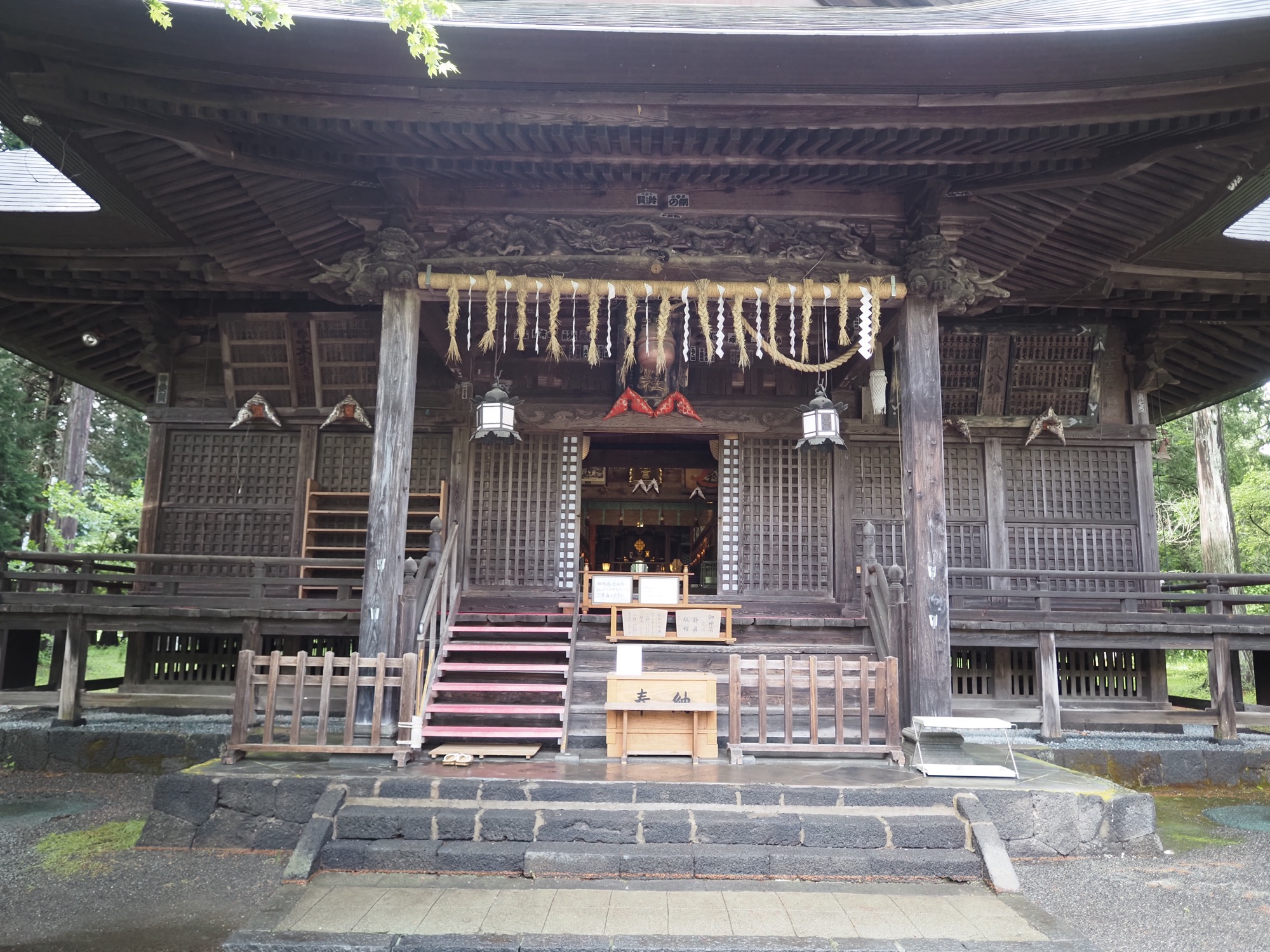
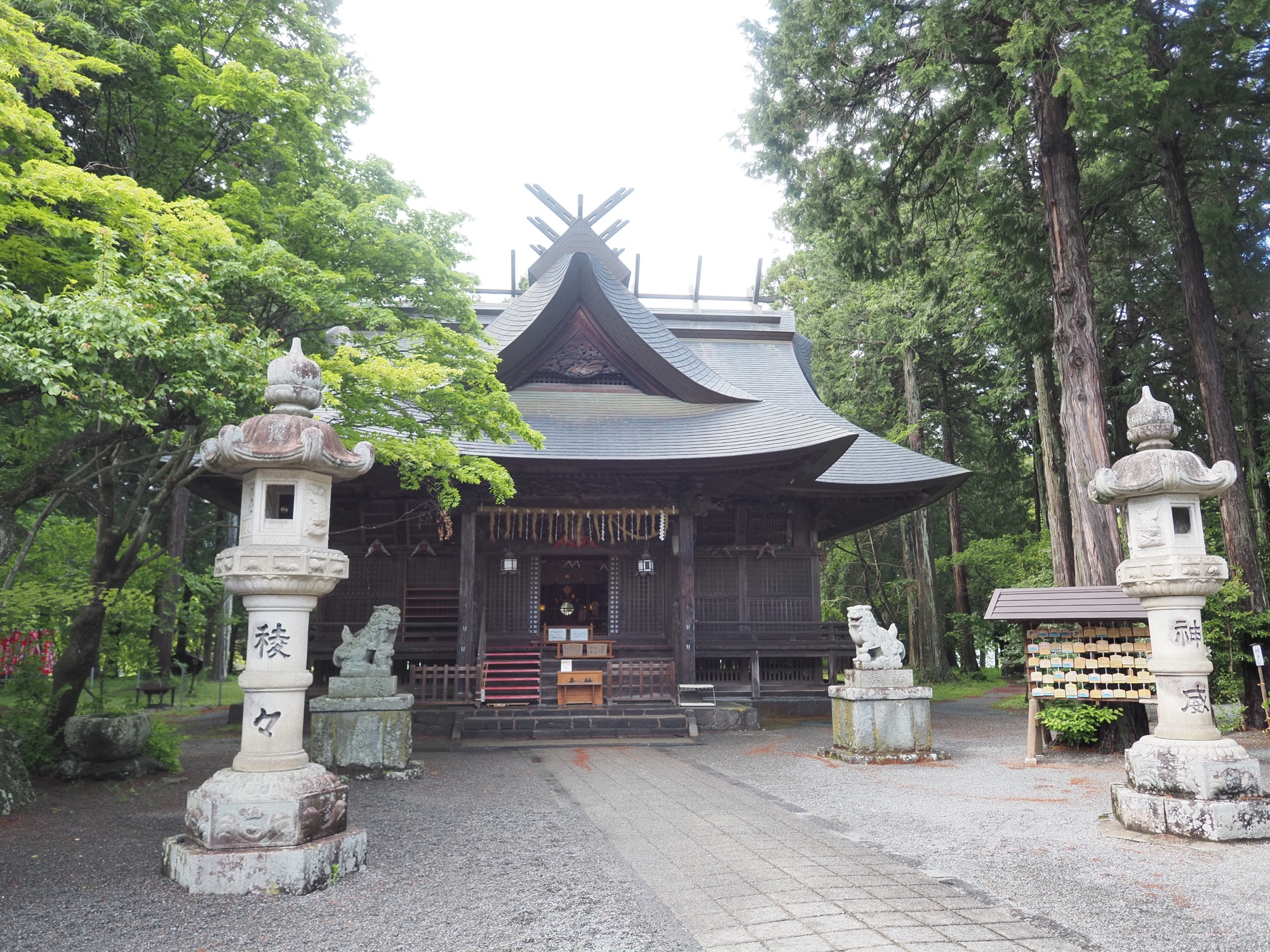
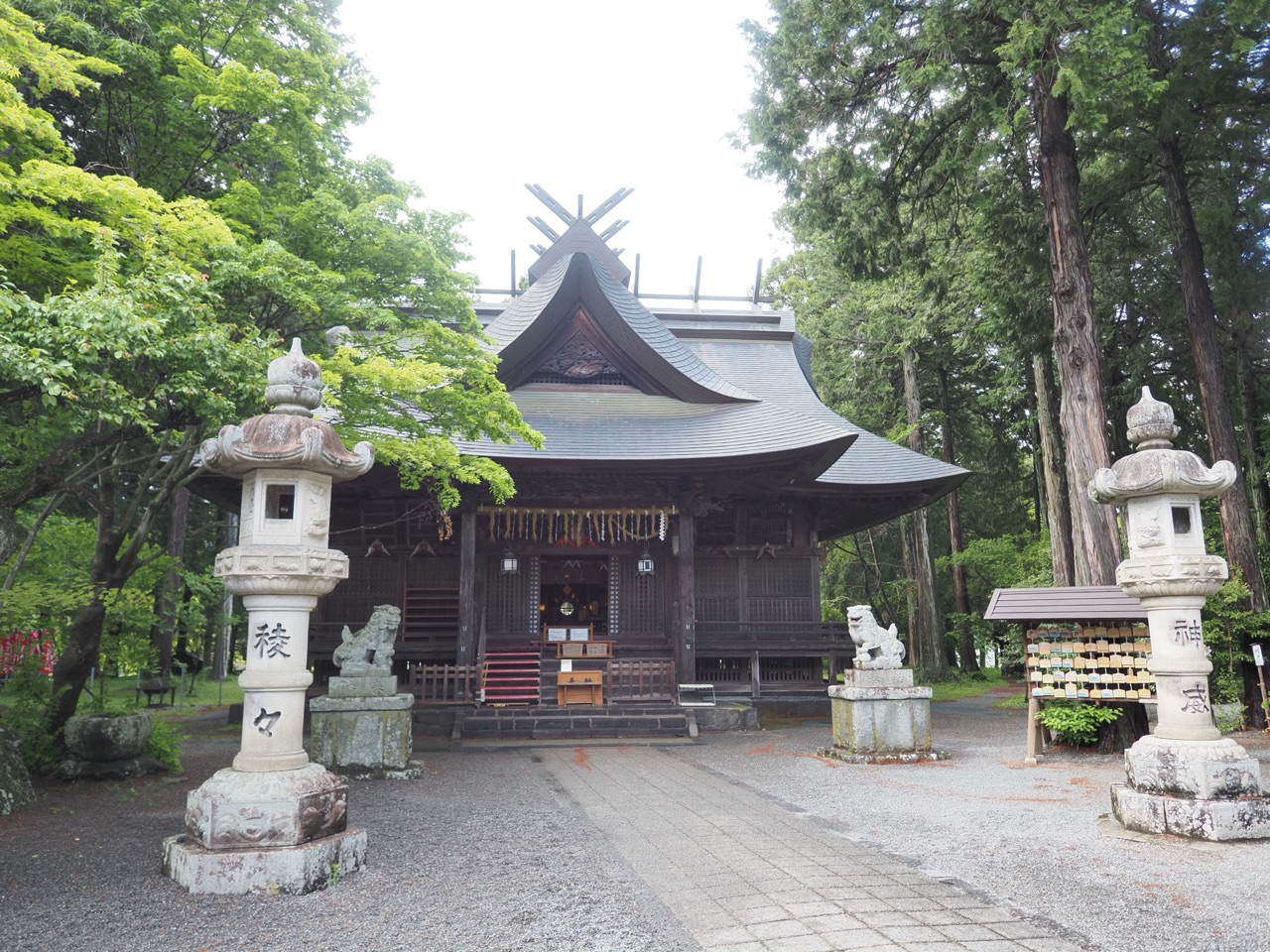
The present main hall of the satomiya was built in 1612 (Keichō 17) by the local lord Torii Naritsugu, and is designated a National Important Cultural Property. The hongū honden, to protect it from decay under the severe alpine climate, was relocated to the satomiya grounds by 1974 (Shōwa 49) and rebuilt facing the satomiya itself. In 2013, when Mt. Fuji was inscribed as a World Cultural Heritage site under the title “Object of Worship and Wellspring of Art,” Fuji Omuro Sengen Shrine was included among its constituent components.
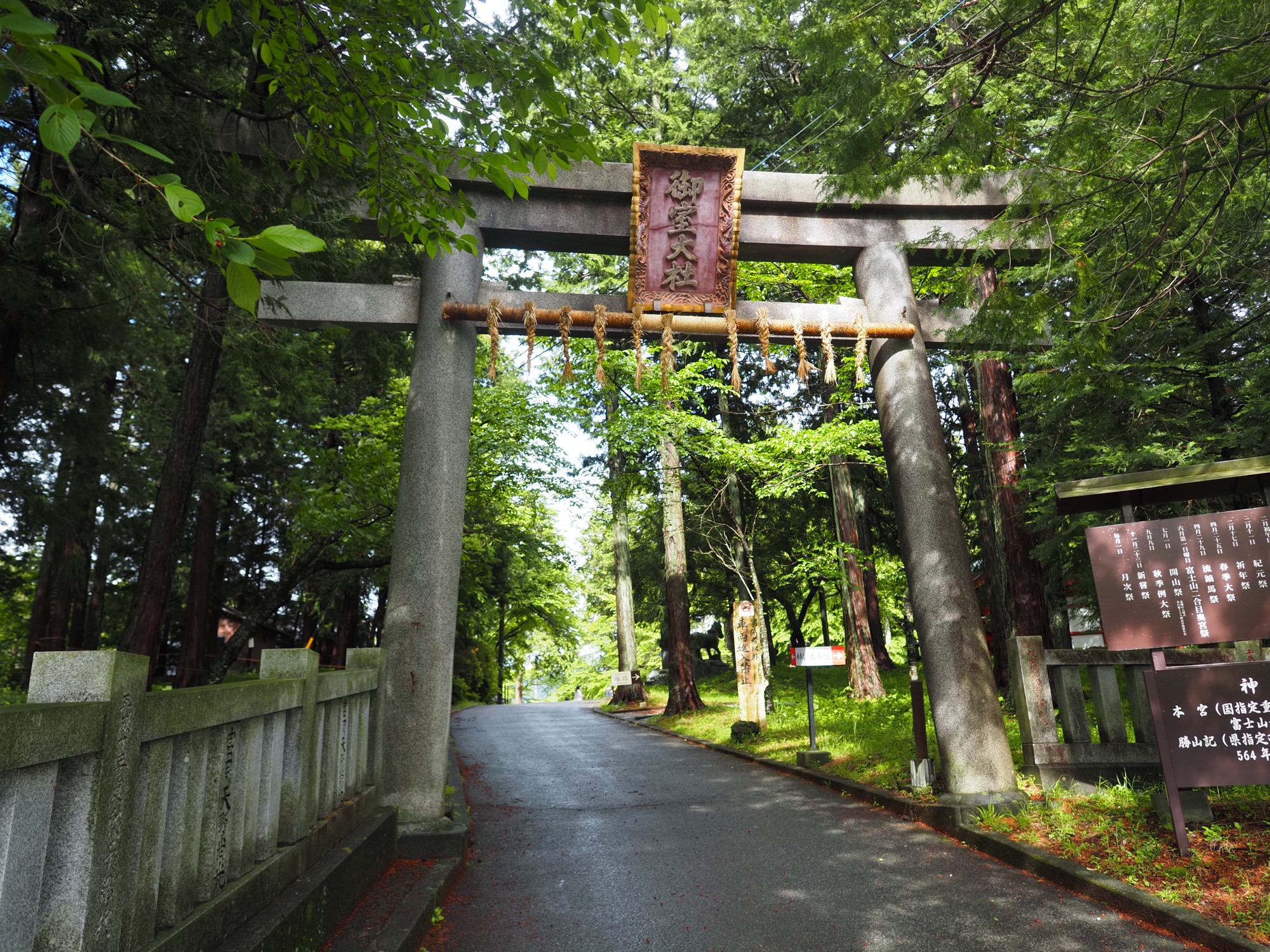
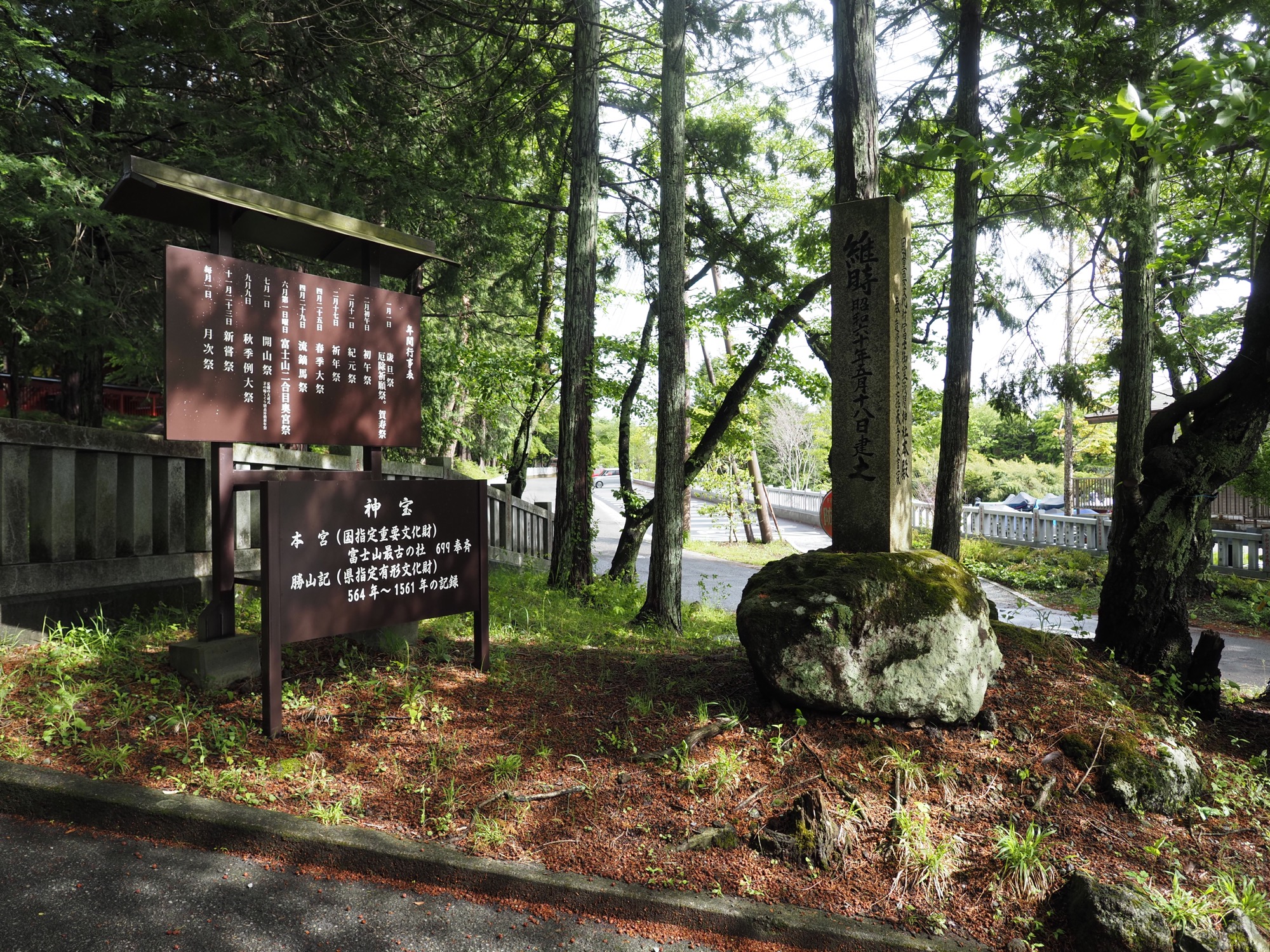
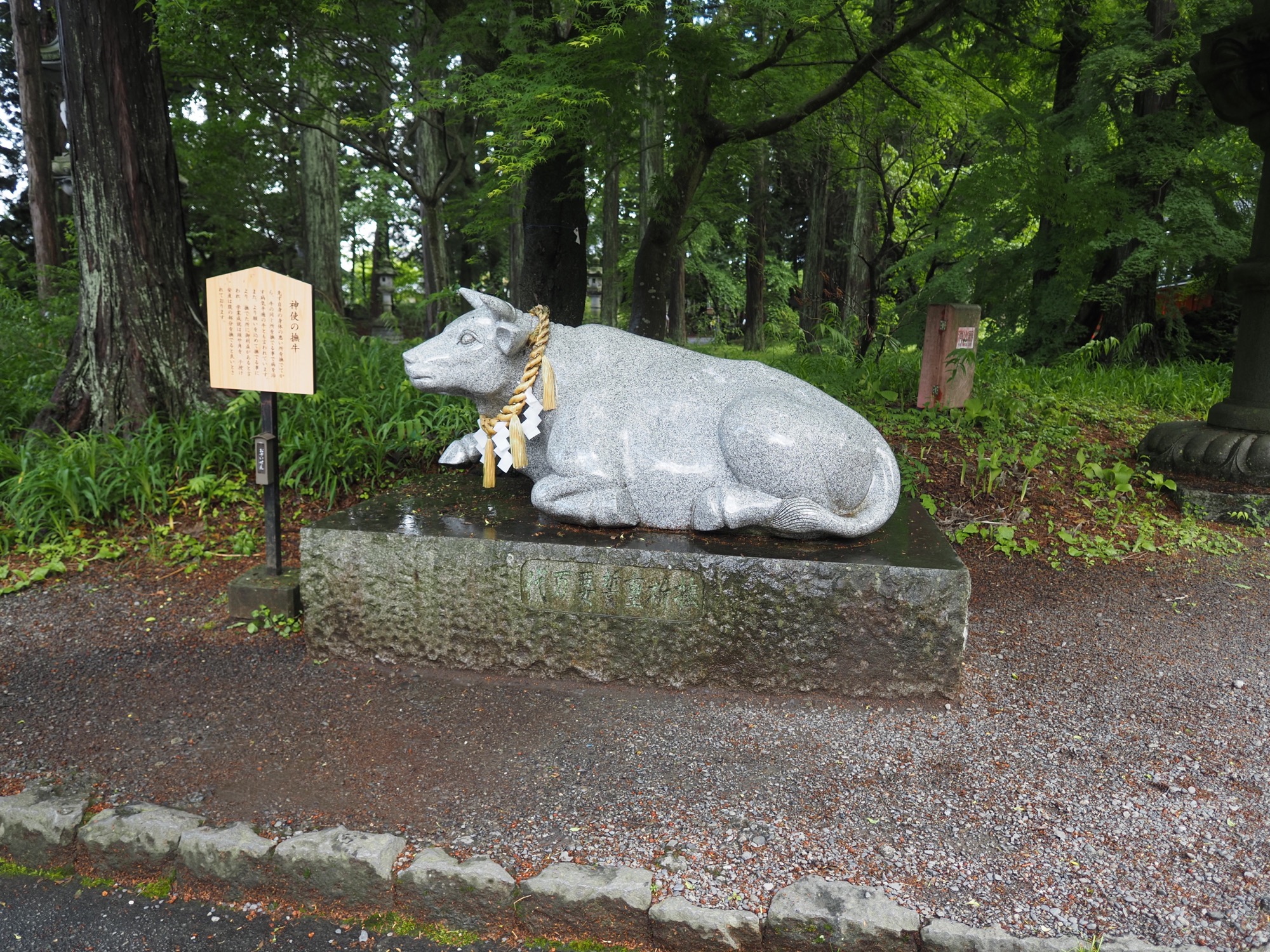
The photographs show the precincts in early summer green: the great torii at the approach, the relocated honden, the satomiya main hall, and the stone sacred-ox figure. The accumulated memory of more than a thousand years — of prayer travelling back and forth between mountain and village — gathers quietly here, folded into the still breath of the trees.