Higashiguchi Hongū Fuji Sengen Shrine (Subashiri Sengen)
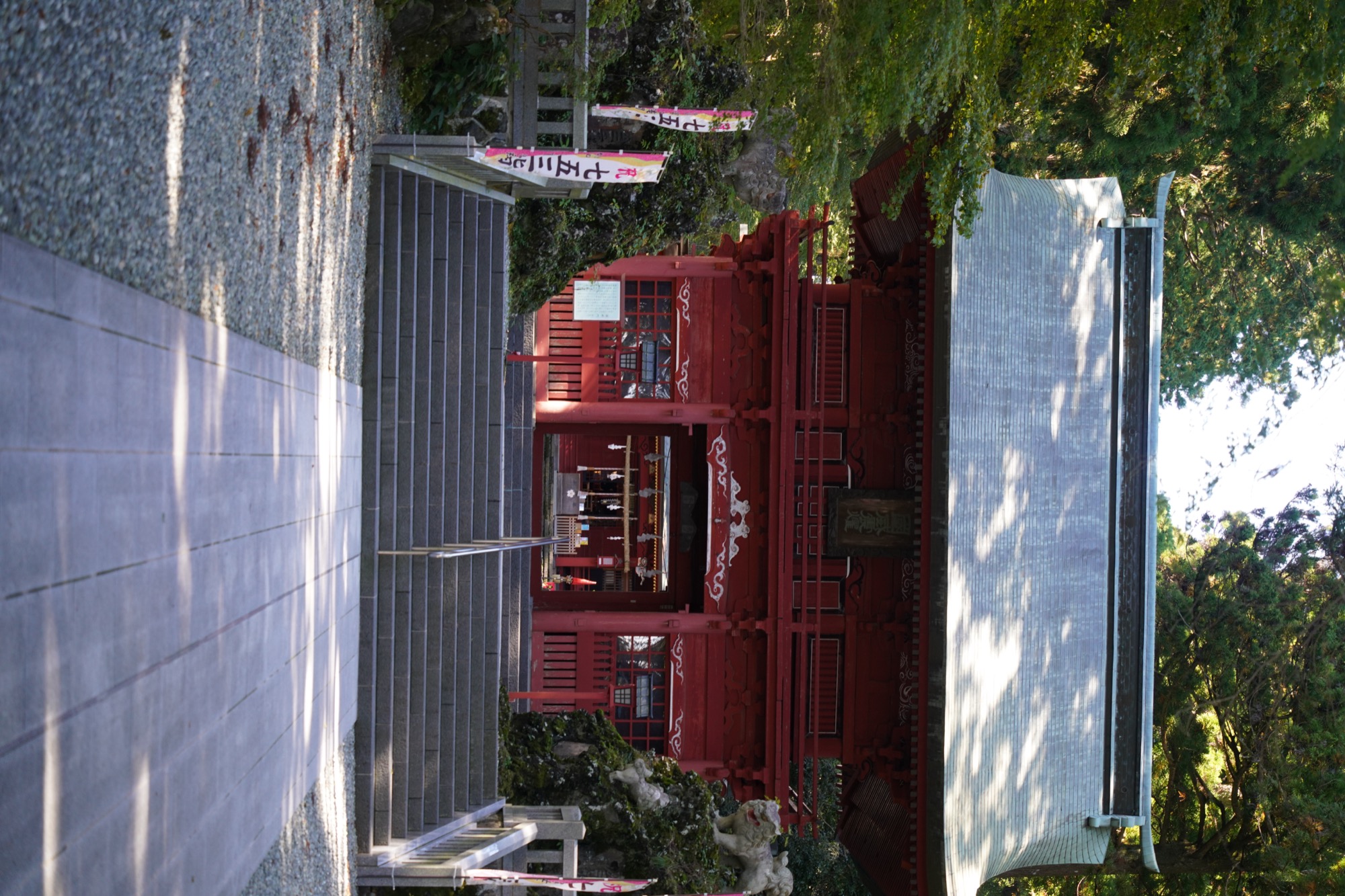
Higashiguchi Hongū Fuji Sengen Shrine, popularly known as Subashiri Sengen, in Subashiri, Oyama Town, Sunto District, Shizuoka Prefecture. As the starting point of the Subashiri trailhead, it long flourished as the “Eastern Main Gate” — the principal reception point for pilgrims arriving from the Kantō and Tōhoku regions, and the foremost station of Fuji faith on the mountain’s eastern foot.
According to shrine tradition, the shrine was founded in 802 (Enryaku 21), originating in the enshrinement of the deity to pacify the eruption of Mt. Fuji. The principal deity is Konohana-no-Sakuya-bime. As the shrine standing at the head of the eastern trailhead, one of the five Fuji trailheads — Yoshida, Subashiri, Suyama, Ōmiya, and Murayama — it has, for more than twelve hundred years, carried one wing of the Fuji-faith tradition.
The Subashiri trailhead was the principal reception point for pilgrims from the Kantō region, particularly those arriving from Sagami Province (modern-day Kanagawa) by crossing the Ashigara Pass. Records of the Sengoku period show that a Subashiri dōja-seki — a barrier for pilgrim travellers — was established here, levying the yama-yakusen (mountain toll). On the descent, the sunabashiri — a path of loose volcanic sand allowing pilgrims to plunge from the sixth station almost to the first in a single rush — gave the route a particular convenience, and many pilgrims who had ascended by other trails chose to descend by way of Subashiri. Because the route joined the Yoshida trail at the eighth station, it was also called the “Eastern Main Gate” in the Edo period and flourished as a major centre of faith.
A treasured painting in the shrine’s possession, dated to the Hōreki era (1740), entitled Sankoku Daiichi Fuji-san Goshinkei, depicts the figure of Konohana-no-Sakuya-bime, holding sacred sakaki and a wish-fulfilling jewel and wearing a crown. It is held to be the sole dated example to show the transition by which Mt. Fuji’s deity shifted from the medieval Kaguya-hime to Konohana-no-Sakuya-bime — a historical document of extreme importance for the history of Fuji faith.
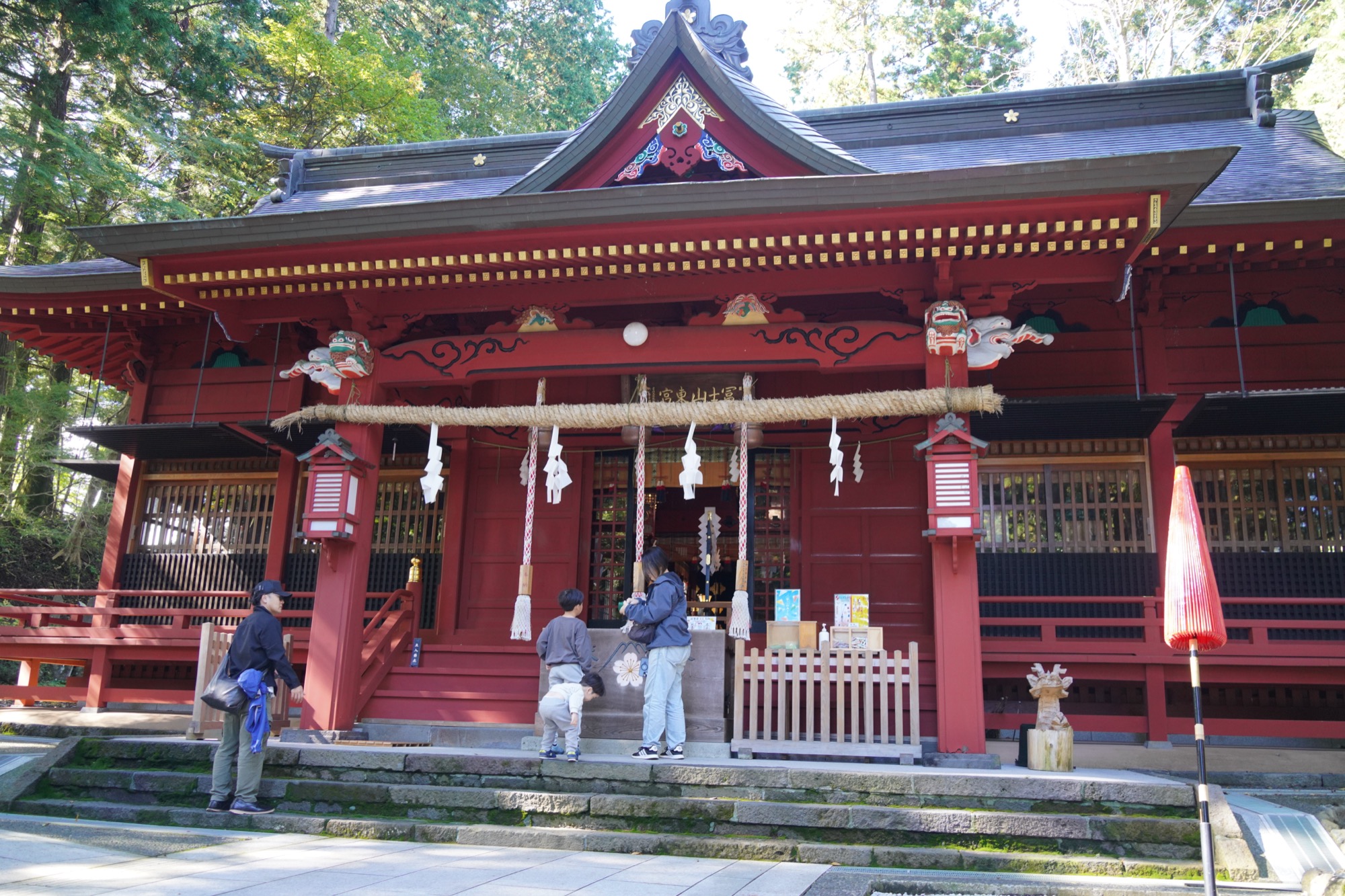
Yet the 1707 (Hōei 4) eruption of Mt. Fuji dealt a devastating blow to Subashiri village. The entire village was buried — to a degree spoken of as “annihilation” — under nearly one jō (about three metres) of ash, and even the shrine’s halls were swallowed up to the eaves. In the immediate aftermath, the head priest Ono Minbu and others appealed to the shogunate with the full extent of the disaster. Eighteen hundred ryō of relief funds were granted for the rebuilding of the village, but the repair of the shrine itself proved exceptionally difficult. In 1715 (Shōtoku 5), with the endorsement of intendant Ina Hanzaemon, fundraising in Edo was approved; with further assistance from the Ōkubo lords of Odawara, the main hall, offering hall, and prayer hall were rebuilt in copper-roofed splendour in 1742 (Kanpō 2), forming the noble shrine landscape that survives today.
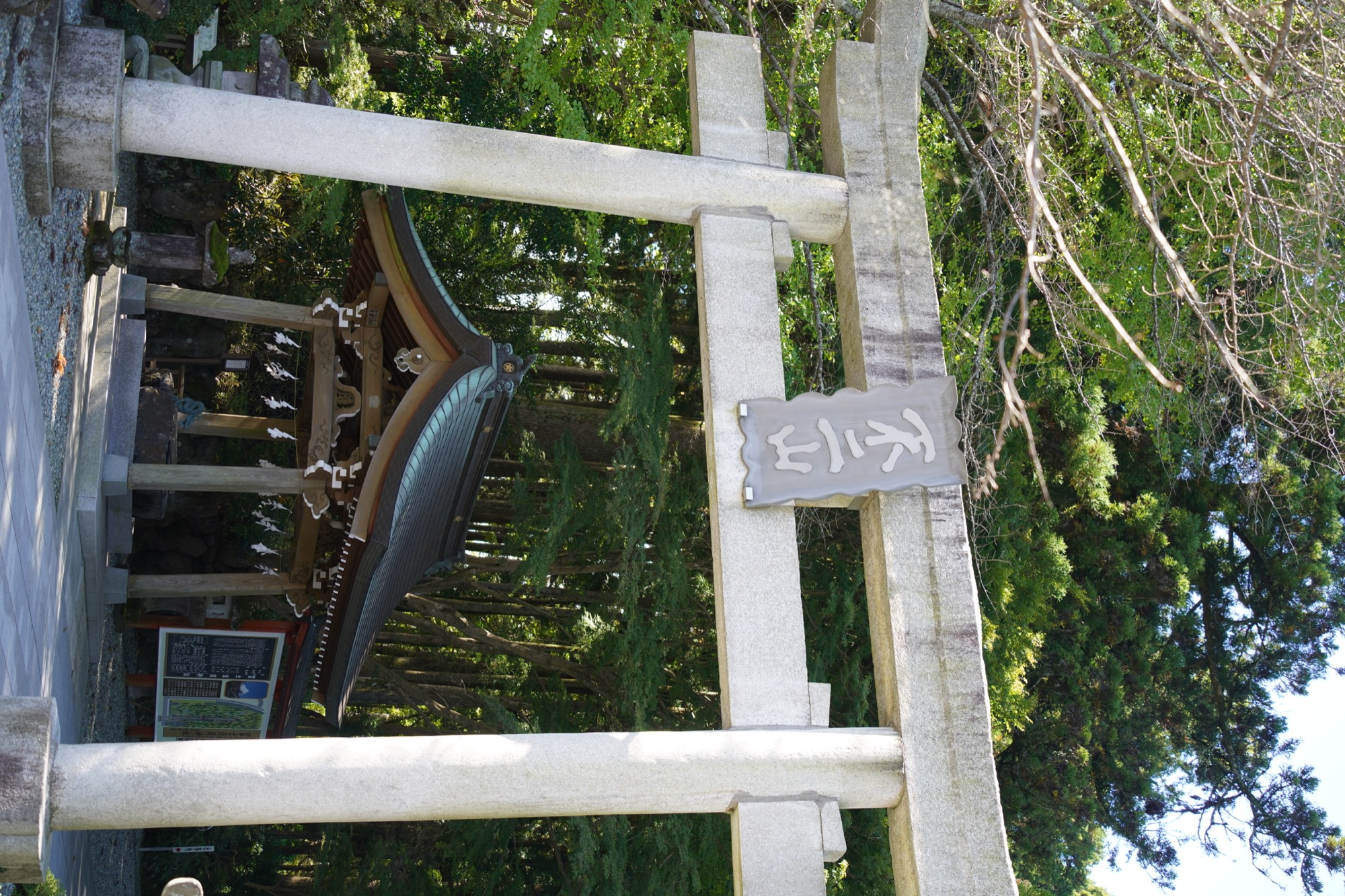
In 2013, when Mt. Fuji was inscribed as a World Cultural Heritage site under the title “Object of Worship and Wellspring of Art,” Higashiguchi Hongū Fuji Sengen Shrine was included among its constituent components. It is recognised as the foremost station on the eastern foot of Mt. Fuji, transmitting to the present a layered history of faith — from ancient volcanic-deity rite, through medieval shugendō, to the early-modern Fuji-kō. The great trees that survive within the precincts, including the prefecturally designated natural monument Subashiri no haruniru (the Subashiri elm), and the shrine halls that have continued since the Edo period, form essential components of the cultural landscape nurtured by faith-driven mountain ascent.
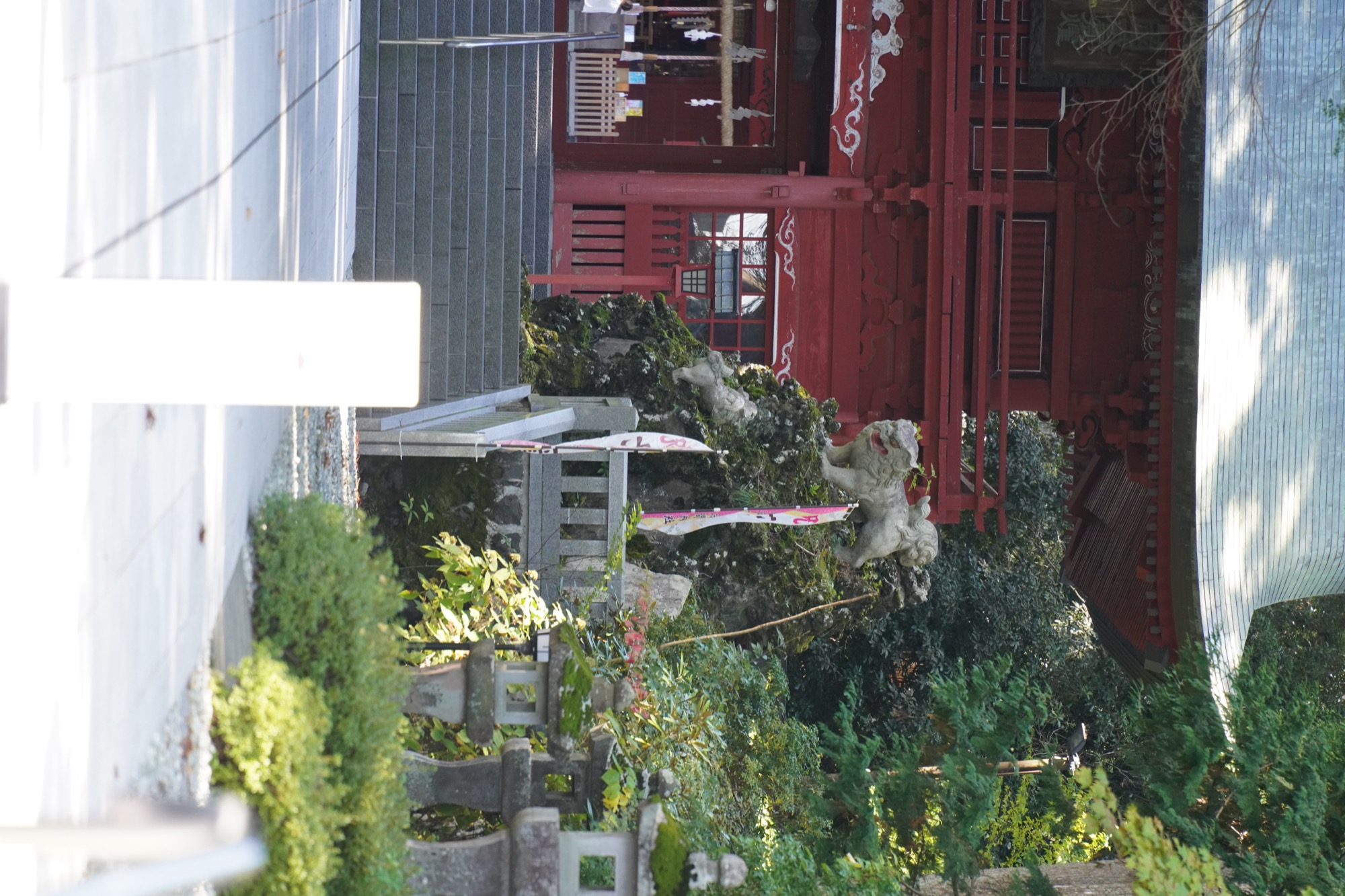
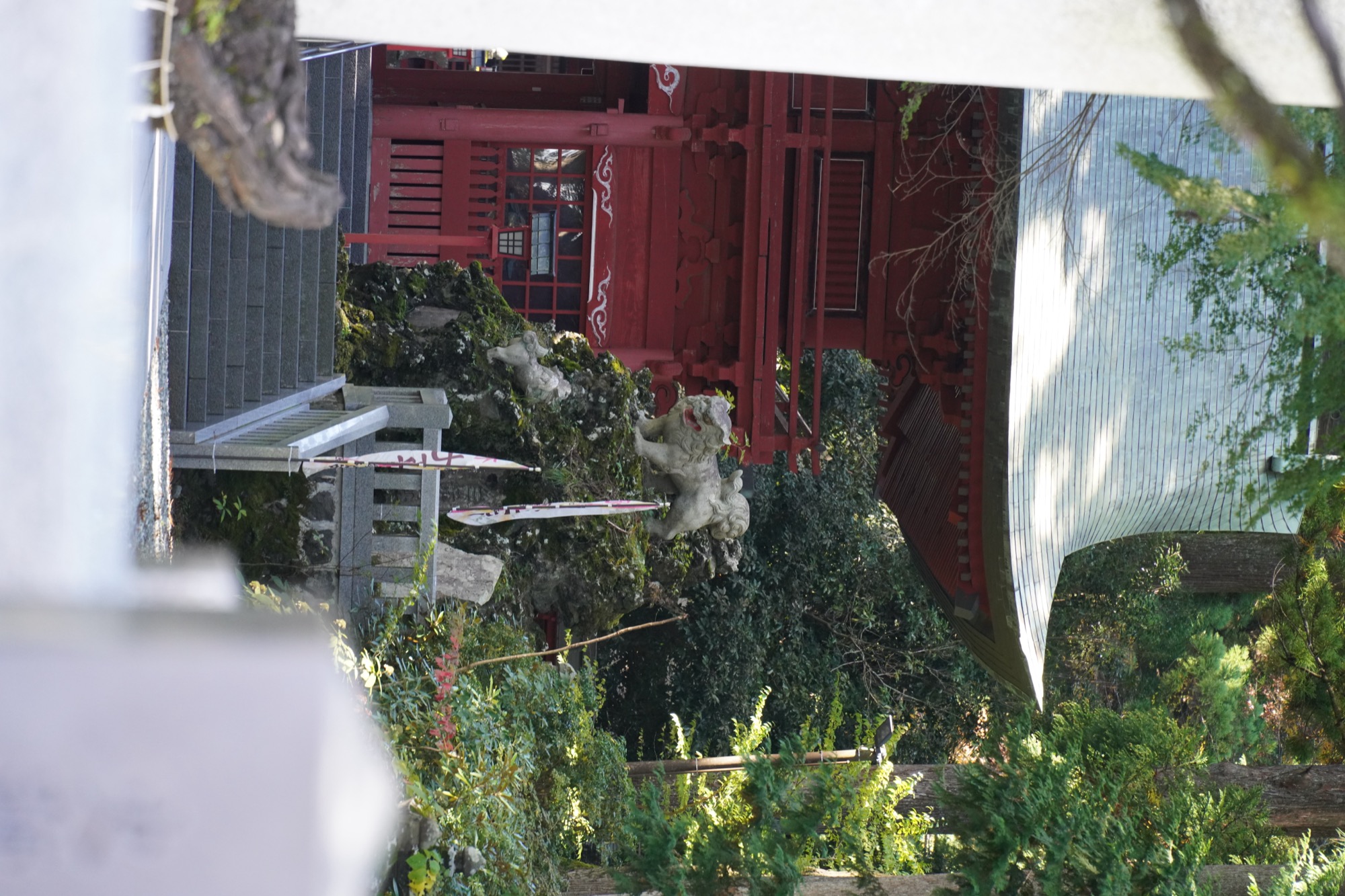
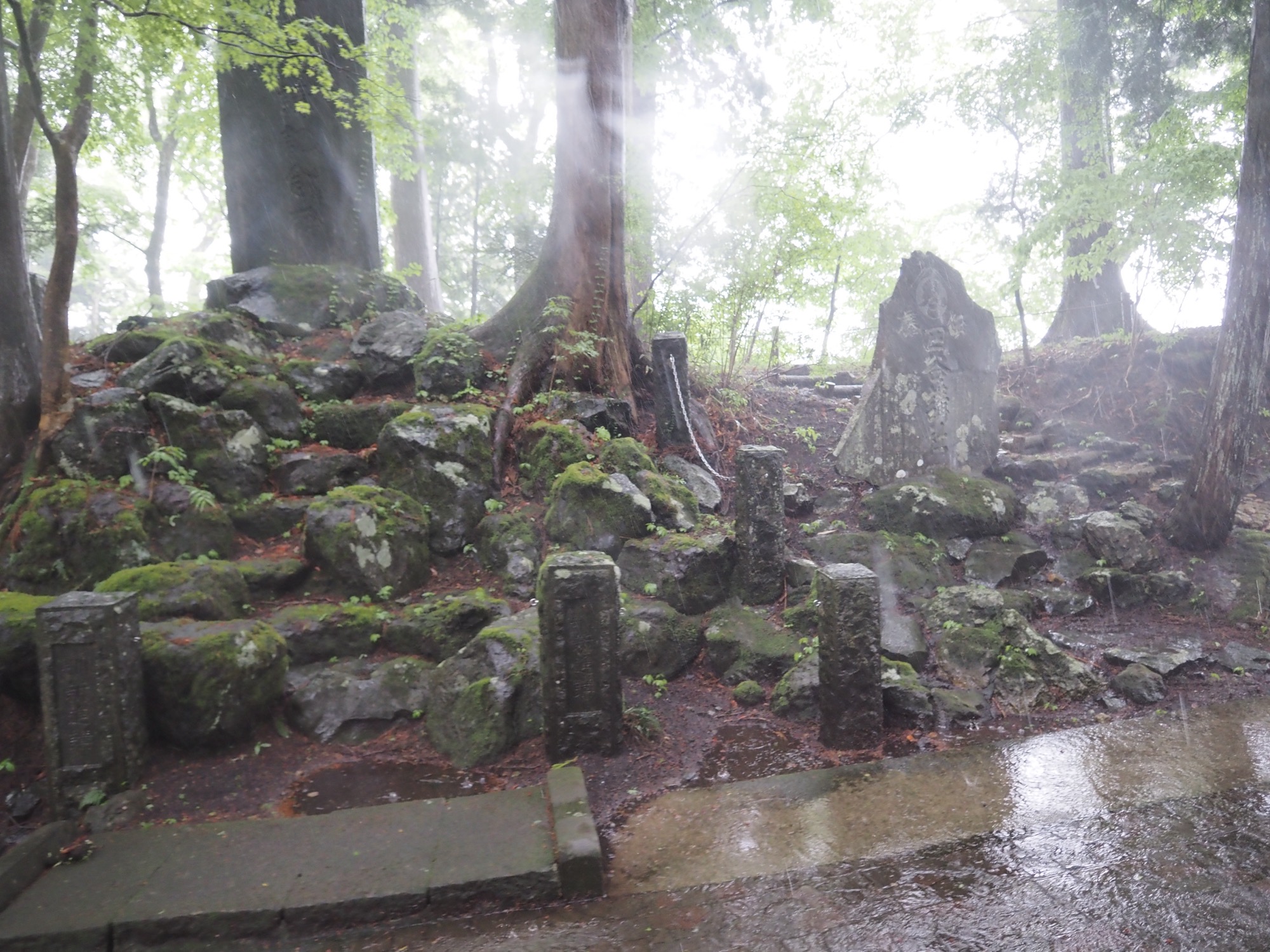
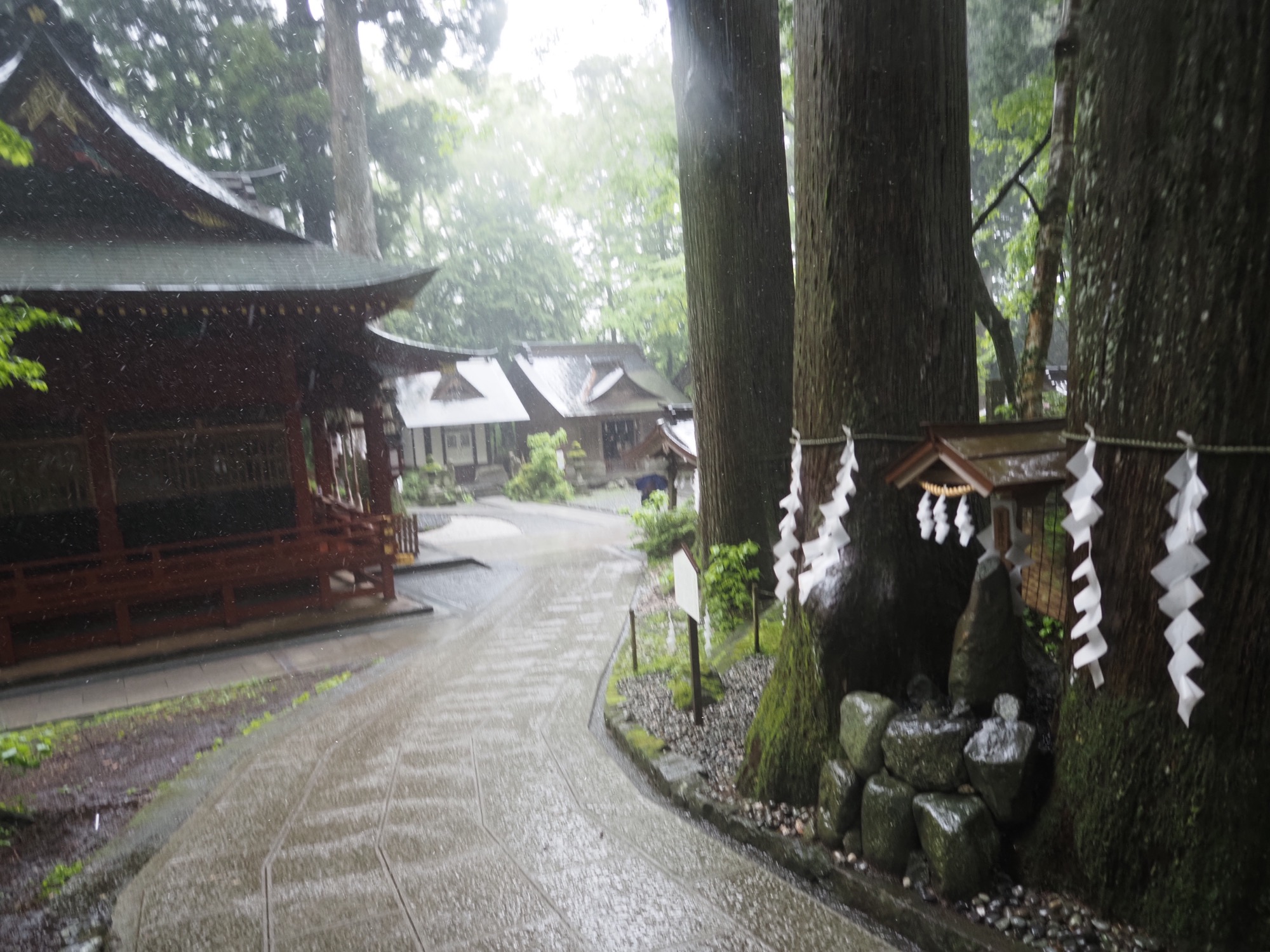
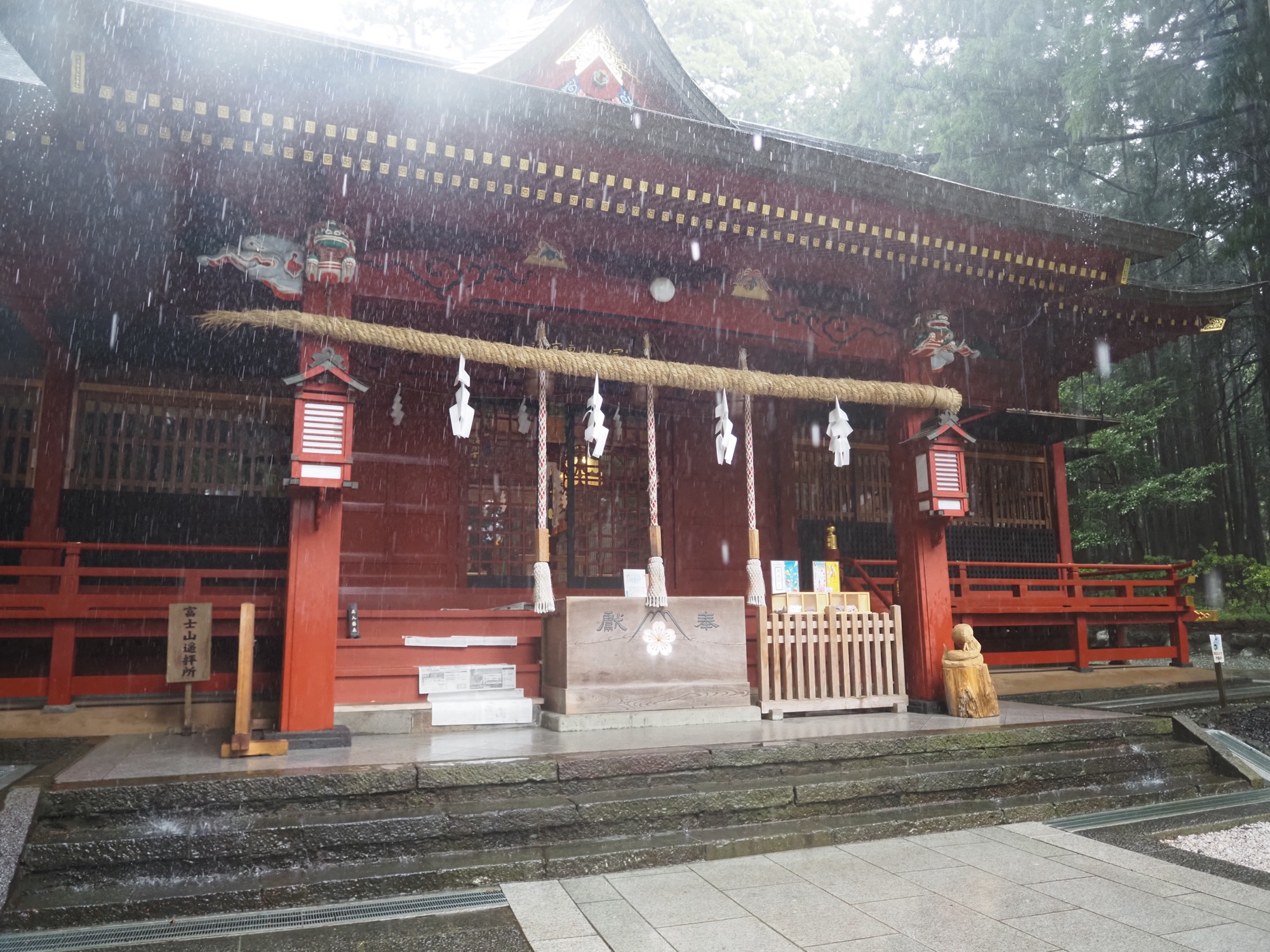
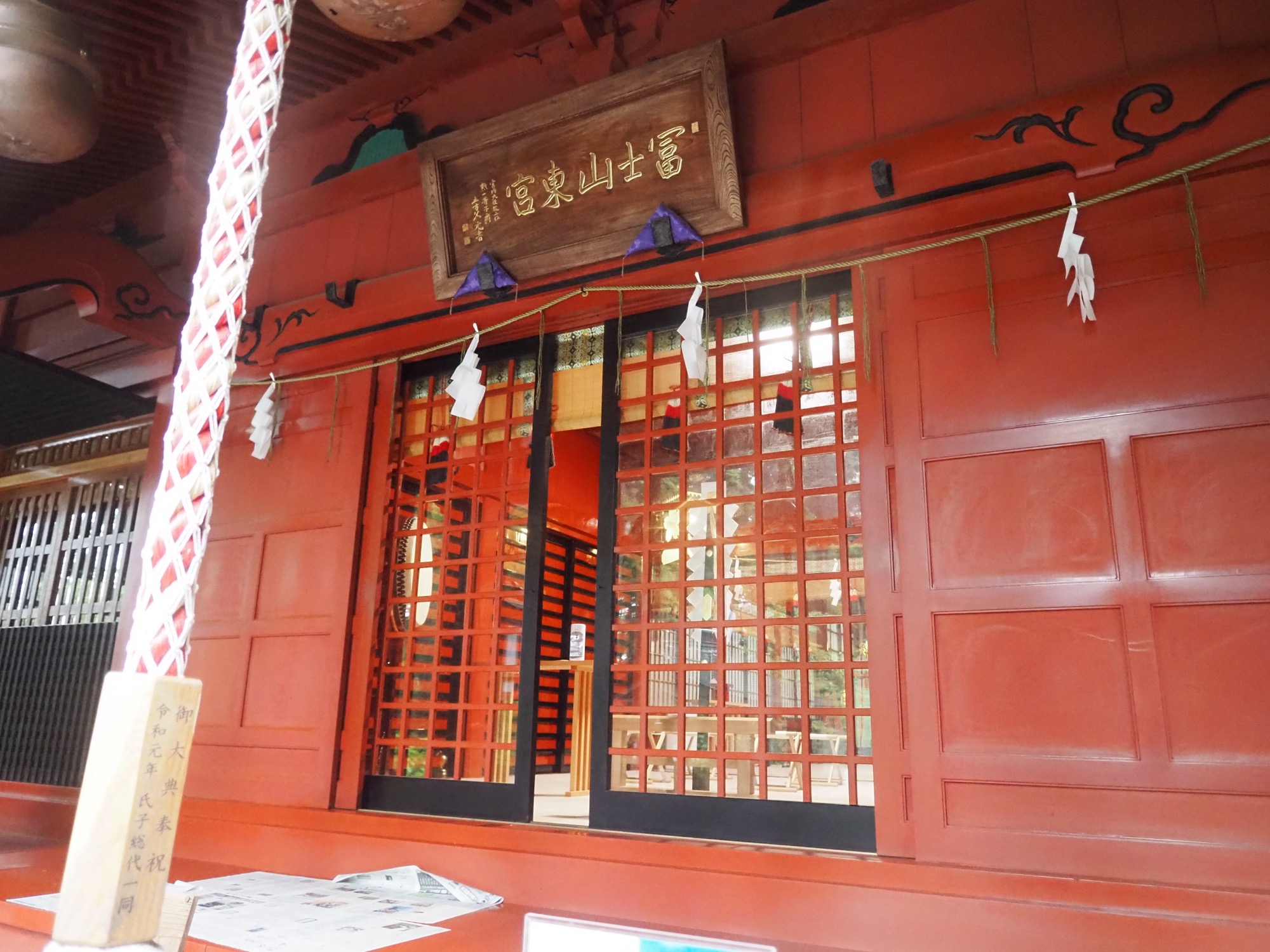
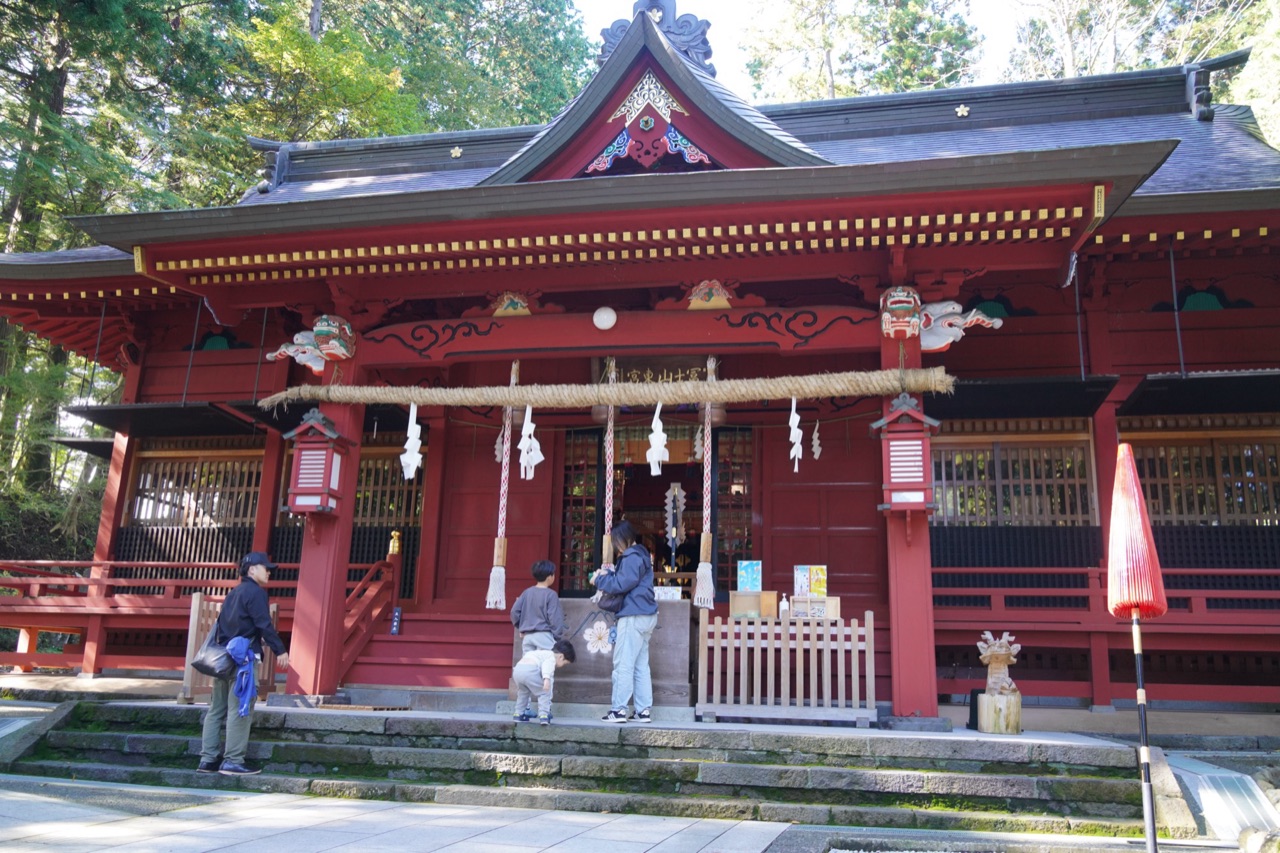
The photographs show the vermilion prayer hall in autumn light, the precincts veiled in May rain, and the inscribed plaque Fuji-san Tōgū glimpsed beyond the great shimenawa. The path of a shrine that has overcome repeated volcanic disasters to sustain the Fuji faith of the entire Kantō region breathes here through both seasons, layered one upon the other.