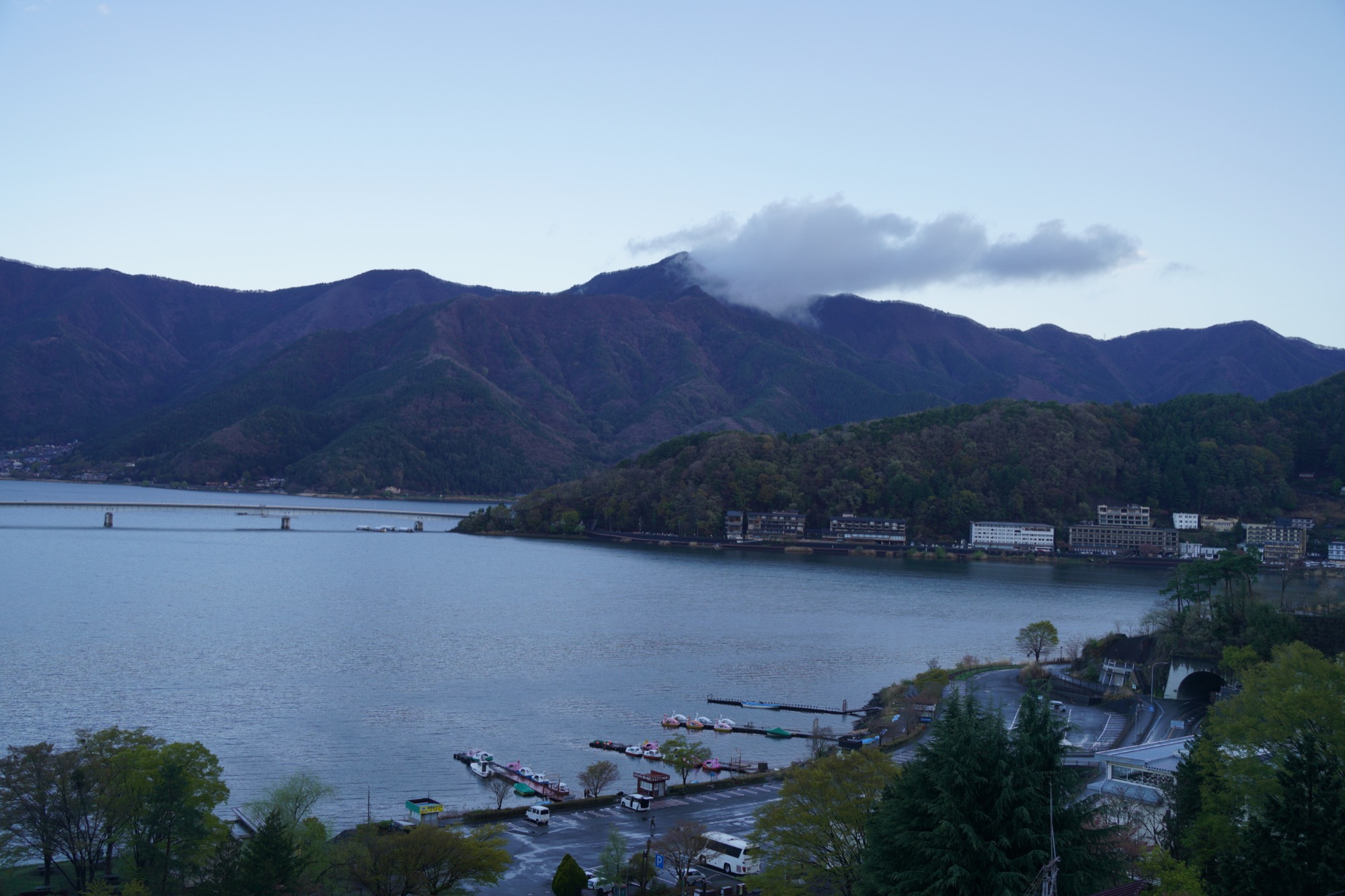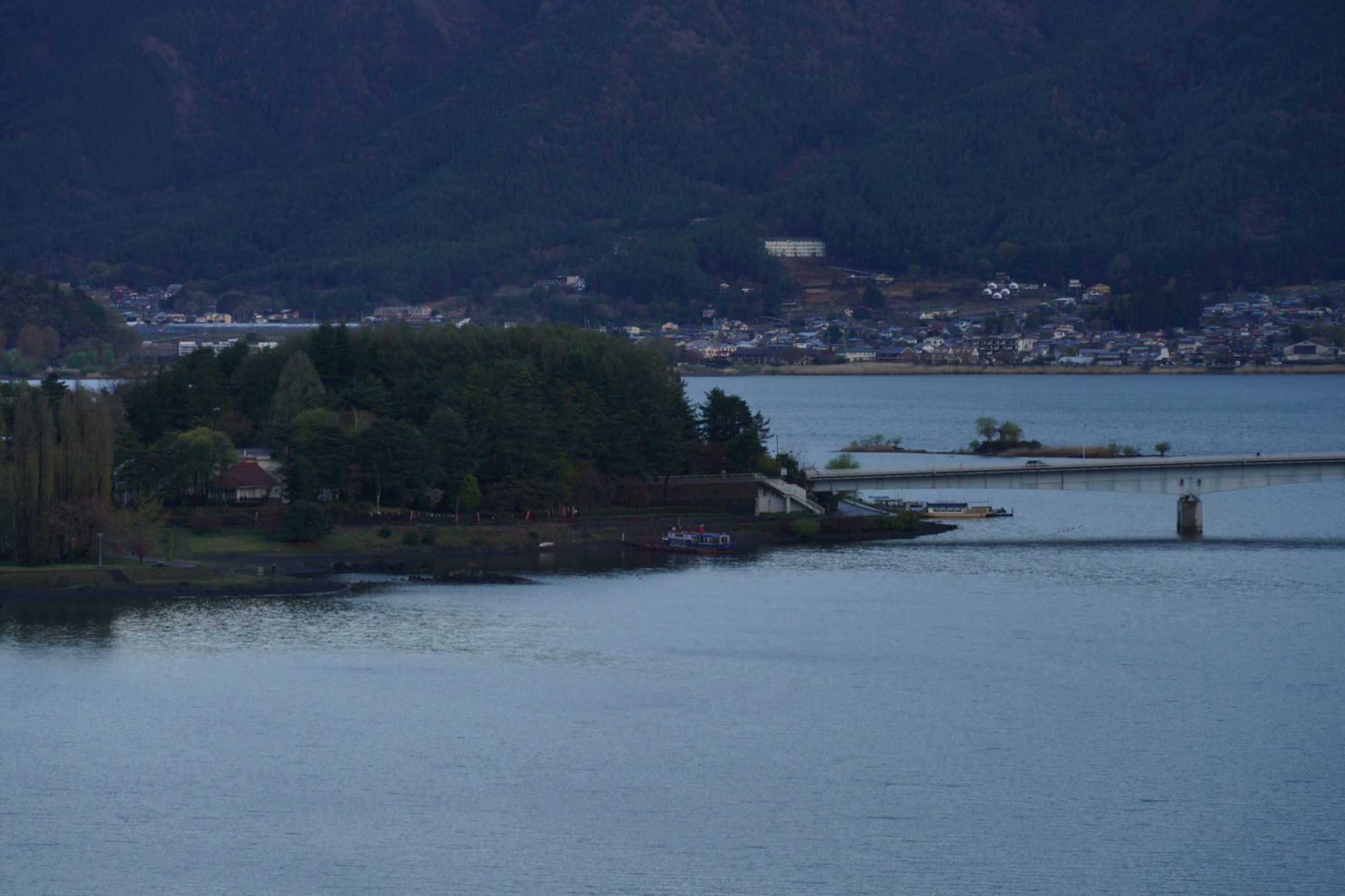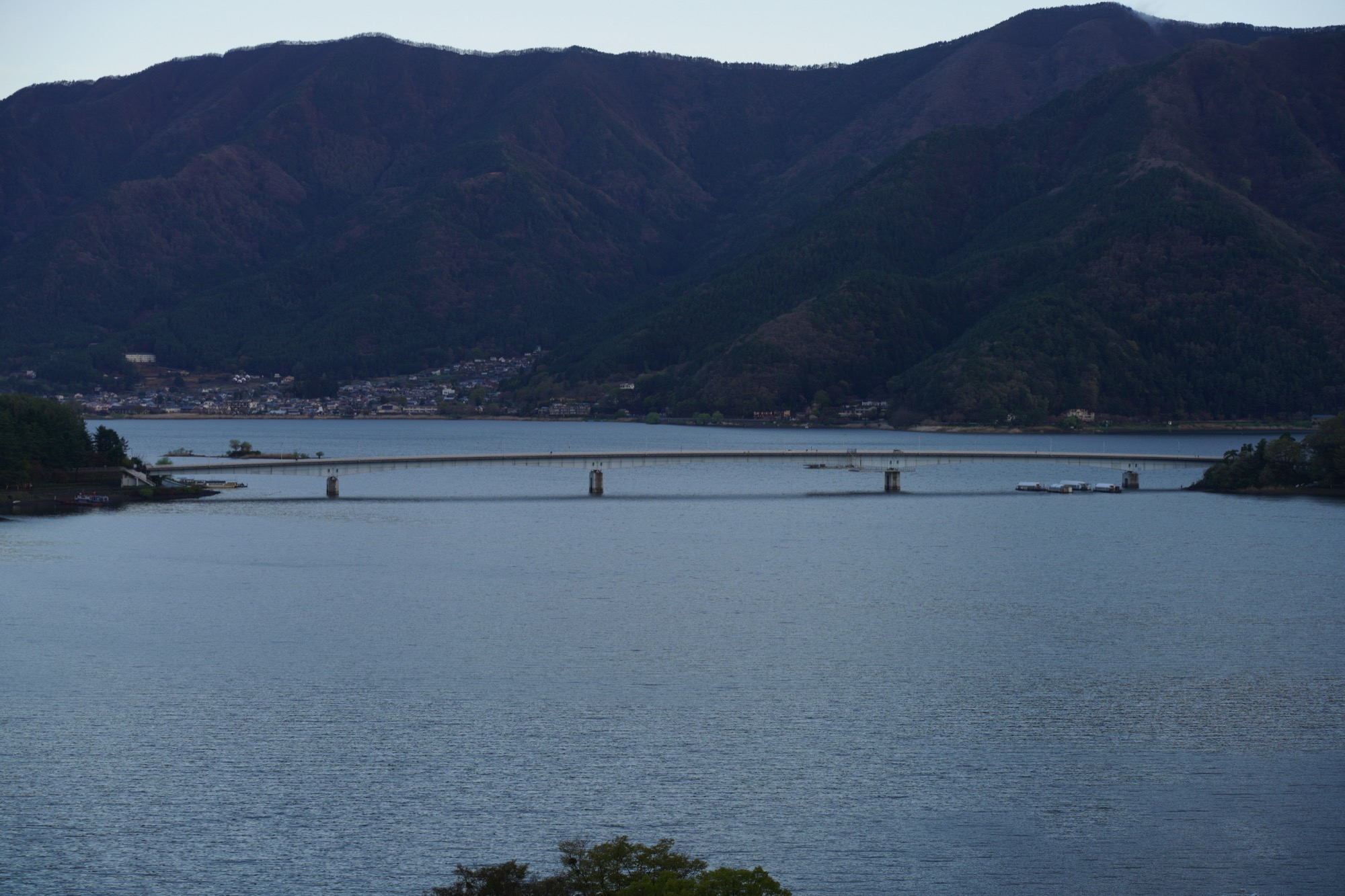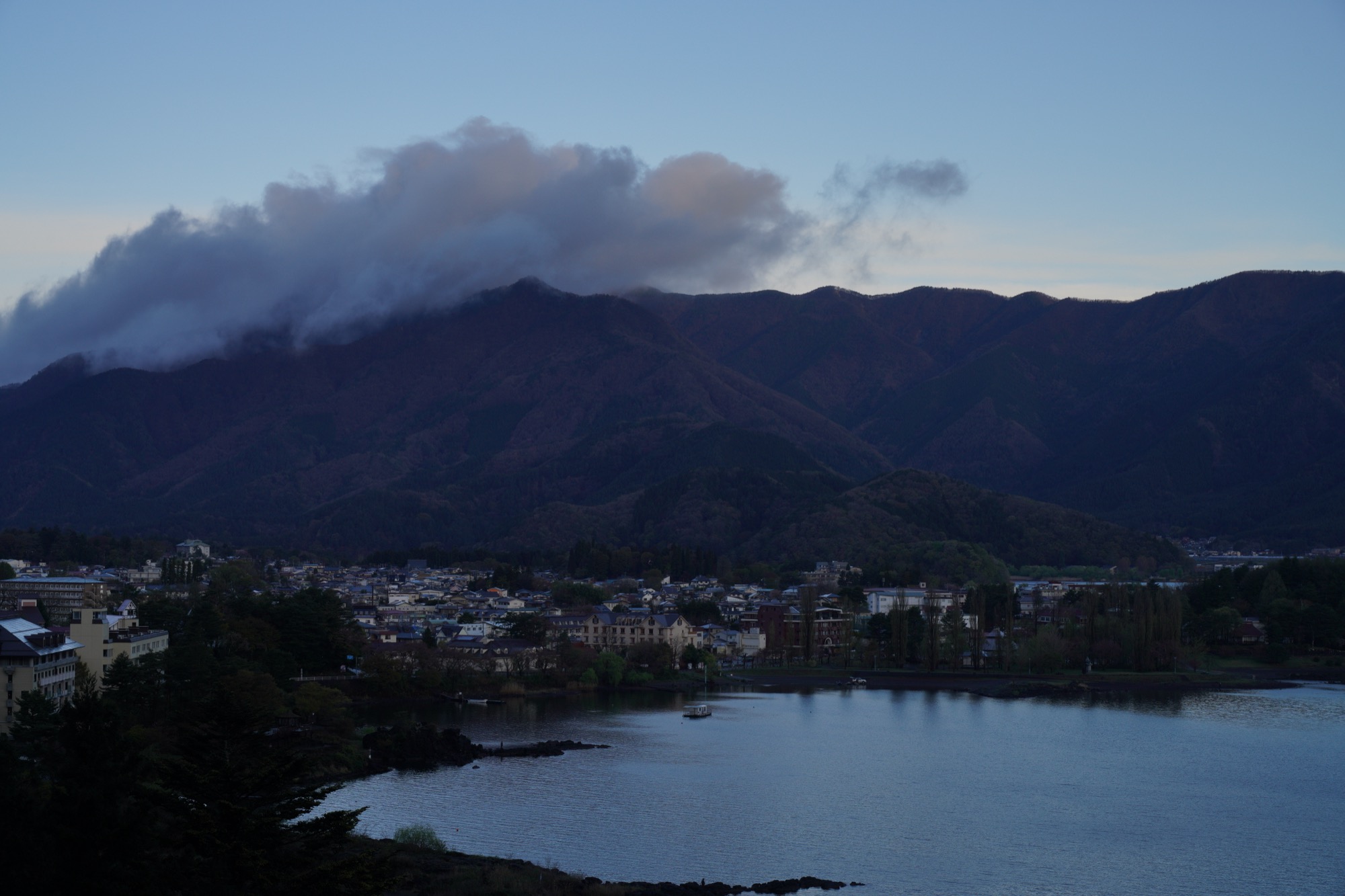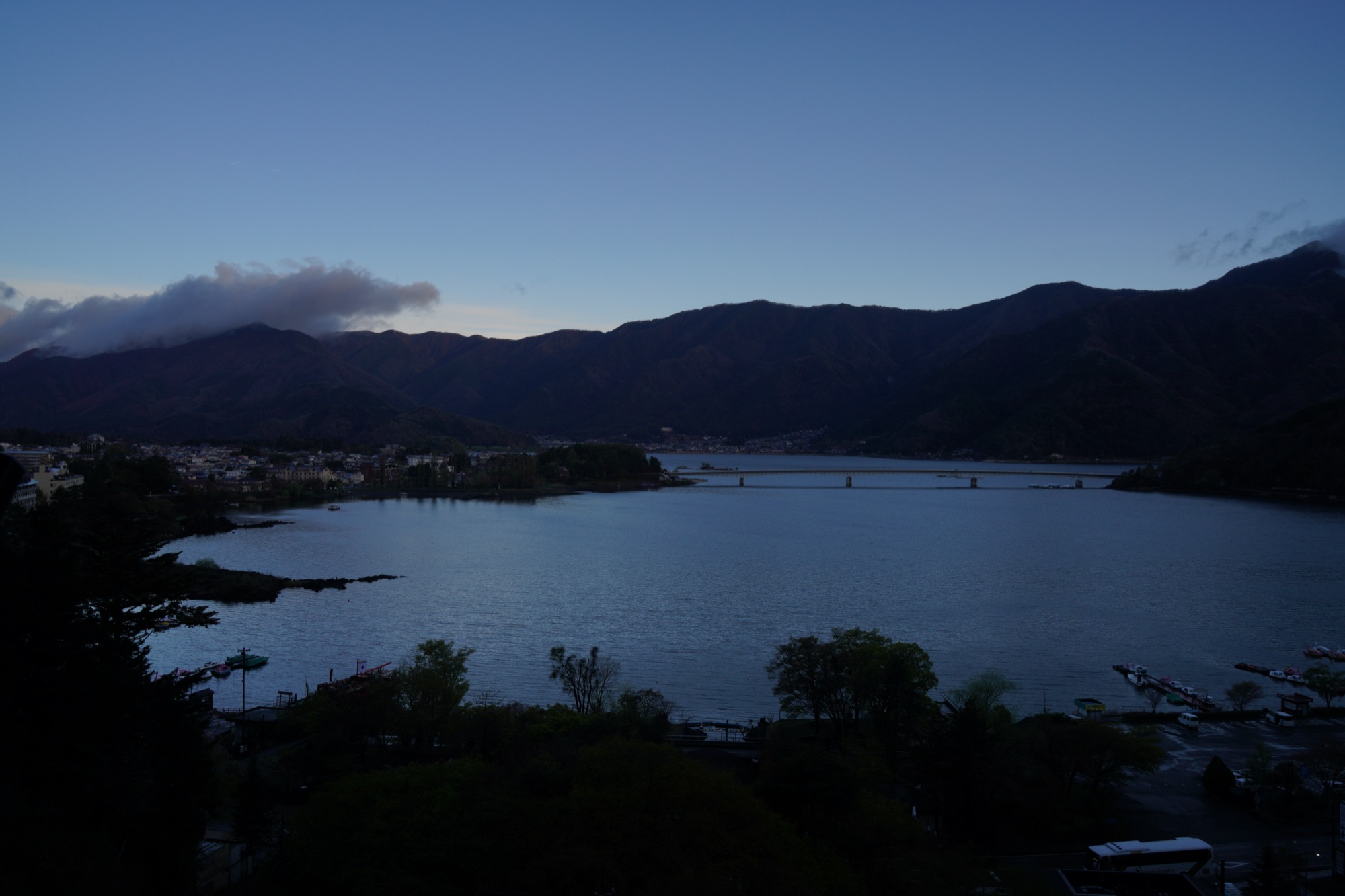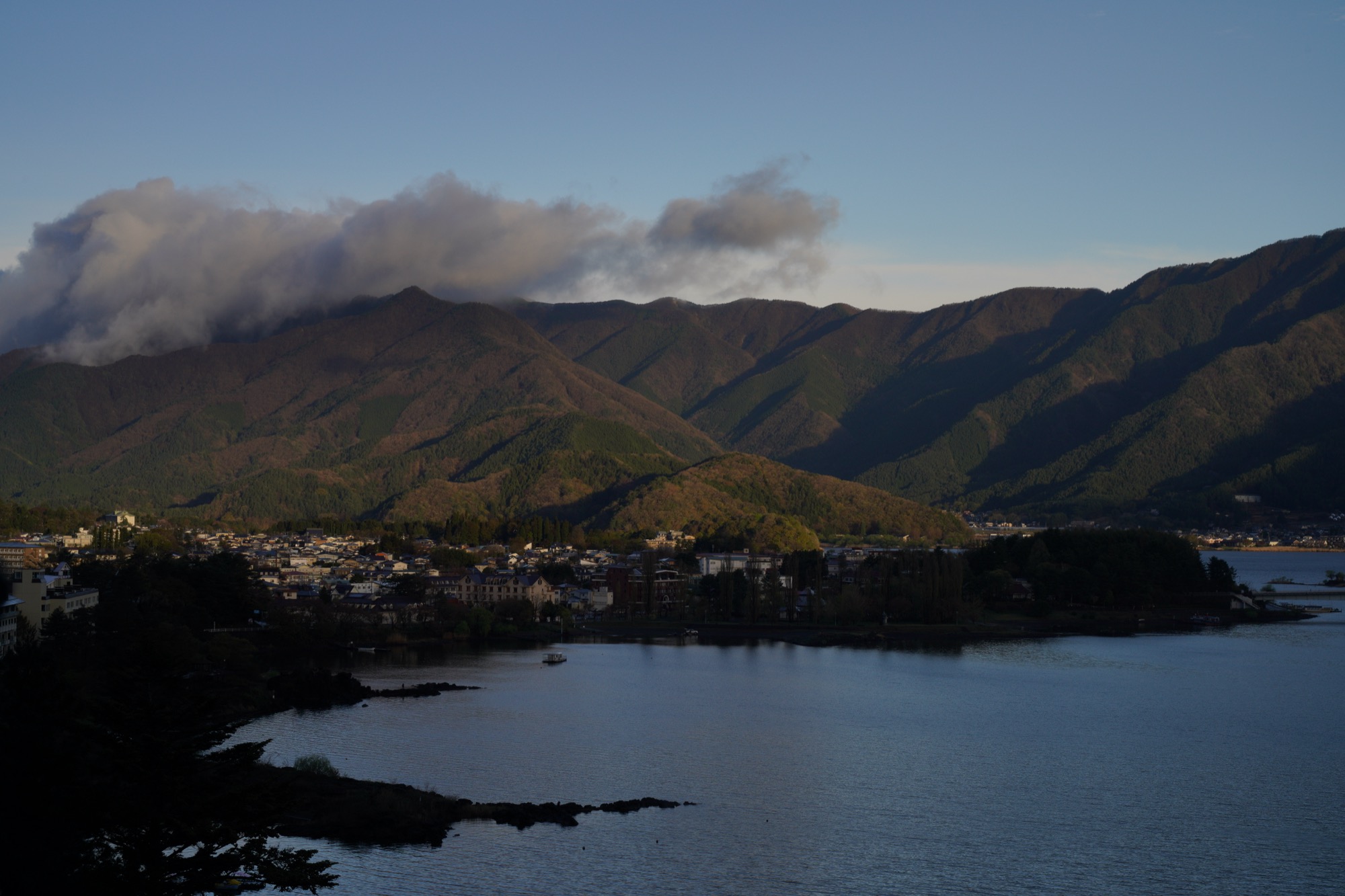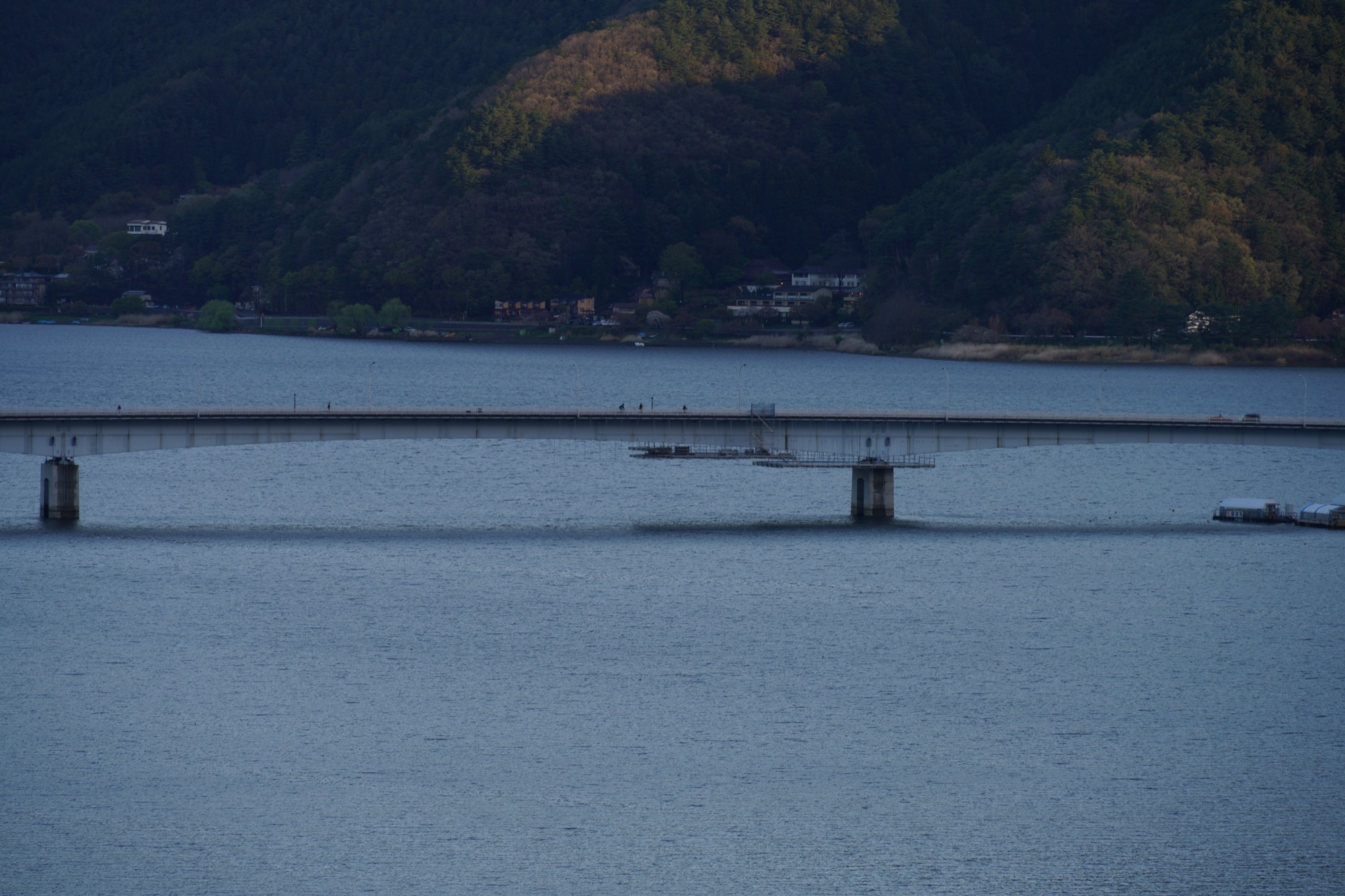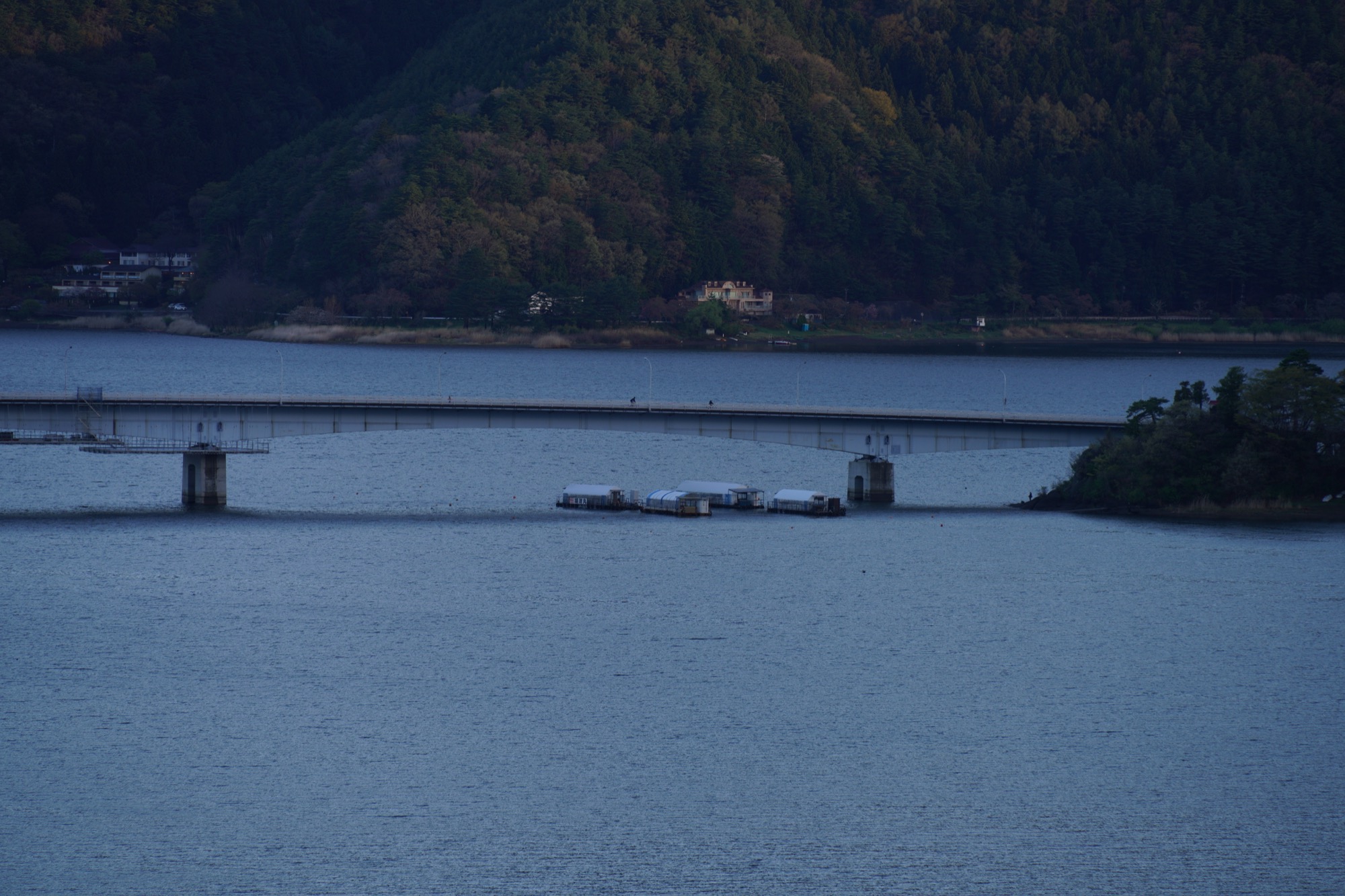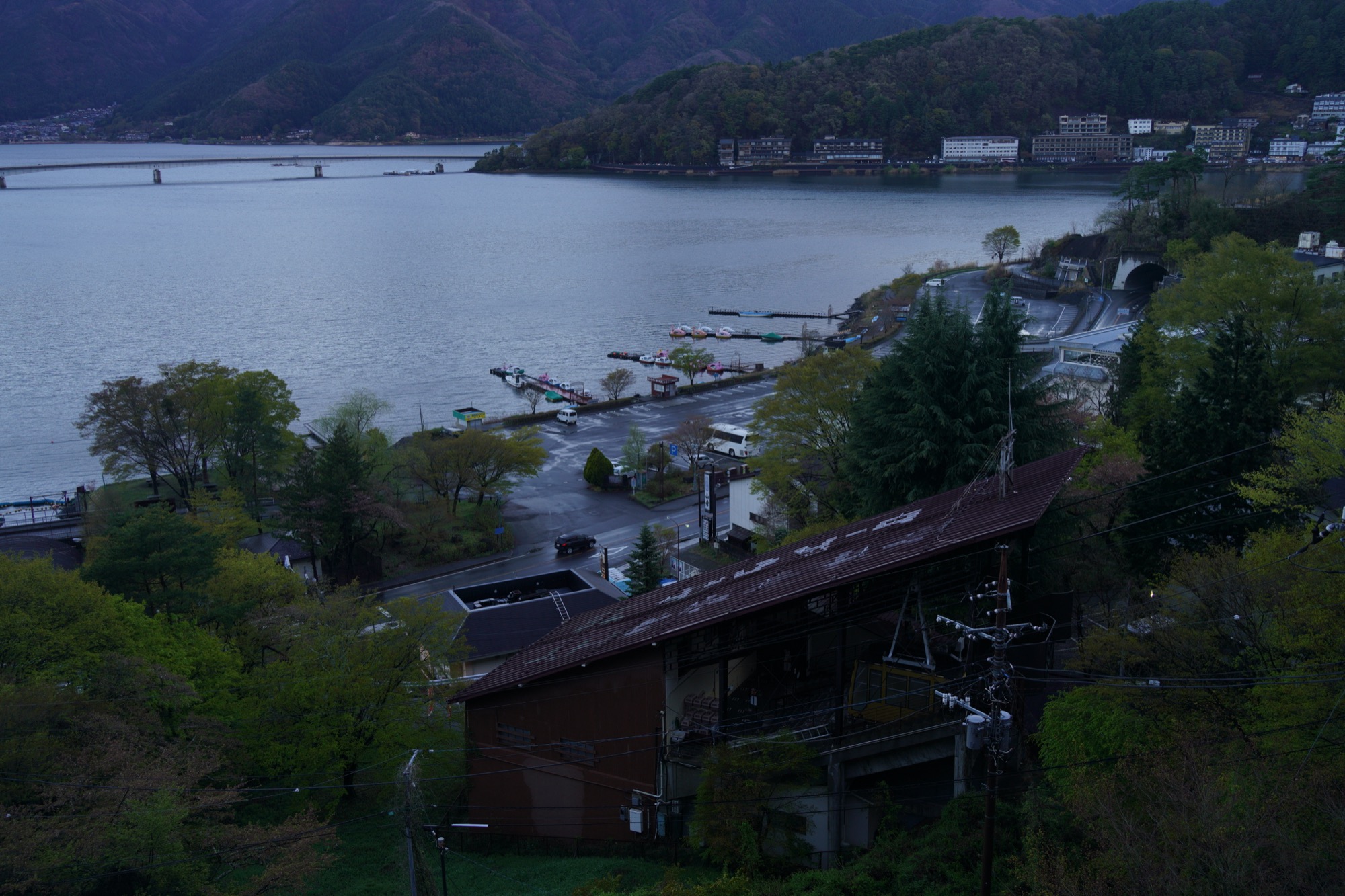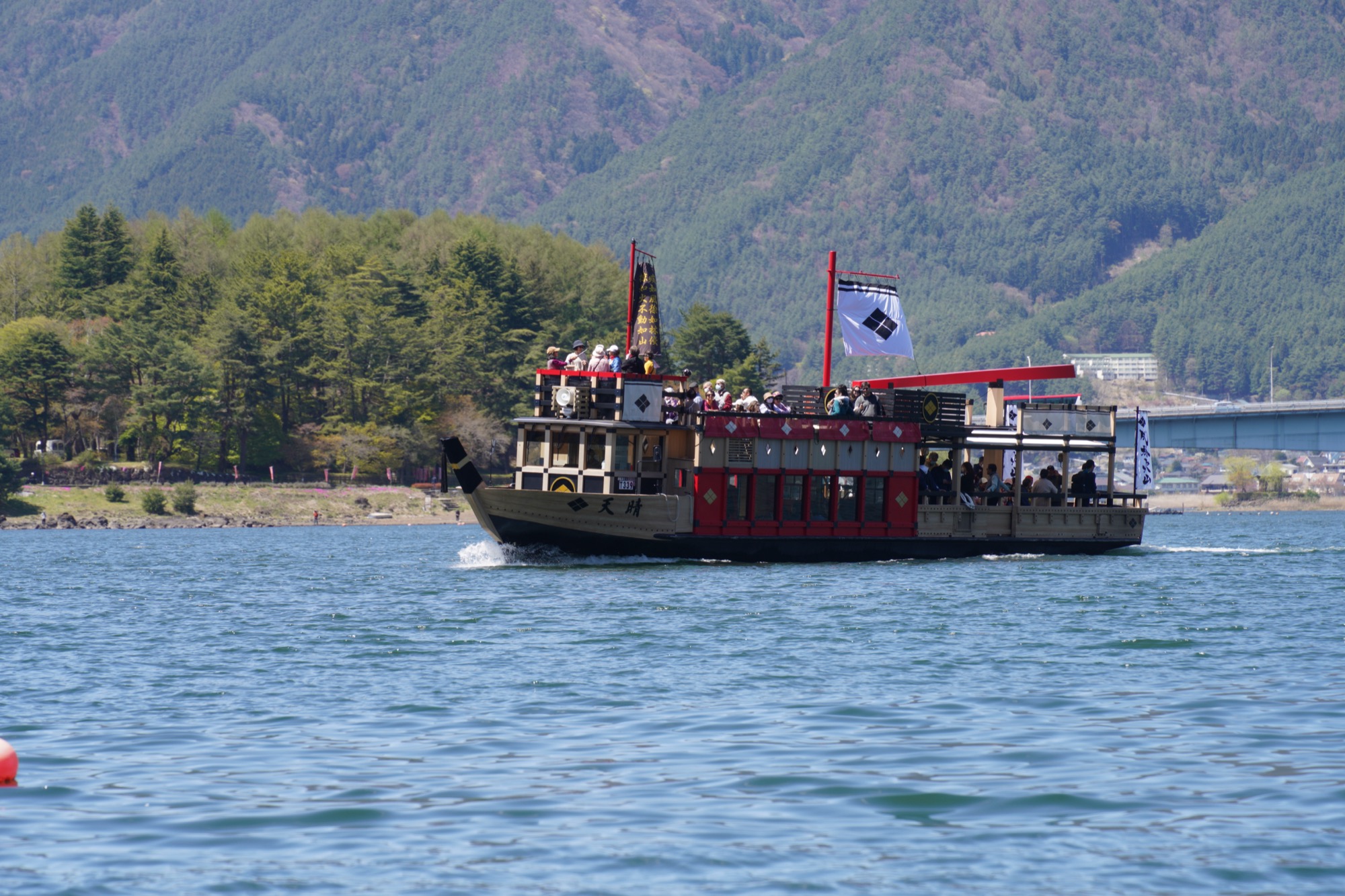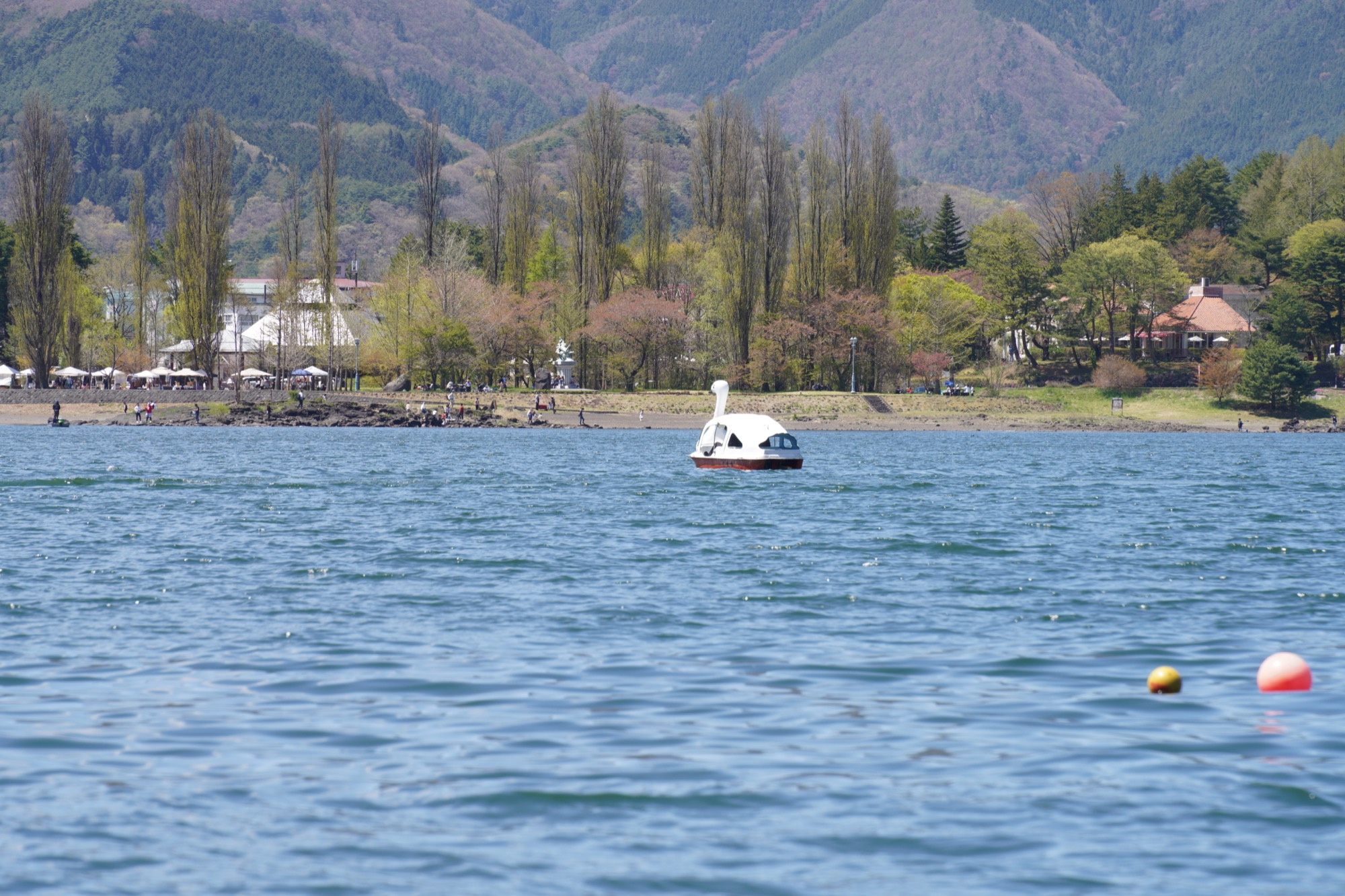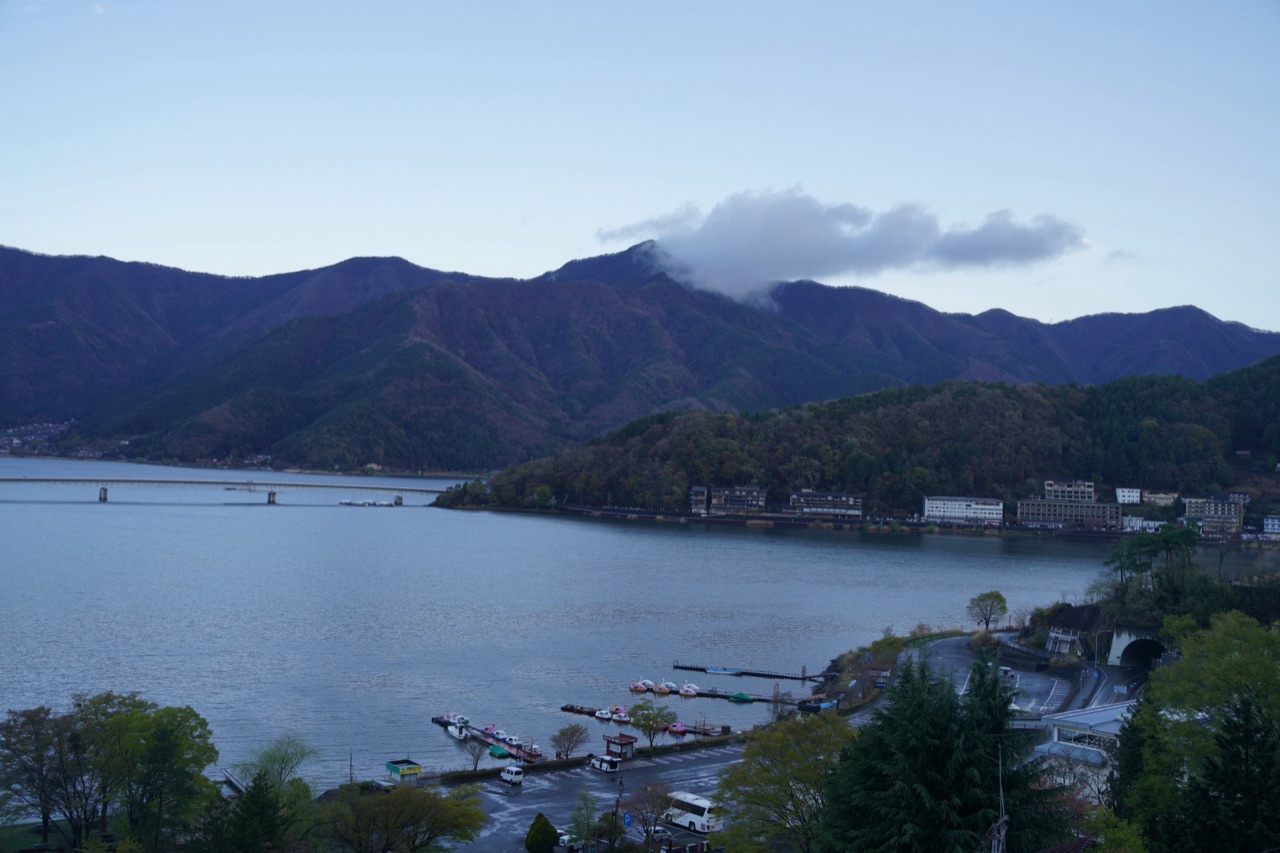
Lake Kawaguchi and the Kawaguchiko Ōhashi Bridge
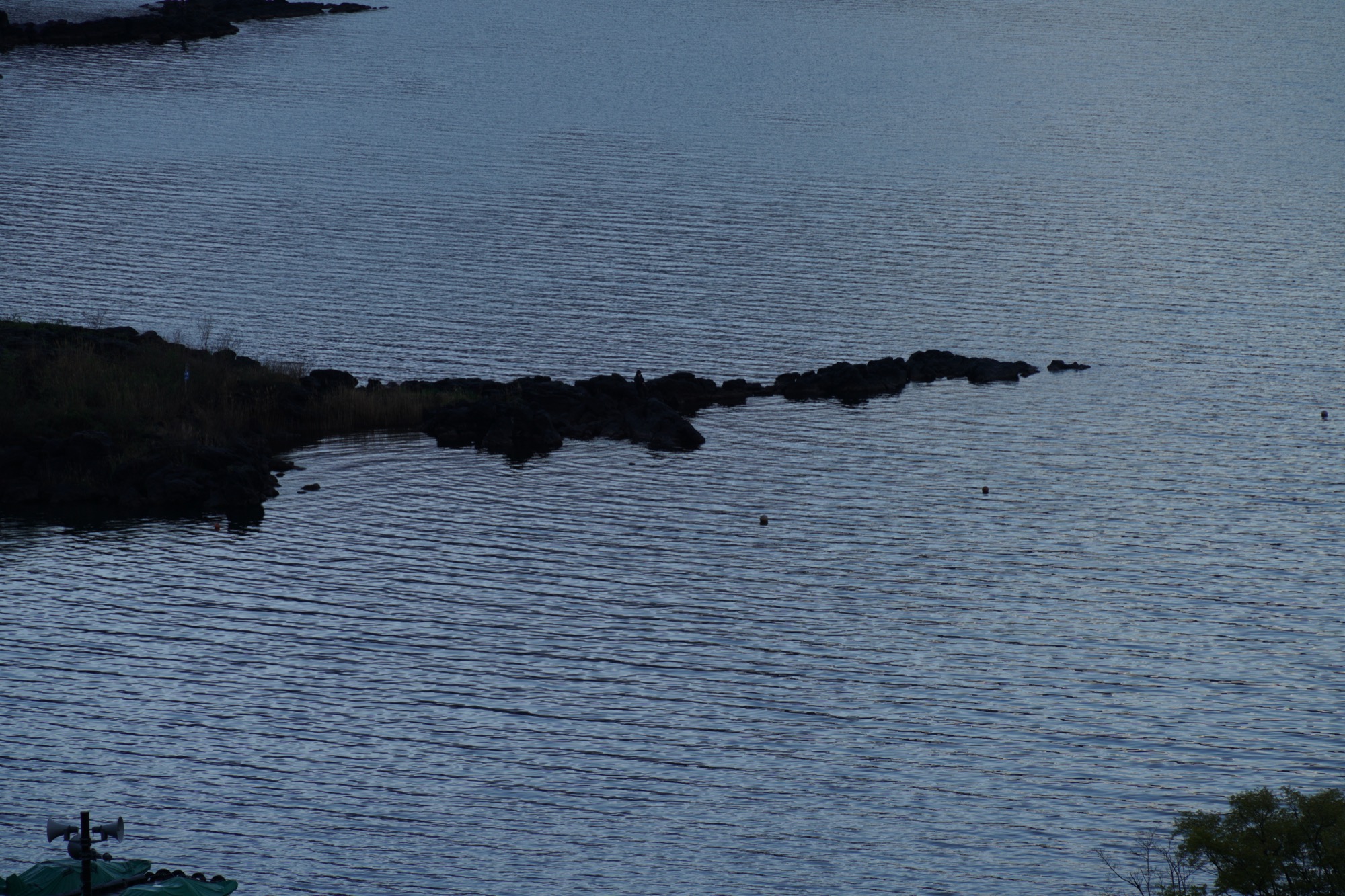
Lake Kawaguchi is one of the Fuji Five Lakes. The photographs were taken in the early morning near the Kawaguchiko Ōhashi Bridge; in the pale light before sunrise, the surrounding mountains lie quietly mirrored on a lake as still as glass.
Lake Kawaguchi is no mere scenic spot — it has played an important role in the history of Mt. Fuji worship. Among the ascetic practices of the Fujikō confraternities was the Uchi-Hakkai-meguri, a pilgrimage circuit of eight lakes and ponds at the mountain’s foot at which water austerities were performed, and Lake Kawaguchi stood at the heart of that circuit. Before their ascent, practitioners purified body and mind with cold-water ablutions in these lakes and only then turned toward the mountain. Hasegawa Kakugyō, revered as the founder of the Fujikō, is likewise said to have received divine revelation through austerities at the lakes of the northern foothills.
The history of the village of Kawaguchi on the lake’s northern shore reaches back further still. In 864 (Jōgan 6), in the Heian period, Mt. Fuji erupted violently, pouring great flows of lava from its northwestern flank. To pacify the eruption, the imperial court in the following year ordered a shrine to Asama Myōjin built in Yatsushiro District of Kai Province — held to be the origin of the present Kawaguchi Asama Shrine. Kawaguchi also commanded a key point on the Kamakura Ōkan (the Misaka route), the highway running from Kōfu over the Misaka Pass toward Kamakura, and flourished from early times as a post station. In time it became a base for the oshi — the priest-innkeepers of Mt. Fuji — forming a religious quarter where, at its height, some one hundred and forty pilgrim lodges stood side by side. The Kawaguchi trail that began here remained a principal route of worship-ascent until the early Edo period, when it gradually declined before the prosperity of the Yoshida trail.
The “inverted Fuji” reflected on the lake’s surface has been a subject of poetry and ukiyo-e since ancient times, shaping how the Japanese have beheld the mountain. As a sacred site of faith and a wellspring of art, Lake Kawaguchi is inscribed as a component of the World Cultural Heritage “Fujisan, sacred place and source of artistic inspiration.”