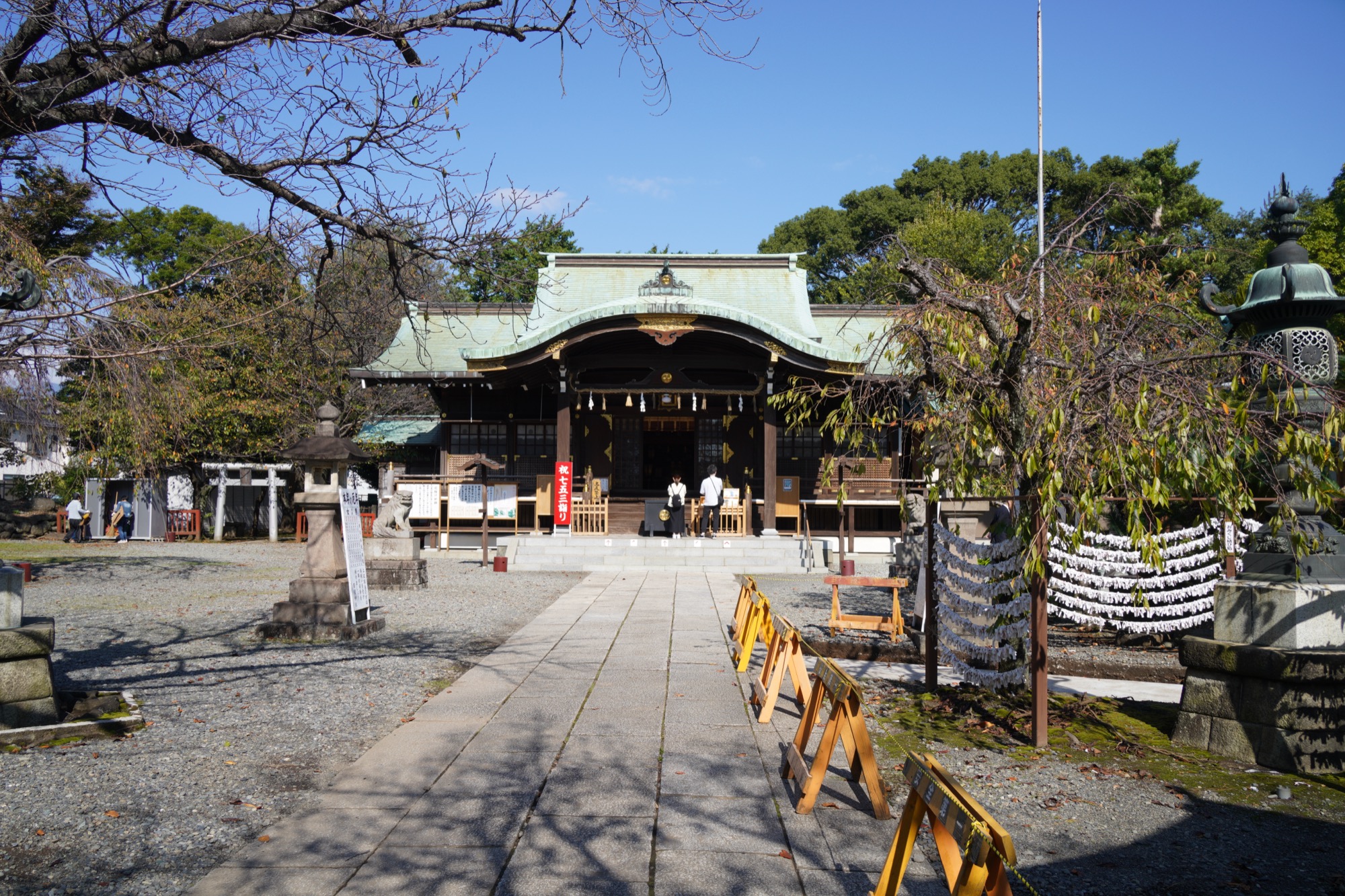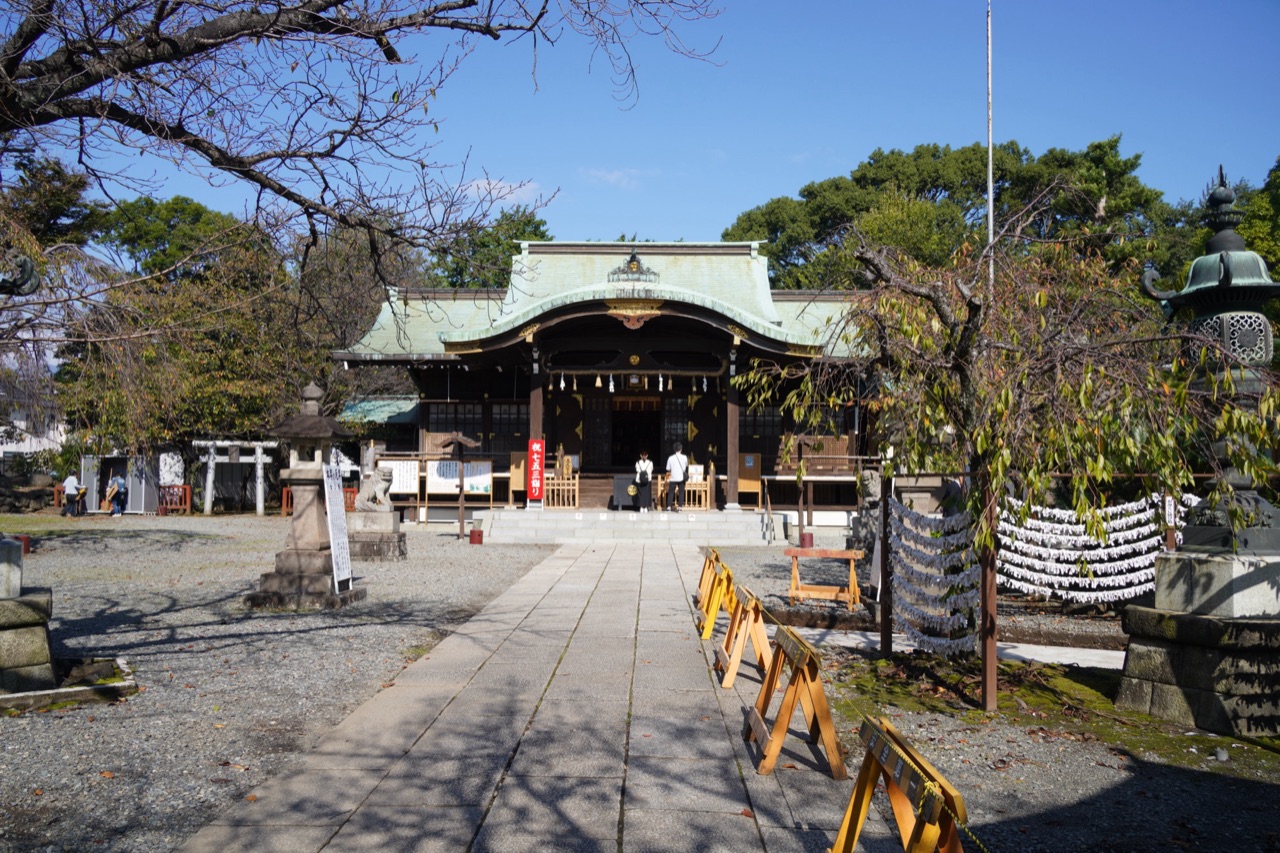
Hie Shrine, Numazu
The Hie Shrine in Numazu, Shizuoka Prefecture, recorded in pre-Meiji documents as the Hie Sannō-sha, played a pivotal role in the religious sphere of southern Mt. Fuji — the omote-guchi — within the systematic Fuji-mine shugyō, the peak ascetic practice organized by the Murayama Shugendō.
The yamabushi of the three Murayama temples — Tsujinobō, Ikenisaibō, and Daikyōbō — set out from Murayama on the twelfth day of the seventh lunar month, underwent severe ascetic training at Fuji’s summit, and descended on the third day of the eighth month. They then entered the fumoto-meguri, the round of the foothills: descending by the Suyama trail, they performed the hashiwatashi rite at Kanazawa (Susono), held services and lodged at the Jūnisho Gongen of Senpuku (Nagaizumi) and the Kumano Gongen of Ōbatake (Numazu), and arrived on the fifteenth at the Hie Sannō-sha in Numazu, where they performed rites. On the sixteenth they passed through Yoshiwara and the Sugita Worship Stone before returning to Murayama. This twenty-six-day pilgrimage placed Numazu near the climax — the threshold where spiritual power was delivered back to the foothills.
The deity of Sannō was, moreover, woven into the sacred geography of the summit itself. According to the Fujisan Daiengi Nukigaki (1560), a record of the Tōsen-in temple from the warring states period, the fifth of the eight peaks — the “eight petals” — crowning Mt. Fuji was assigned to Sannō Daigongen, whose original Buddhist form was the bodhisattva Maitreya. The god enshrined at the Hie Sannō-sha of Numazu thus occupied a place within the mandala-like world of the summit, and the choice of this shrine as a station of the peak asceticism rested on a religious necessity that went beyond mere geographic convenience.
At each station the practitioners performed fudauchi, the nailing of plaques inscribed with Buddhist names and divine titles, marked with the ascetic’s monastic name, onto the structures of the shrine or temple. The act extended the spiritual power accumulated on Mt. Fuji to the surrounding territory, saving and protecting that land. The Hie Shrine in Numazu held one of the principal positions within this circle of spiritual guardianship.
Numazu also served as the disembarkation point for pilgrims arriving by sea across Suruga Bay. From the medieval into the warring states period, pilgrims arriving by boat were many, landing at the harbors of Yoshiwara and Ōoka — in the area of present-day Numazu — before setting out for Mt. Fuji. A document from 1554 (Tenbun 23) records that a dōja shōnin tonya — an agency for pilgrim merchants — had been established at the Yoshiwara harbor, serving as a hub where seaborne pilgrims found lodging and arranged for their luggage. A 1568 (Eiroku 11) edict of Imagawa Ujizane exempted Fuji pilgrims traveling under a guide from tolls at the ship barriers between Ejiri and Kanbara — evidence that the pilgrims passing through Numazu and Mishima moved under the organized protection and administration of the territorial lords.
The Hie Shrine in Numazu served as the gateway for Fuji pilgrims setting out for the mountain, and simultaneously as the threshold through which yamabushi carried the spiritual power of their training back to the villages. As an indispensable sanctuary within the organized ascetic system of the Murayama Shugendō, it has long fulfilled the role of binding together the sacred power of Fuji’s summit and the daily life of those who dwelt at its base.