Fuji-kō Festival of Shintō Fusō-kyō
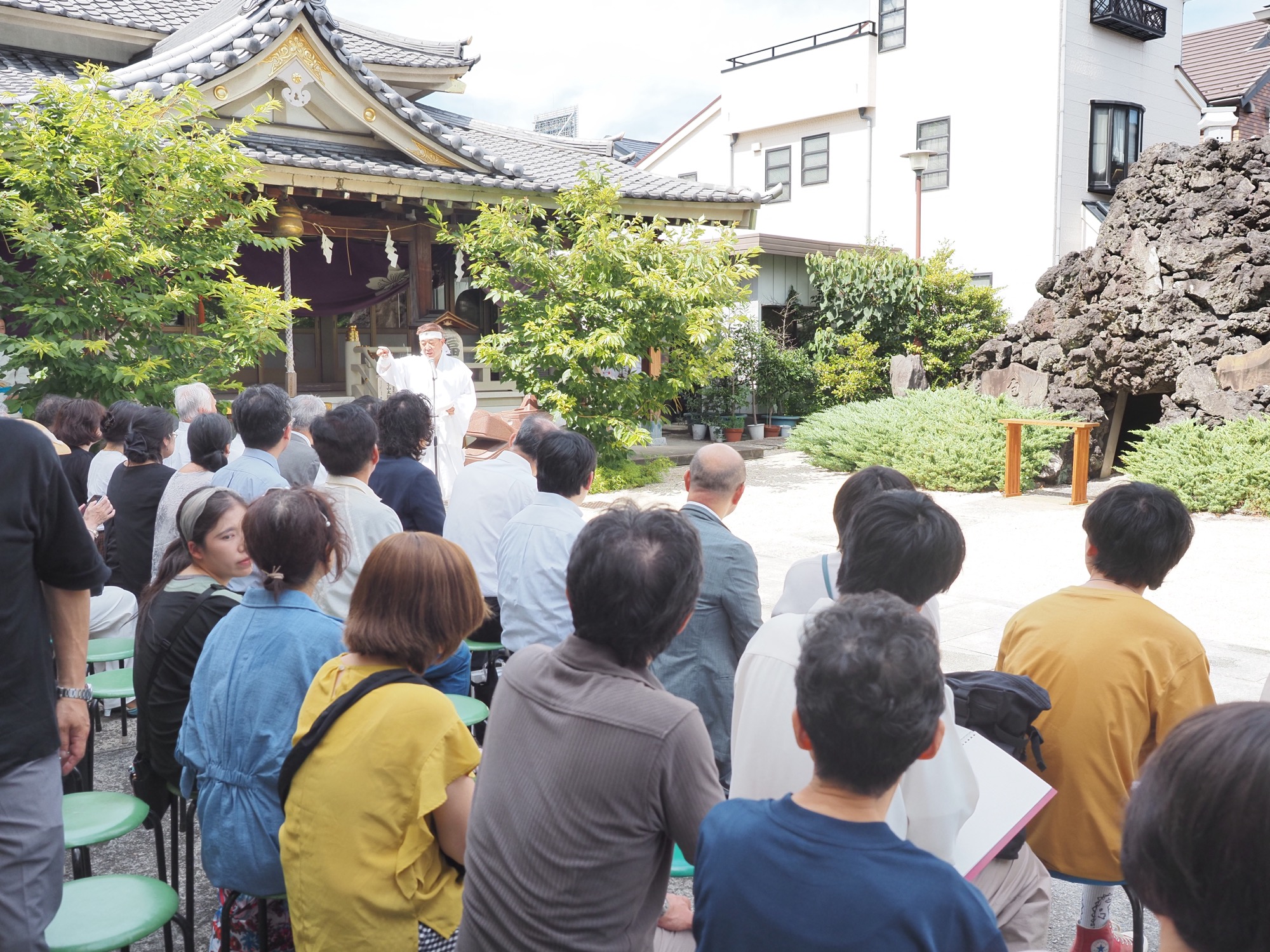
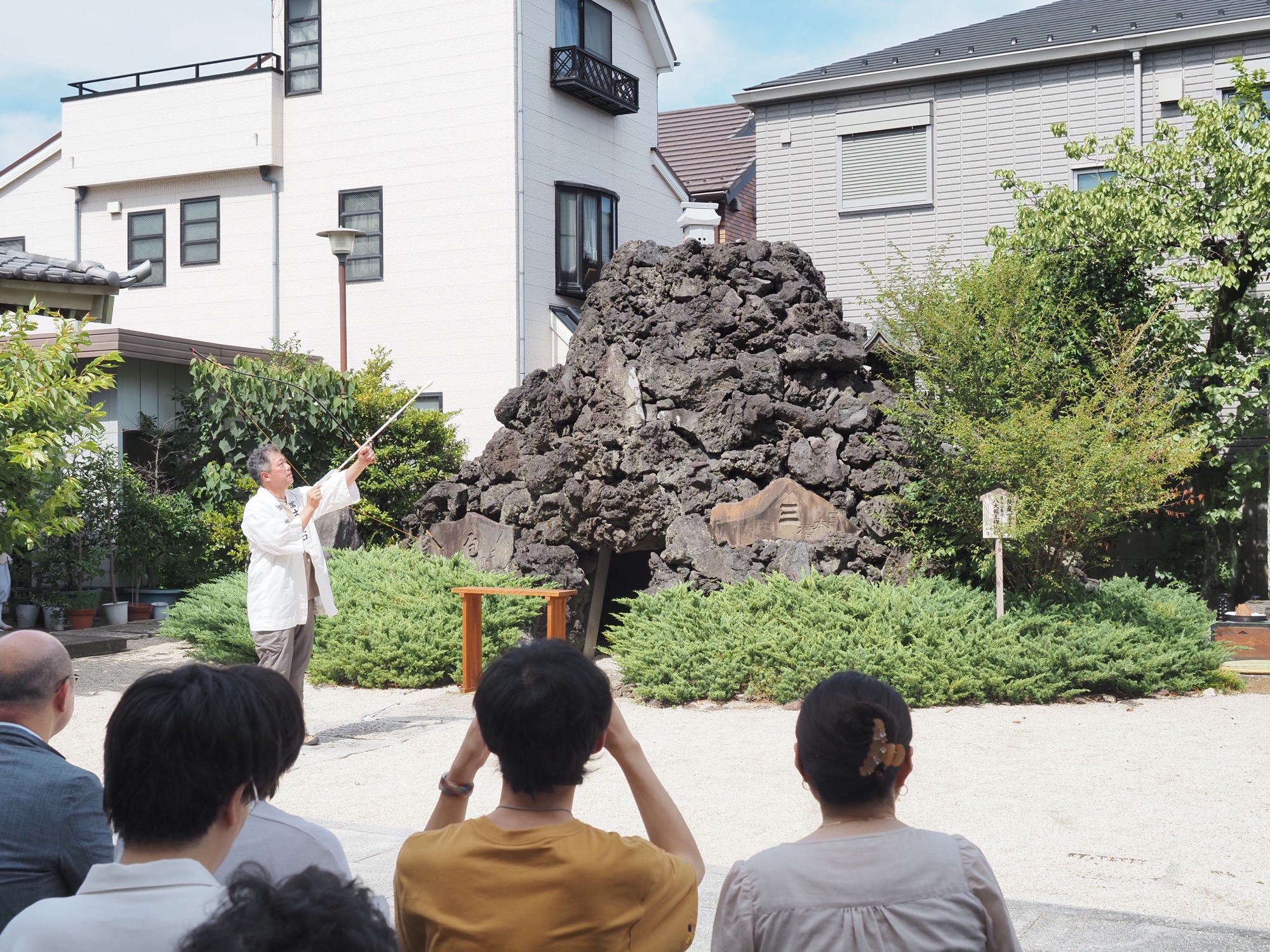
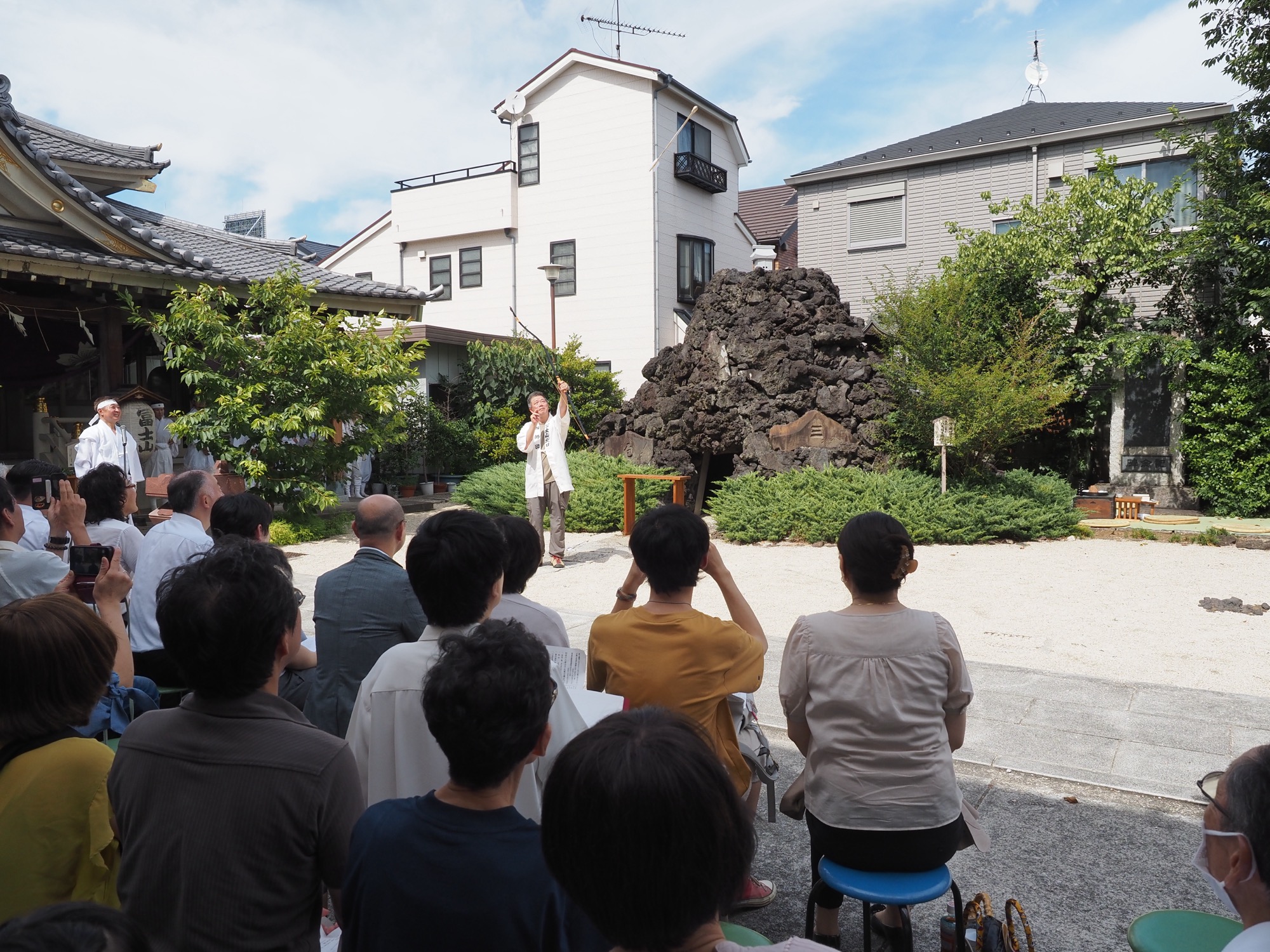
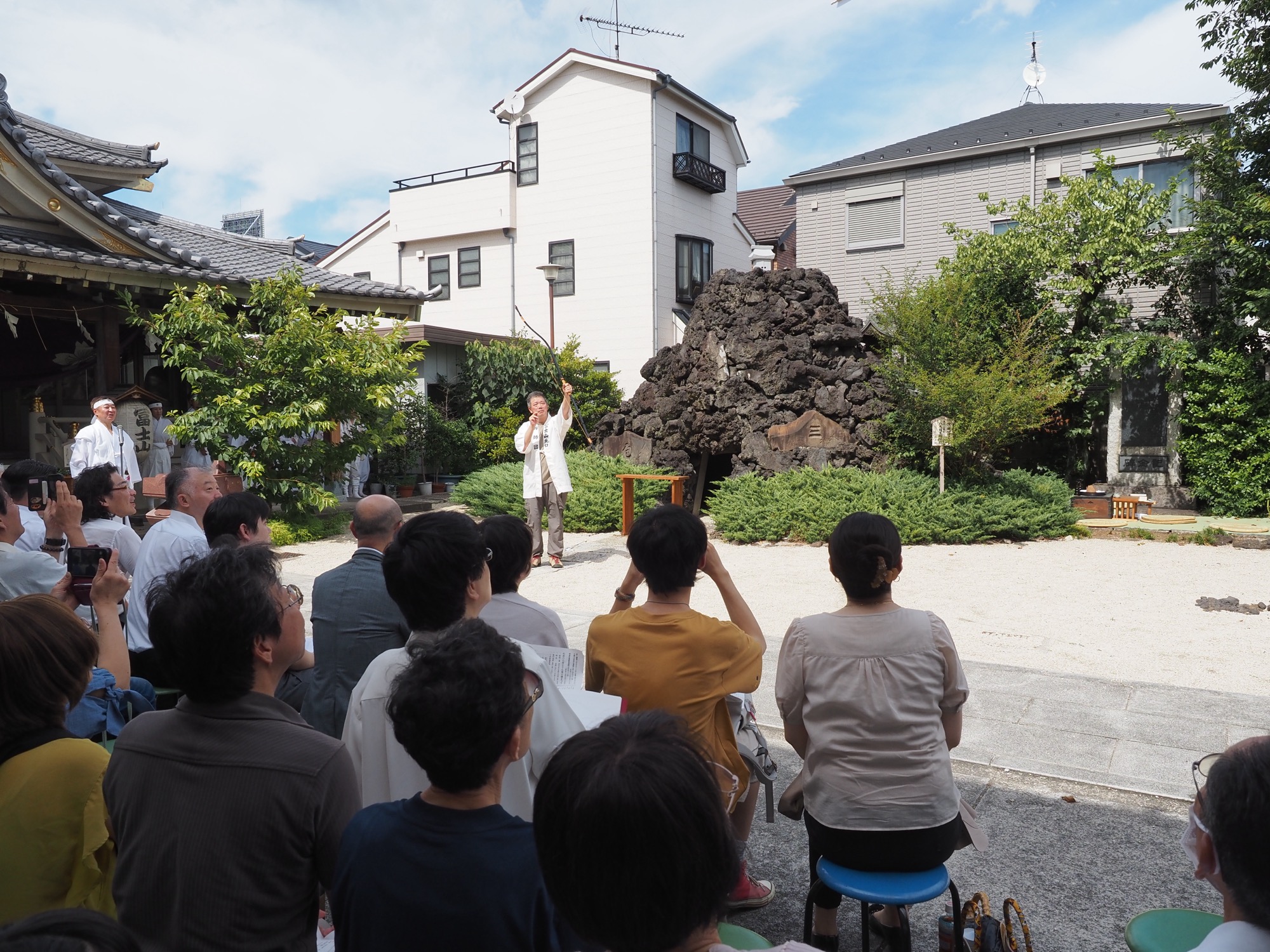
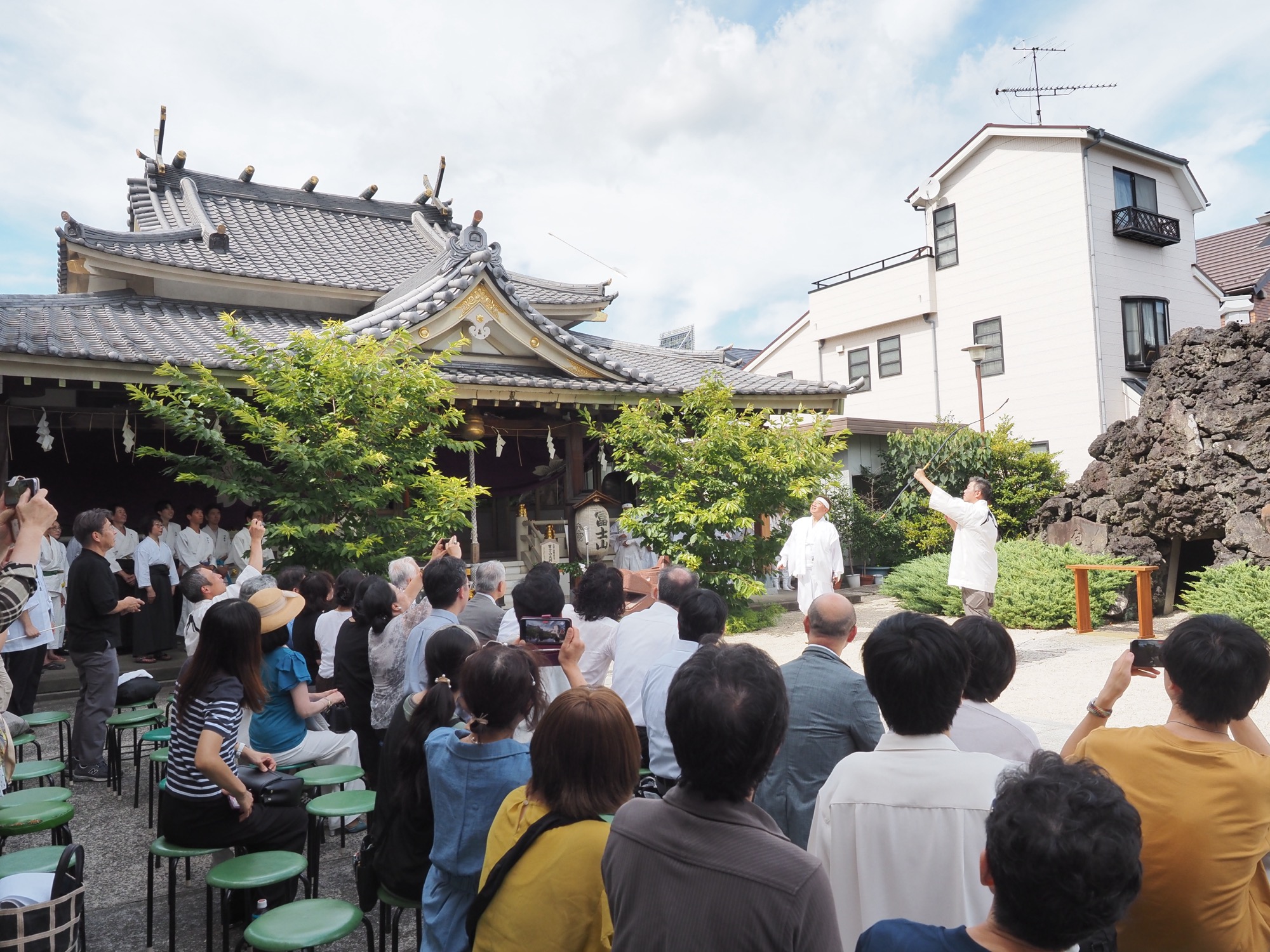
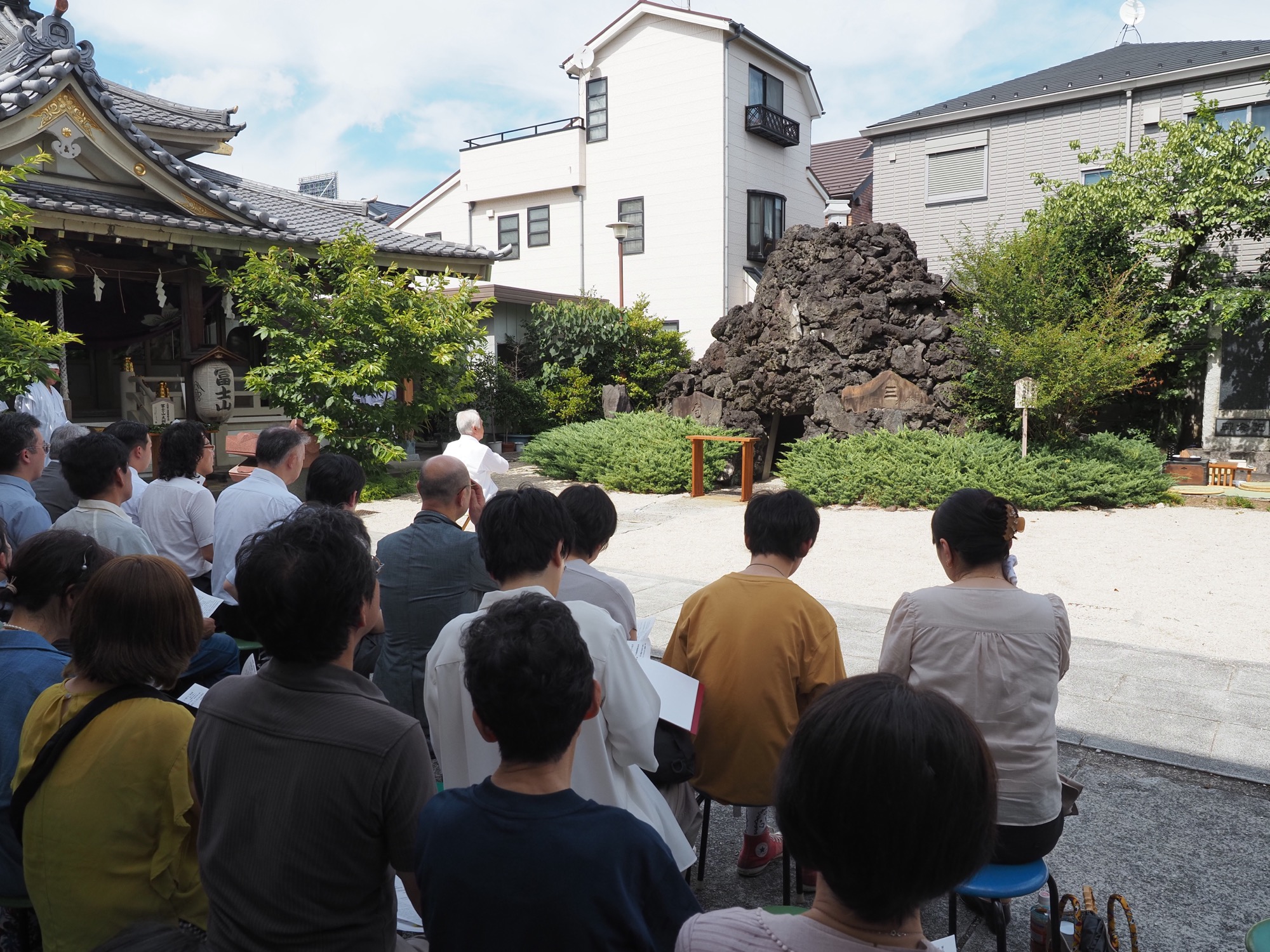
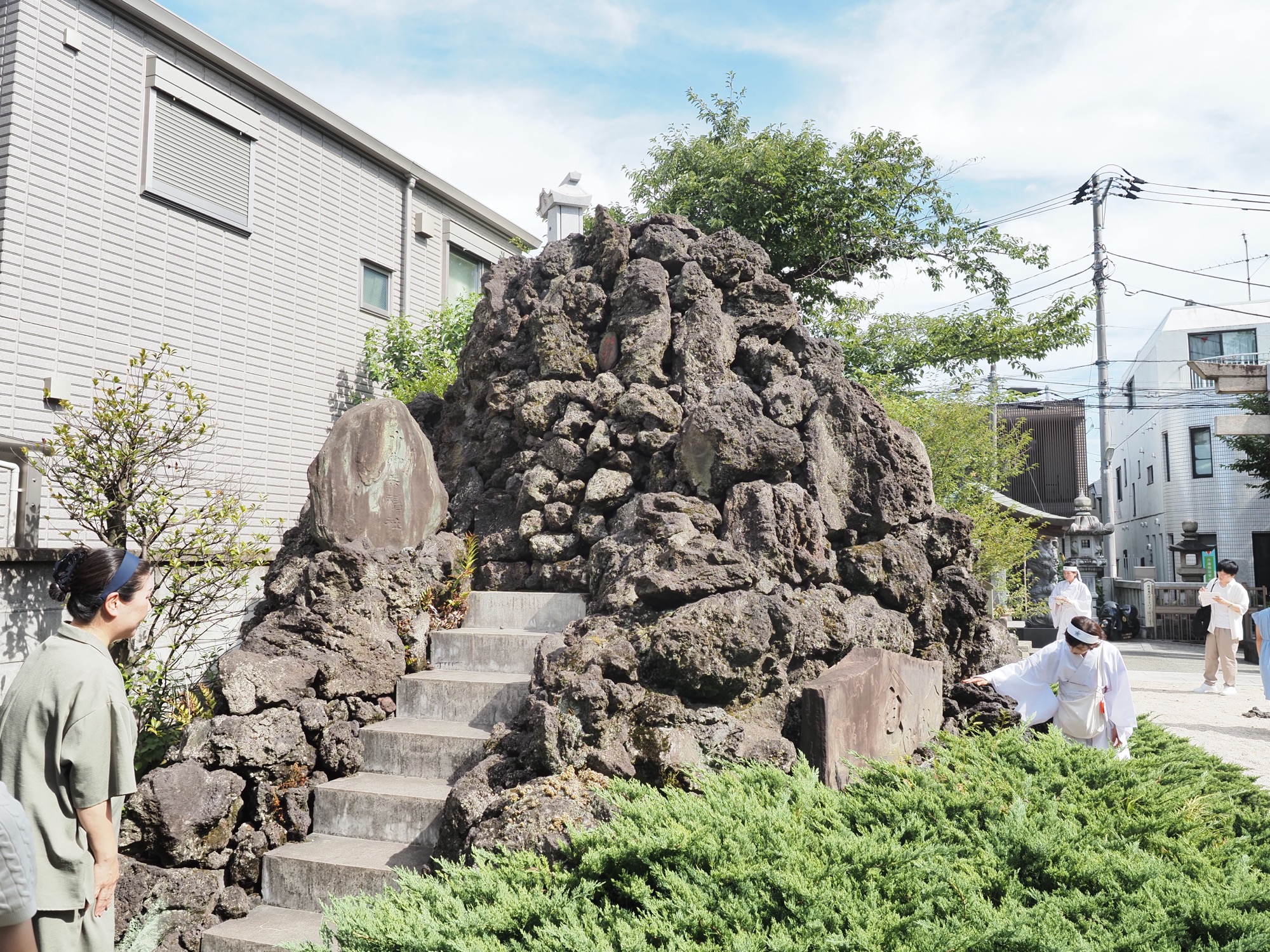
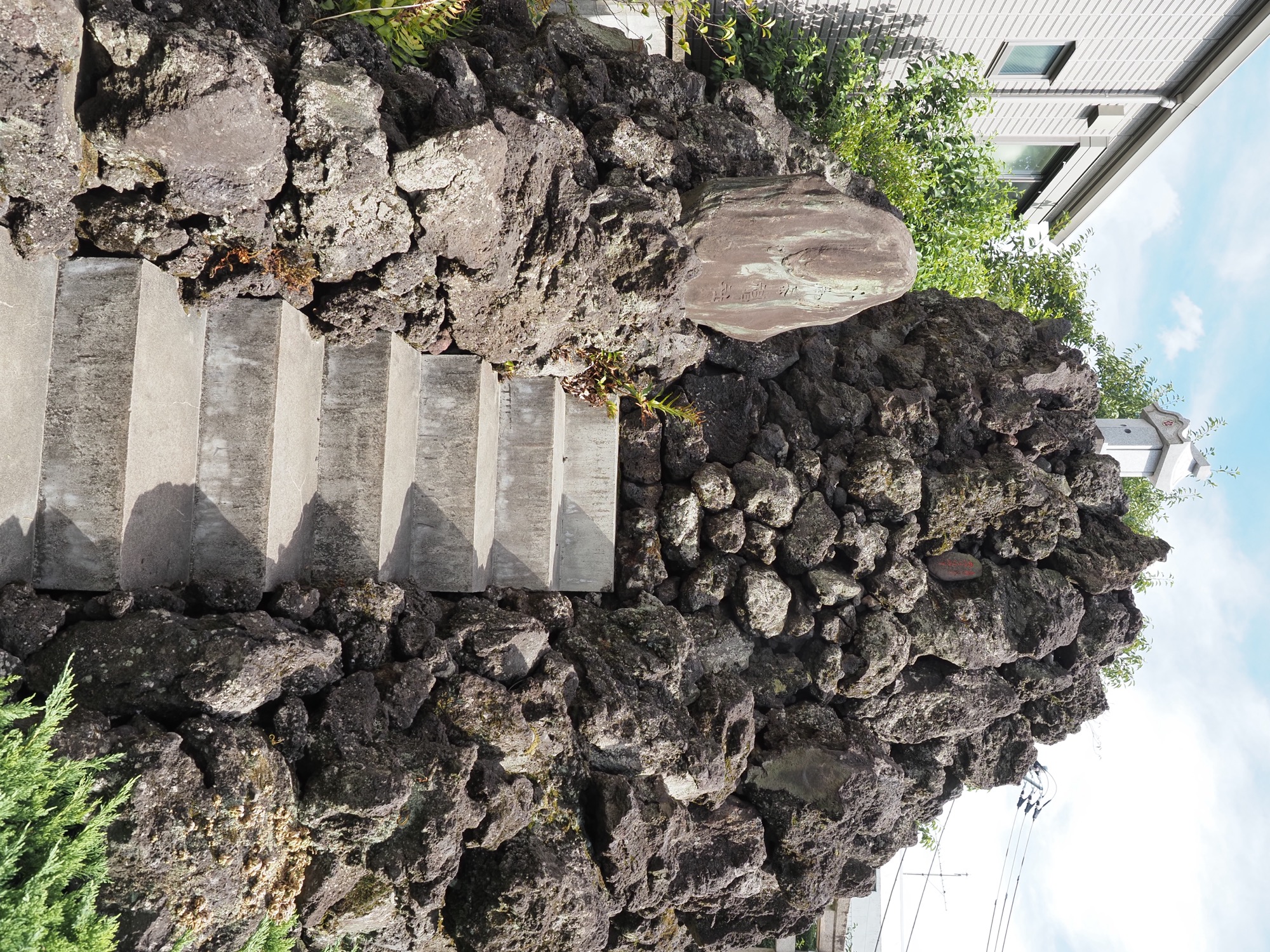
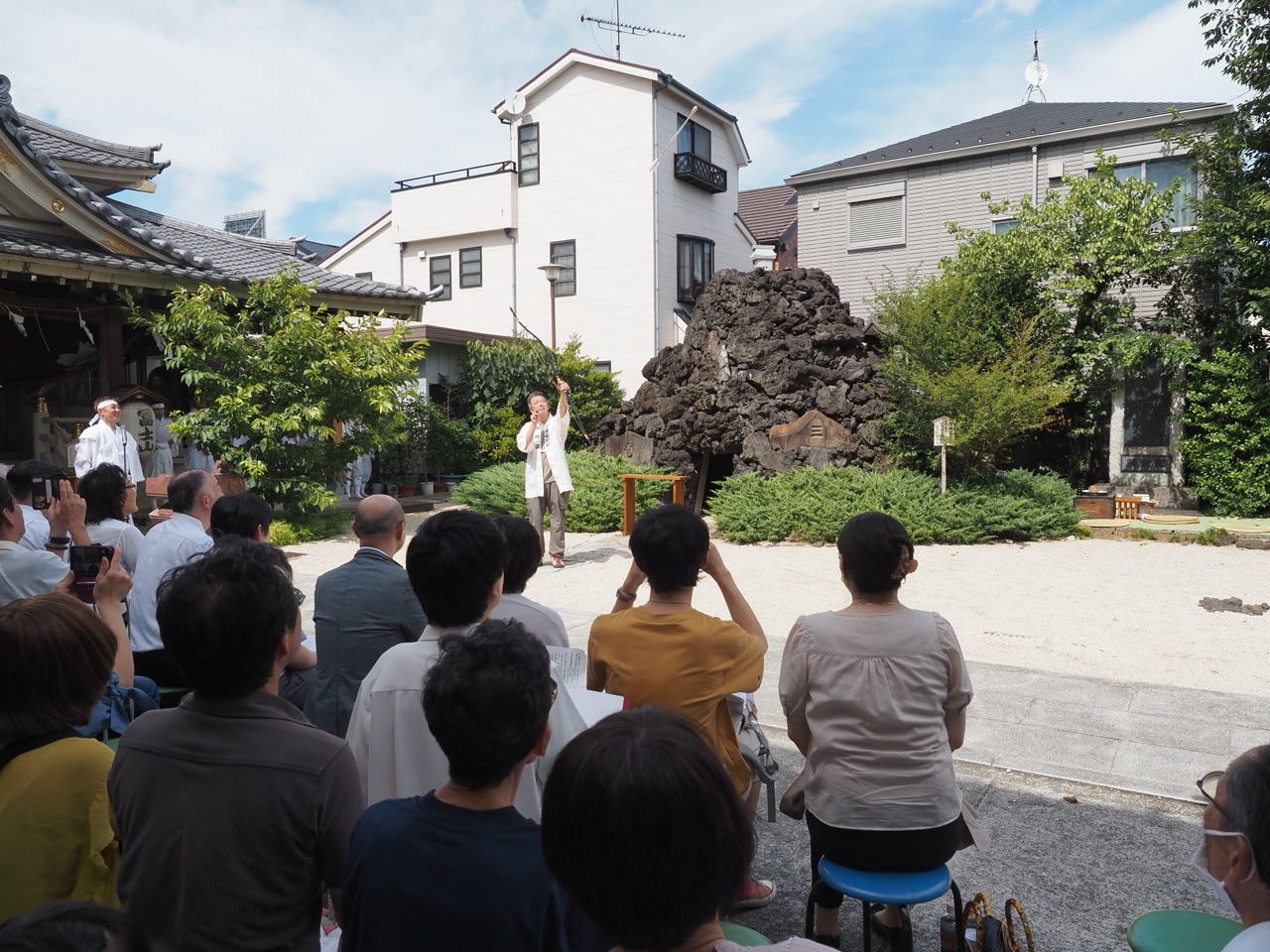
The summer Fuji-kō festival of the Shintō Fusō-kyō. A scene from the Oyamabiraki — the Mountain-Opening Rite — held in July in response to the official opening of Mt. Fuji’s climbing season. At the heart of the grounds rises the fujizuka, a small mound of stacked volcanic rock shaped to imitate Mt. Fuji itself; around it, white-robed teachers and kō members carry out the rites of simulated ascent.
Fusō-kyō is a Shinto religious body founded in 1873 (Meiji 6) by Shishino Nakaba, who unified the various branches of the Fuji-kō confraternities. Shishino served as head priest of both Fujisan Hongū Sengen Taisha and Kitaguchi Hongū Fuji Sengen Shrine — a “great restorer” who reorganised the Edo-era Fuji-kō tradition within the framework of modern Shinto. He established the Tenpaisho, the place of worship at Mt. Fuji’s summit, and oversaw renamings such as Yakushigatake to Kusushidake to remove Buddhist place-names from the mountain. The organisation gained independent recognition as Fusō-kyō in 1882 (Meiji 15), becoming one of the thirteen officially recognised sects of Shinto.
The fujizuka in the grounds is not a mere ornament: it is a sacred precinct invested with the same religious standing as Mt. Fuji itself. In the Edo period, Fuji-kō confraternities across Japan built such mounds for those who could not undertake the actual climb — women, the elderly, children — because of physical limits, distance, or the rule of female prohibition on the mountain. Believers held that to circle the mound while chanting rokkon shōjō — “purification of the six senses” — and to ascend it brought the same worldly merit as reaching the real summit. On the slopes of the mound stand stone markers in the form of the Komitake Shrine and of the Eboshi Rock where Jikigyō Miroku entered his self-imposed death; at the summit, a small shrine receives the worship of Mt. Fuji’s deity (the great Asama) and the three deities of creation. Within a single small mound, the entire devotional structure of Mt. Fuji is concentrated.
The divine name invoked in the rites is Sanmei-tō-Kaizan — a unique theological expression carried over from the Fuji-kō tradition, meaning that the threefold light of sun, moon, and stars and the source of life are one with Mt. Fuji itself. The prayers seek peace for the realm, good harvest, and household safety. With the move toward Shinto purification after the Meiji Restoration, devotion to the Zōka sanshin — the three creator deities Amenominakanushi, Takamimusubi, and Kamimusubi — came to be especially emphasised. The Edo-era Fuji-kō chants that intermixed Shinto and Buddhist elements were left behind, and the rites took on a purified Shinto form; yet the core of the spirit still holds Jikigyō Miroku’s final four truths — honesty, mercy, compassion, sufficiency — at its centre.
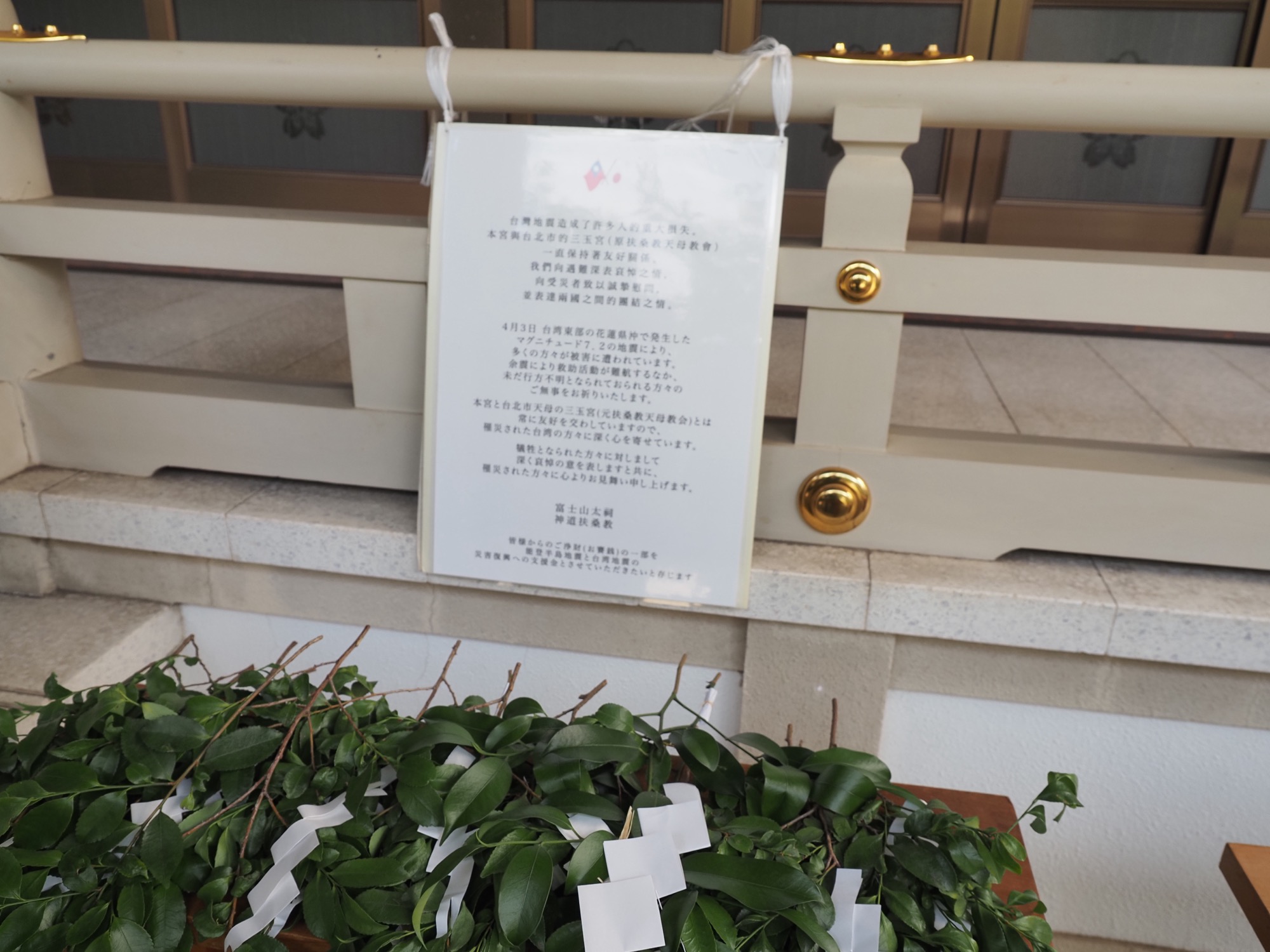
The photographs were taken on 27 July 2025. Sermons and prayers offered by the teachers; kō members raising their eyes to the fujizuka in worship; the laurel branches, offerings, and notice plaque set before the prayer hall; and the quiet expanse of the mound after the people have withdrawn. In a corner of the grounds, enclosed by the surrounding houses, the lineage of Mt. Fuji faith — passed down for more than a thousand years — breathes on, steadily, within the light of a summer afternoon.