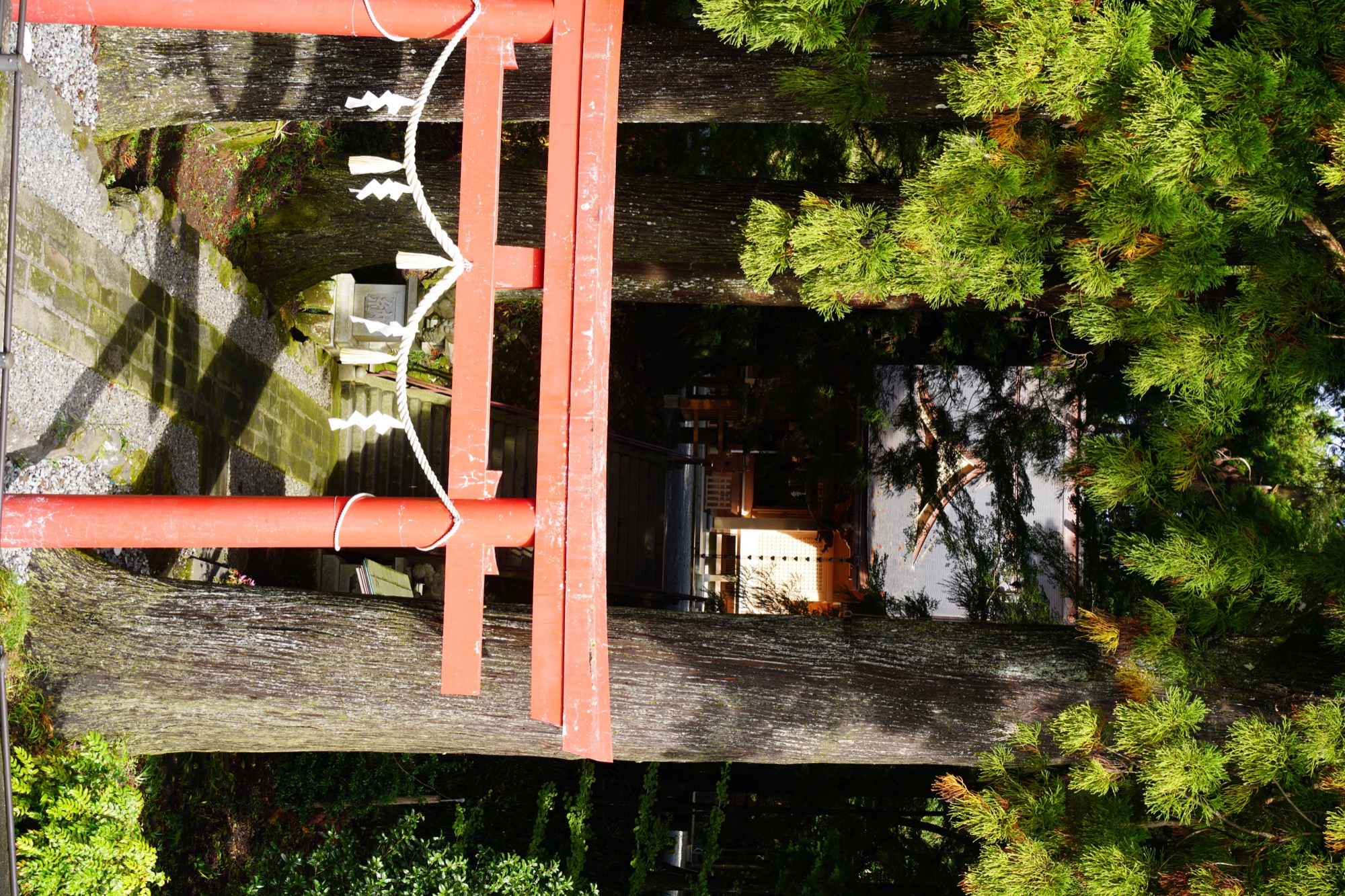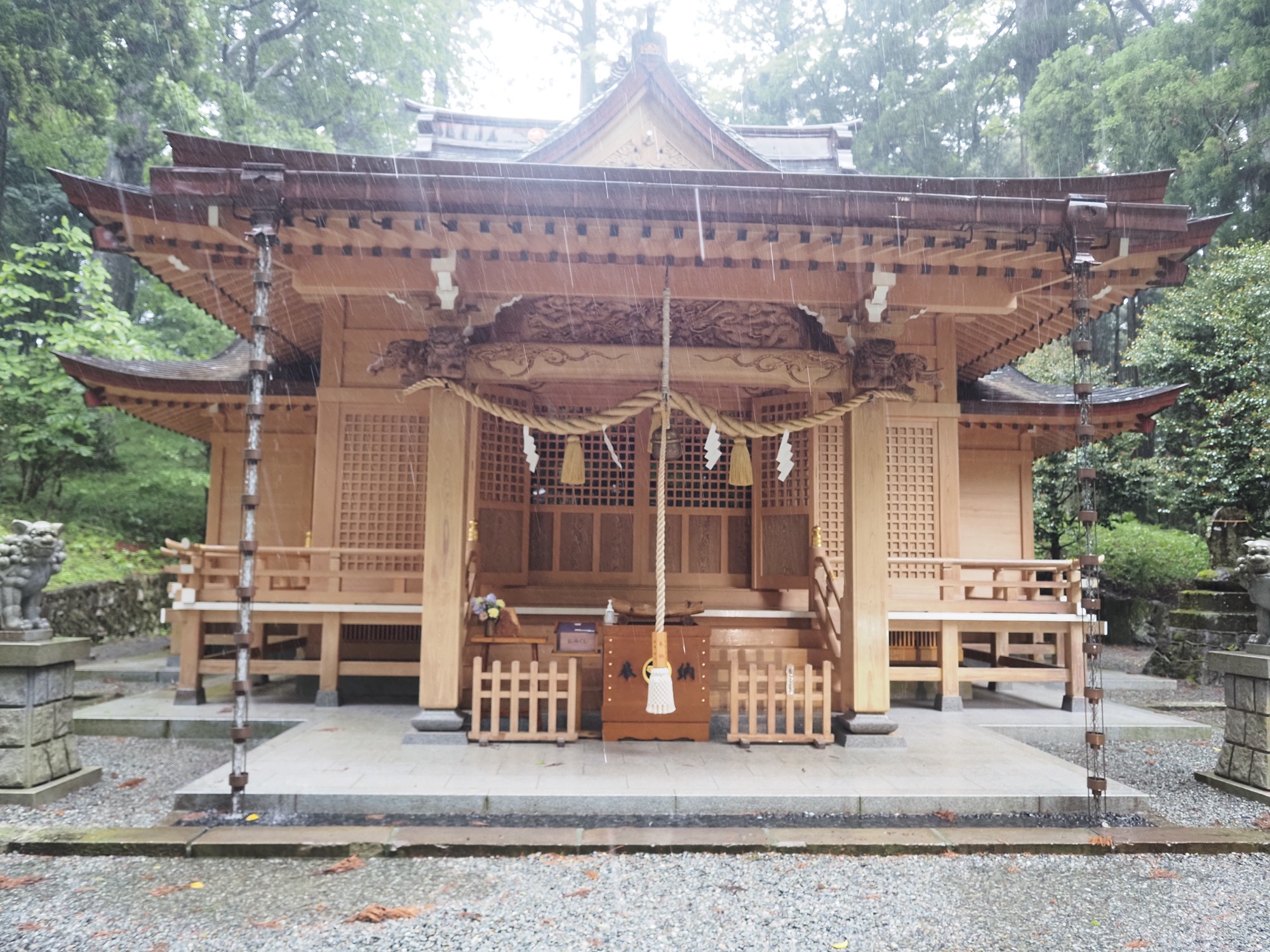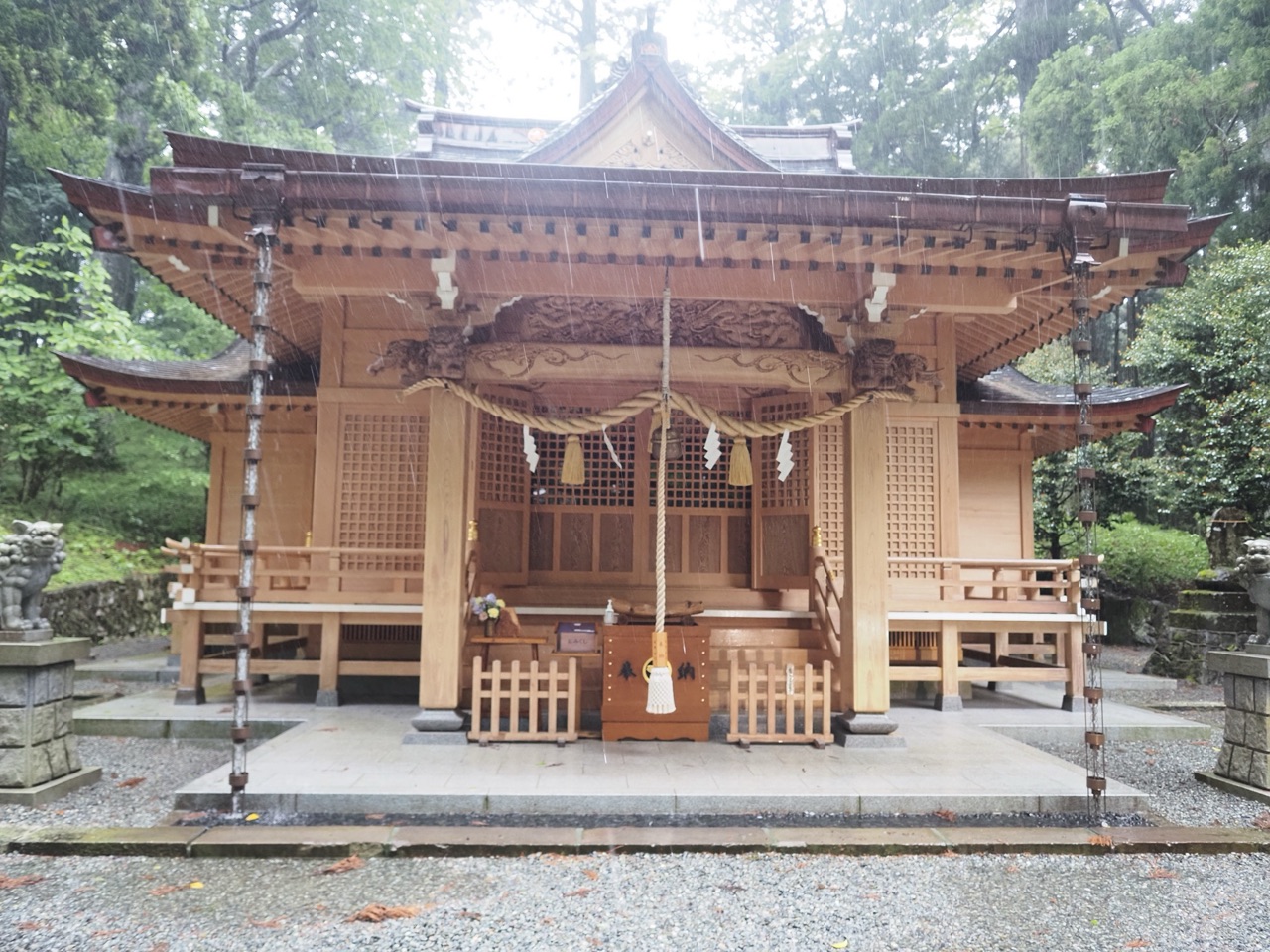
Suyama Sengen Shrine
Suyama Sengen Shrine, in Suyama, Susono City, Shizuoka Prefecture. Standing at the southeastern foot of Mt. Fuji as the starting point of the Suyama trailhead, it is a sanctuary that received many pilgrims and ascetics from the medieval into the early modern era, an indispensable site within Fuji faith.
The principal deity is Konohana-no-Sakuya-bime. According to shrine tradition, Yamatotakeru-no-Mikoto established a small shrine here to the deity of Fuji during his eastern expedition; the shrine was also anciently called Suyama Fuji Sengen-gū. Within the sacred precincts of Mt. Fuji, it stood as one of the “four directional trailheads,” alongside Yoshida in the north, Murayama and Ōmiya in the west, and Subashiri in the east, governing the approach to the summit.
From the medieval into the Edo period, the shrine held an important role within the systematic Fuji-mine shugyō — the peak ascetic practice organised by the Murayama Shugendō. The yamabushi descended at the Suyama trailhead on the third day of the eighth lunar month, struck votive plaques on the shrine, and remained overnight in retreat to perform their rites. The fudauchi, nailing of plaques inscribed with Buddhist names and divine titles, is an ascetic act that extends to the foothills the spiritual power accumulated on Mt. Fuji.
In the Edo period, the shrine flourished as a key reception point for pilgrims arriving from Izu, Sagami, and the Yoshiwara post-station on the Tōkaidō, routed via the Jūrigi pass. At the first station stood an administrative office, where the yama-yakusen — the mountain toll — was collected and registration tallies were verified before the wooden gate was opened and the climb permitted. Although Suyama asserted its own rights over governance of the summit, the shogunate’s 1779 (An’ei 8) judgement placed everything from the eighth station upward under the domain of Fujisan Hongū Sengen Taisha (Ōmiya).
The 1707 (Hōei 4) eruption of Mt. Fuji devastated Suyama village and the trail; vast deposits of ash and pumice buried the route, and the path lay closed for nearly thirty years. The trail was finally reopened around 1780 (An’ei 9), and during the Kansei era the stone shelters of the upper mountain were rebuilt, drawing the pilgrims back. The late-Edo gazetteer Fuji no Rekishi records that the Suyama route at times saw even greater traffic than Ōmiya or Subashiri.
In 1883 (Meiji 16), the opening of the Gotenba trailhead — easily reached from the new railway station — caused a sharp decline in Suyama’s use; the long footpath was increasingly forsaken, and the shrine entered a lengthy period of quiet. In 2013, when Mt. Fuji was inscribed as a World Cultural Heritage site, the Suyama Sengen Shrine and a section of the trail (between approximately 1,200 and 2,000 metres in elevation) were recognised for their historical value and included among the constituent assets. Through repeated volcanic disasters and shifts in the structures of travel, the shrine has continued to safeguard a place of prayer at the southeastern foot of Mt. Fuji — a long history that still quietly breathes here.