Opening Rite of the Subashiri Trailhead
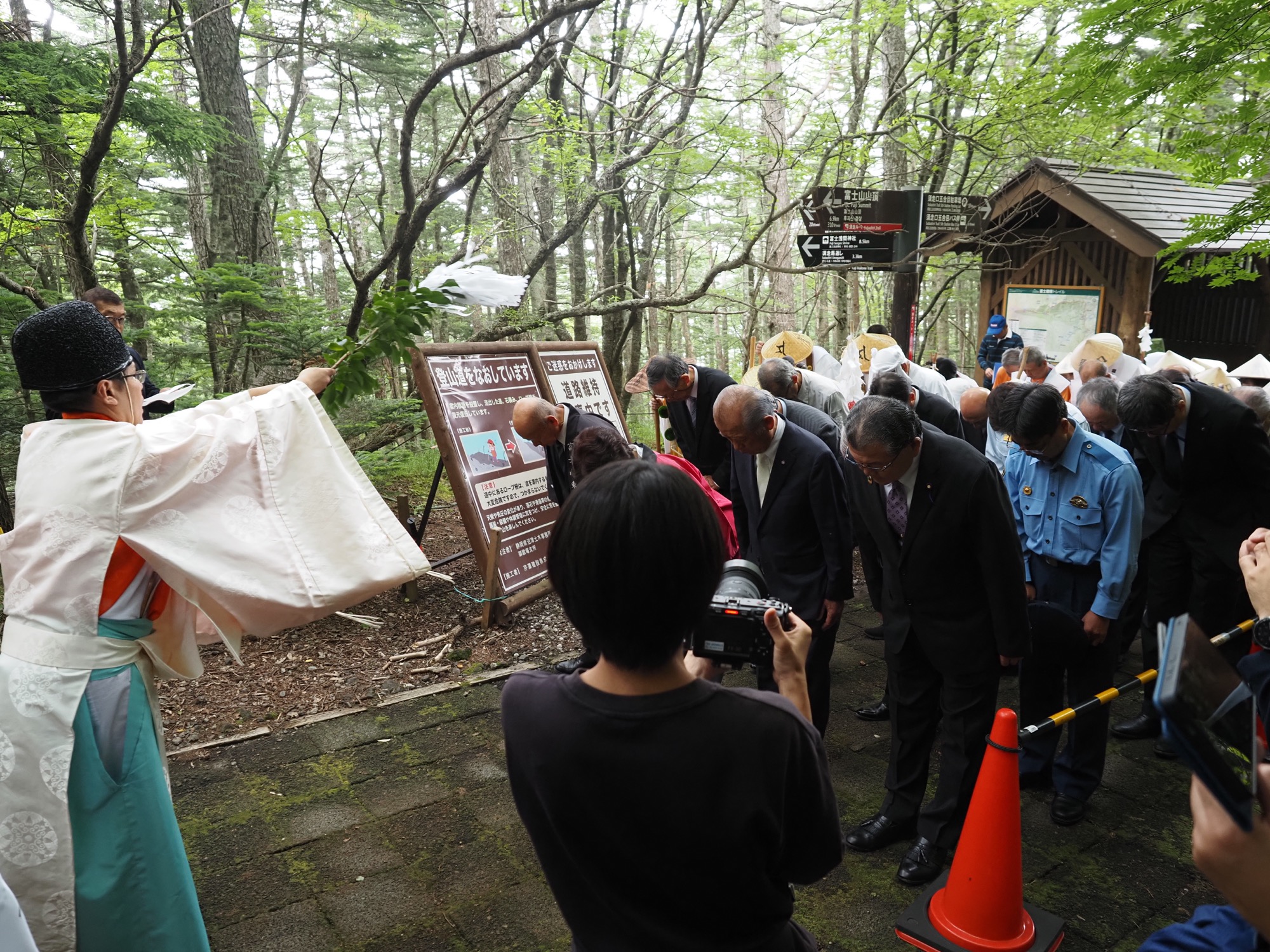
The annual opening rite of the Subashiri trailhead of Mt. Fuji, held each year on 10 July. Announcing the beginning of the summer climbing season, the rite is officiated by the chief priest of Higashiguchi Hongū Fuji Sengen Shrine (Subashiri Sengen); at the very entrance to the trailhead, prayers are offered for the safe ascent to the summit, and the year’s climb upon the sacred peak is purified and opened.
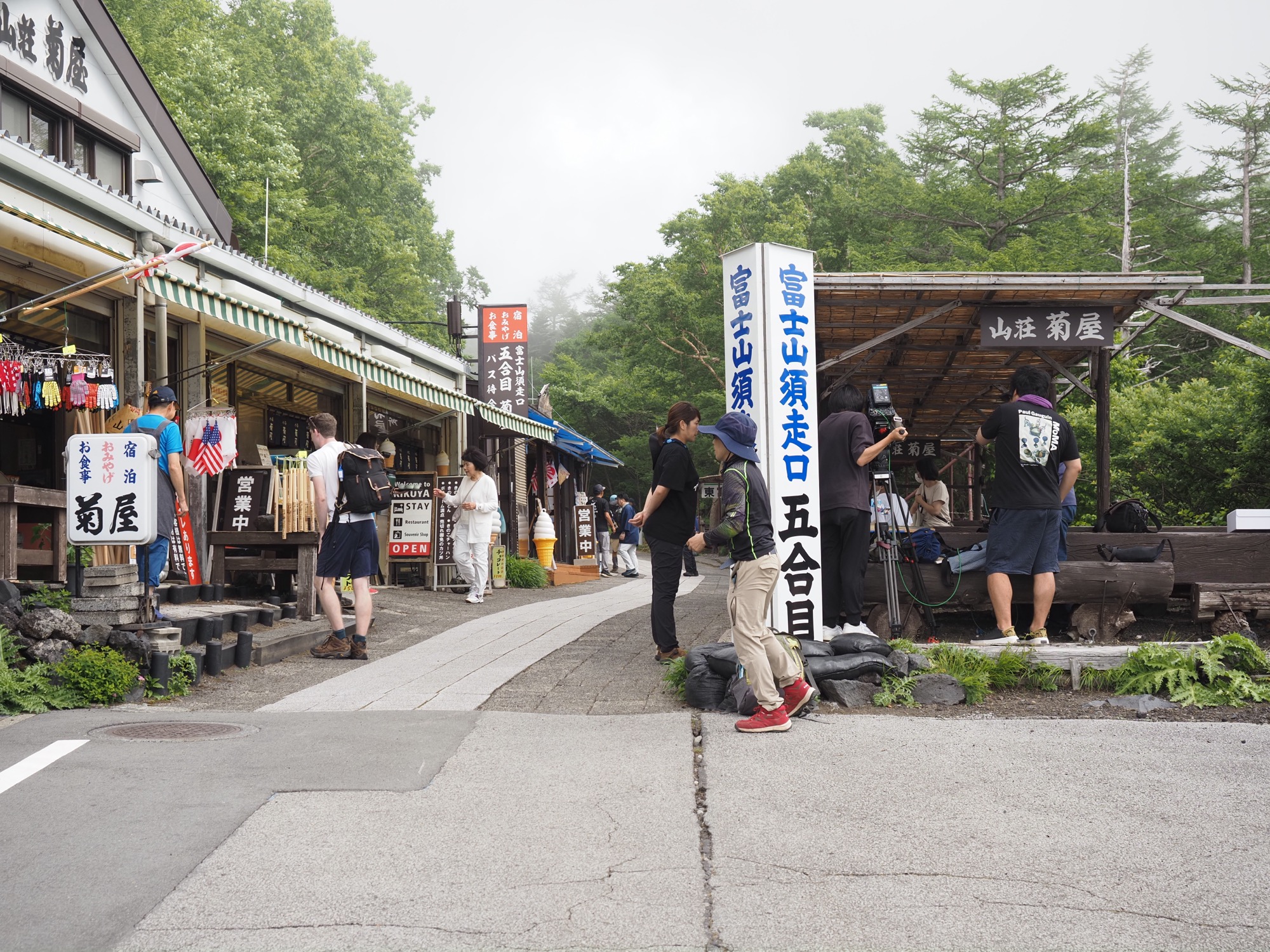
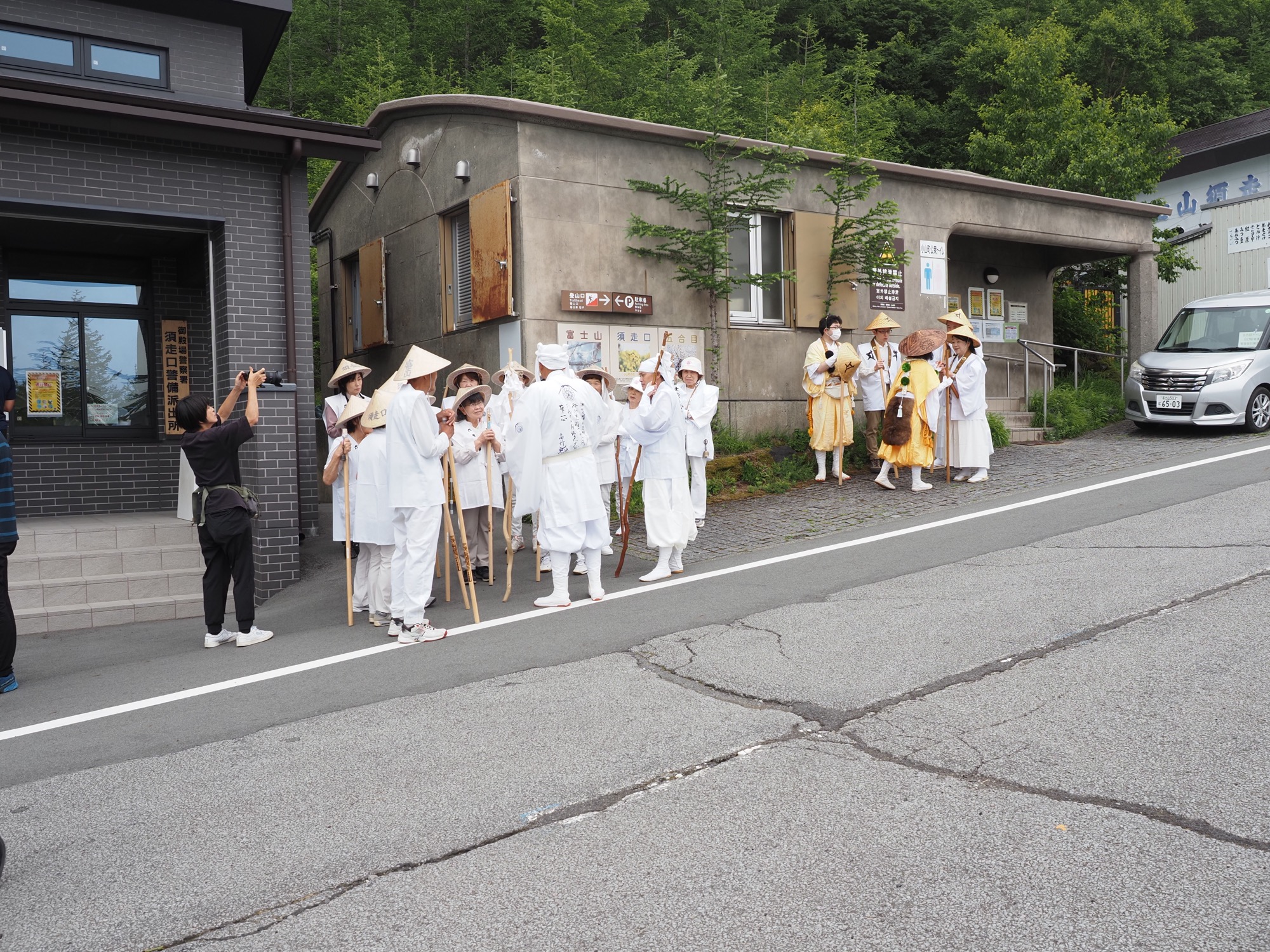
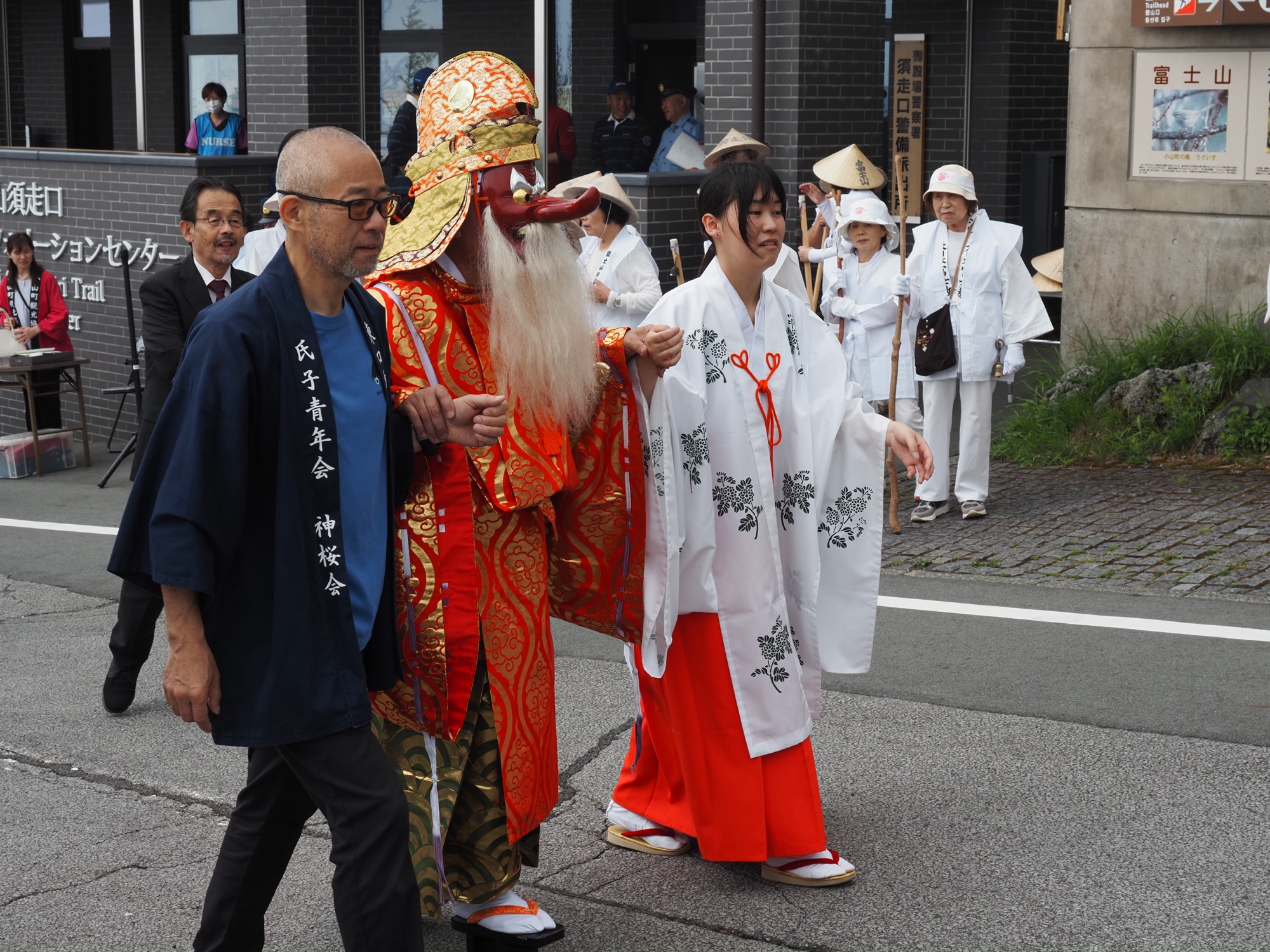
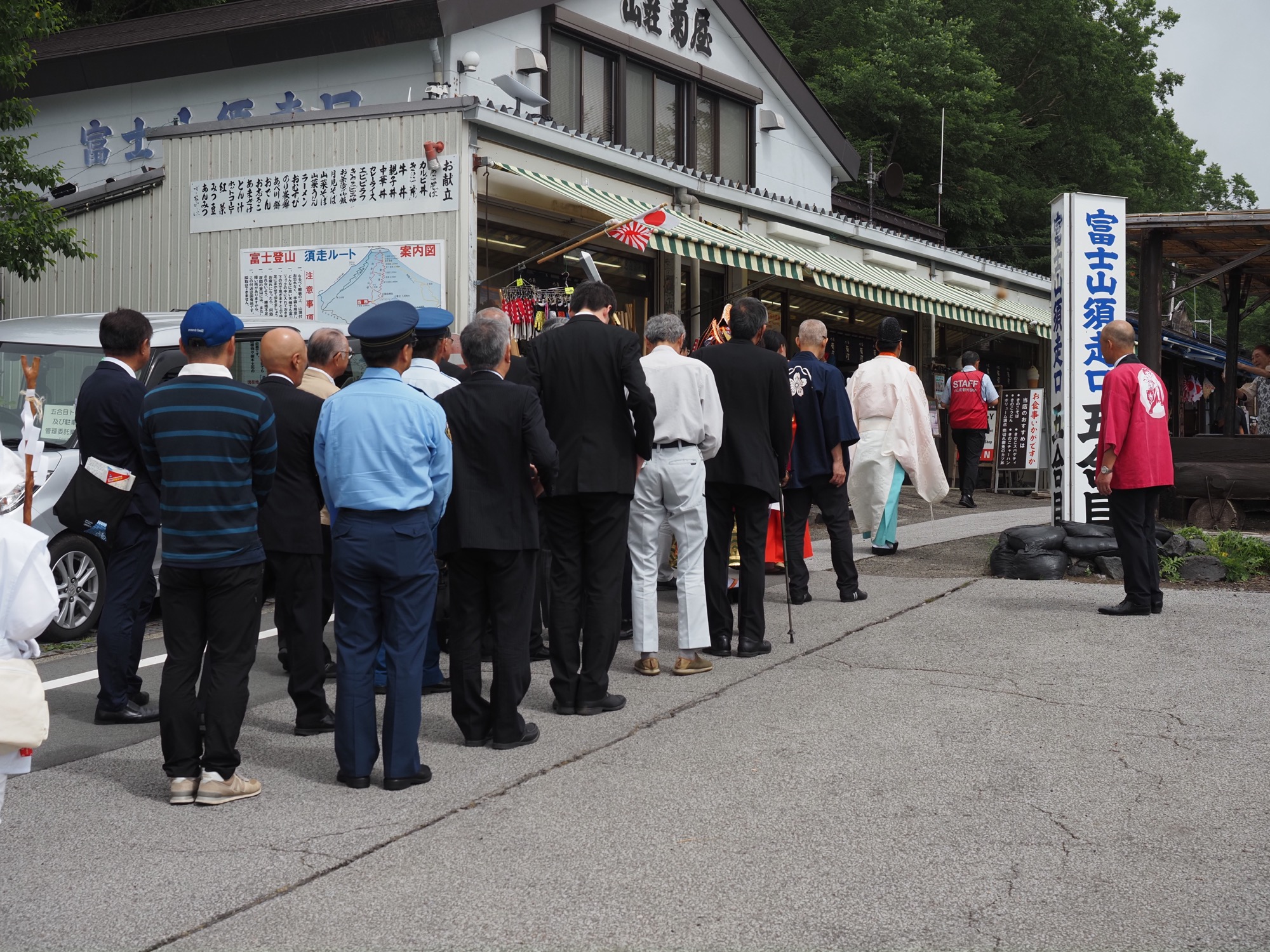
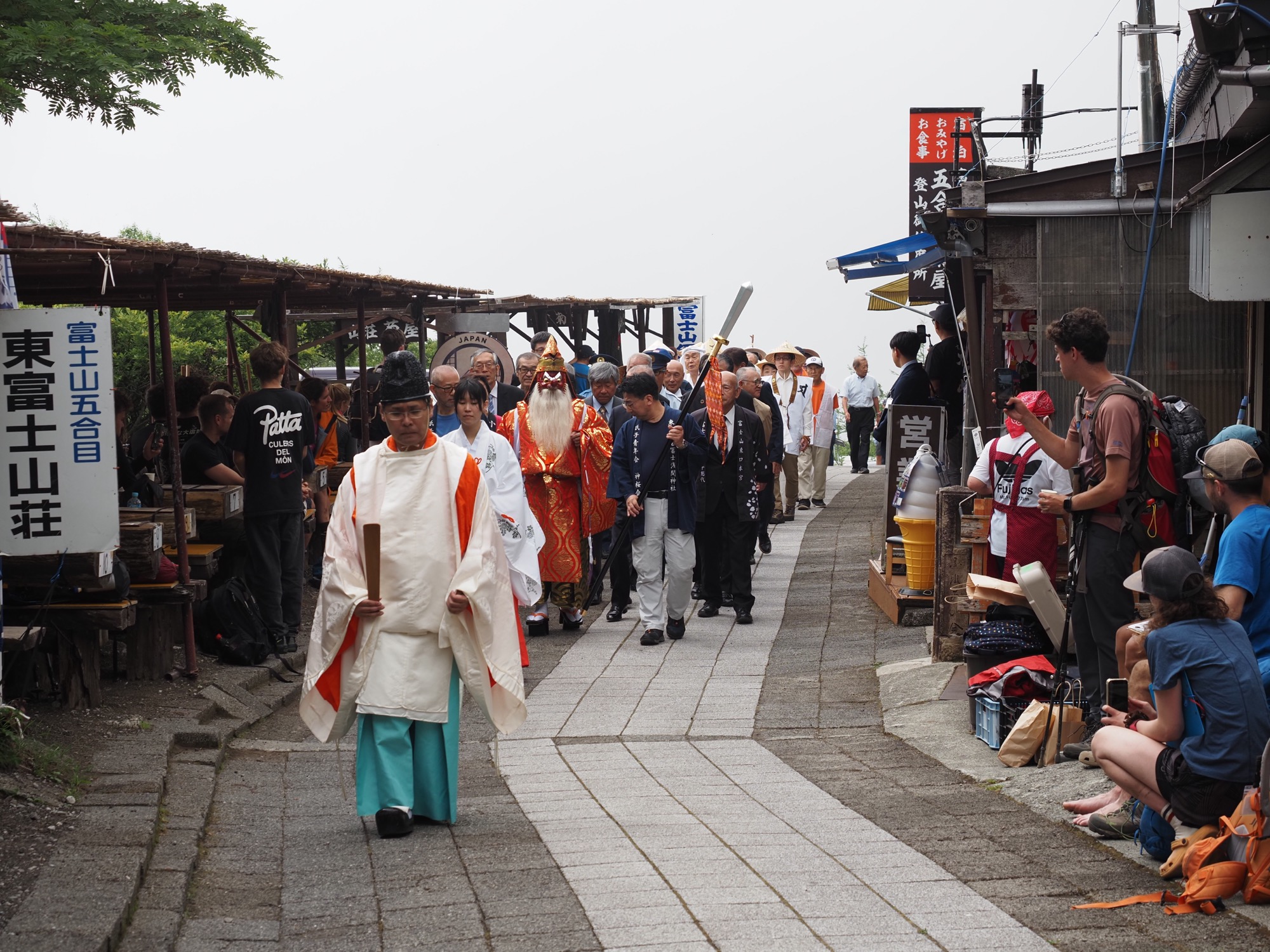
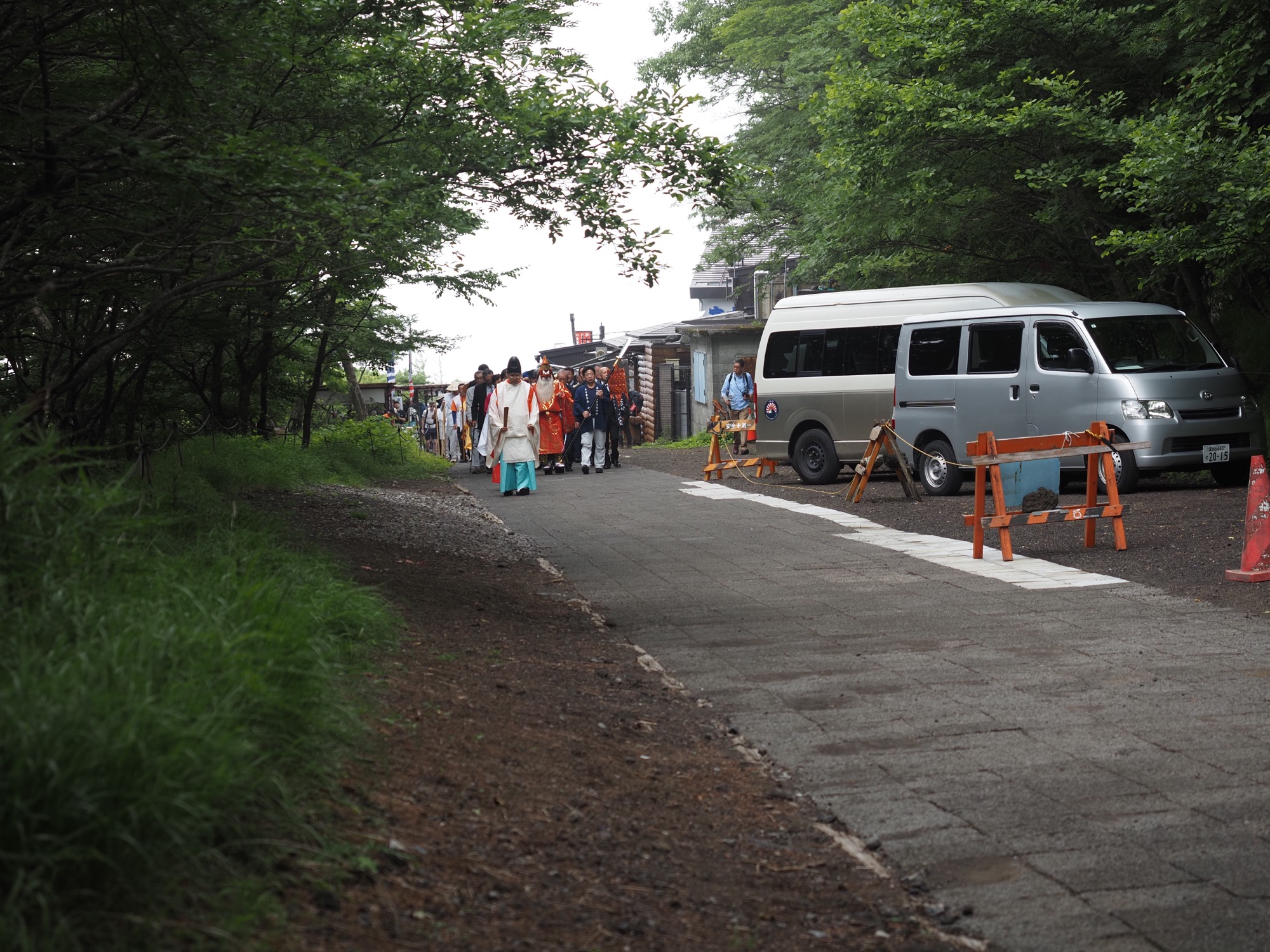
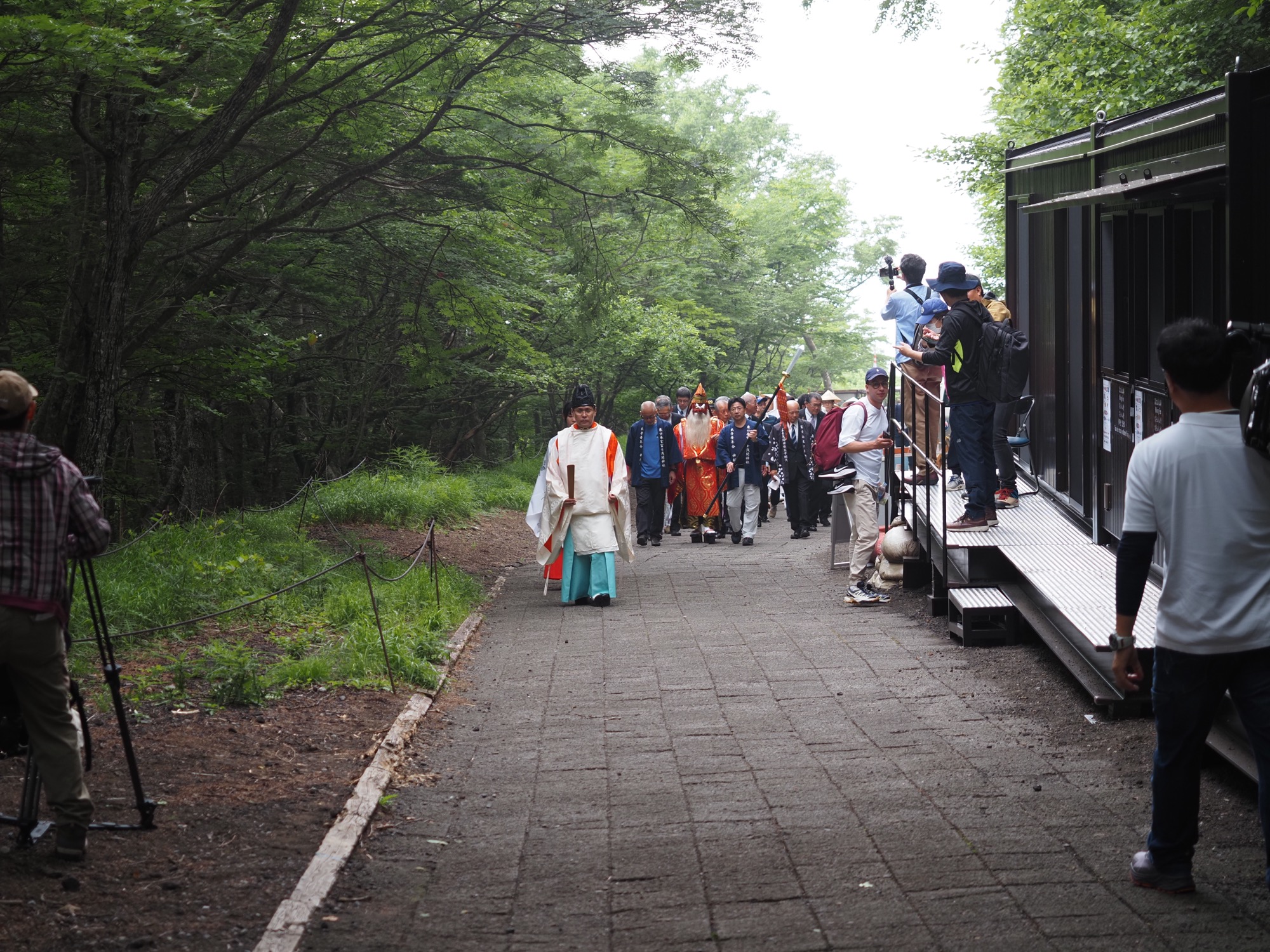
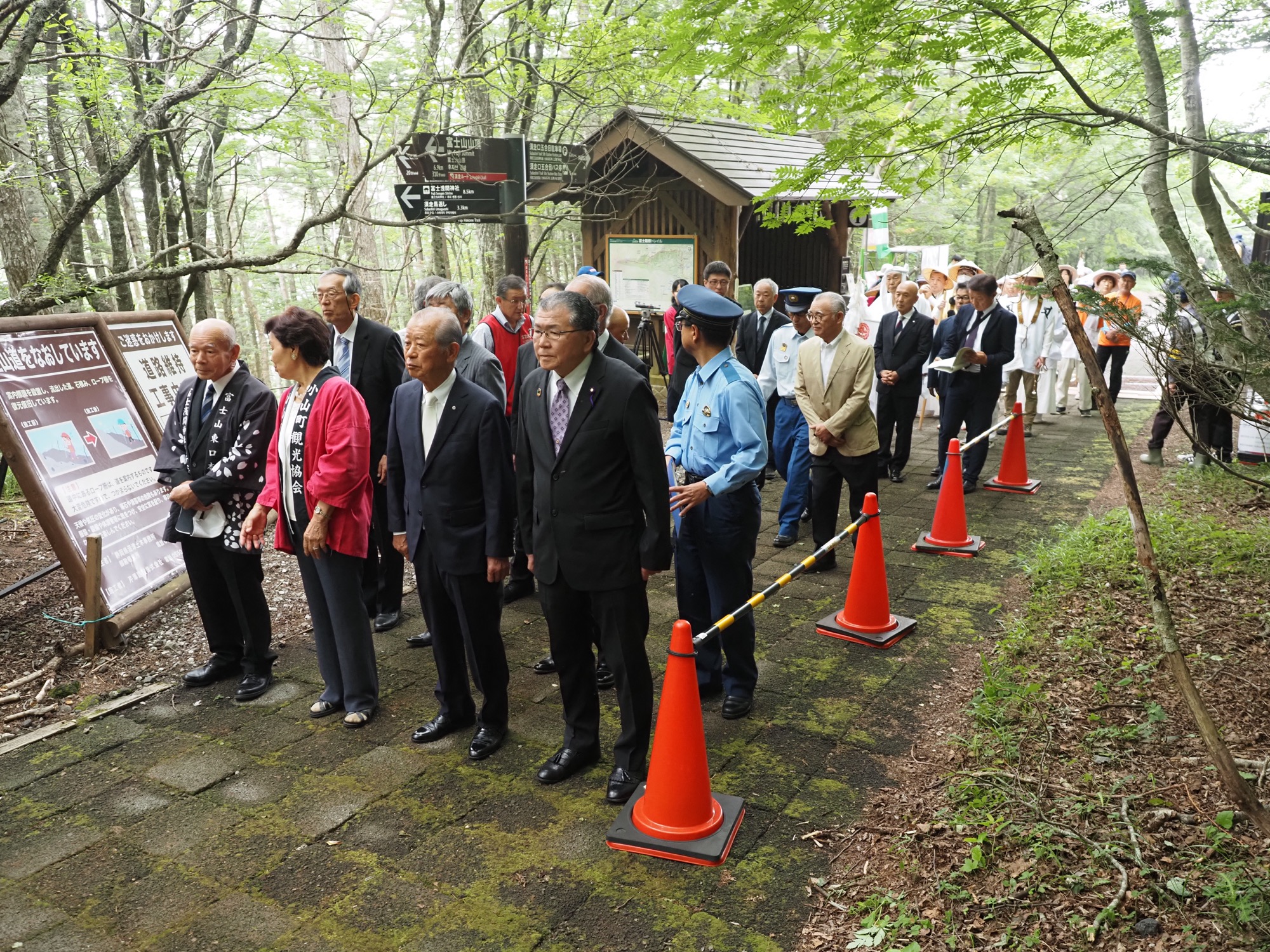
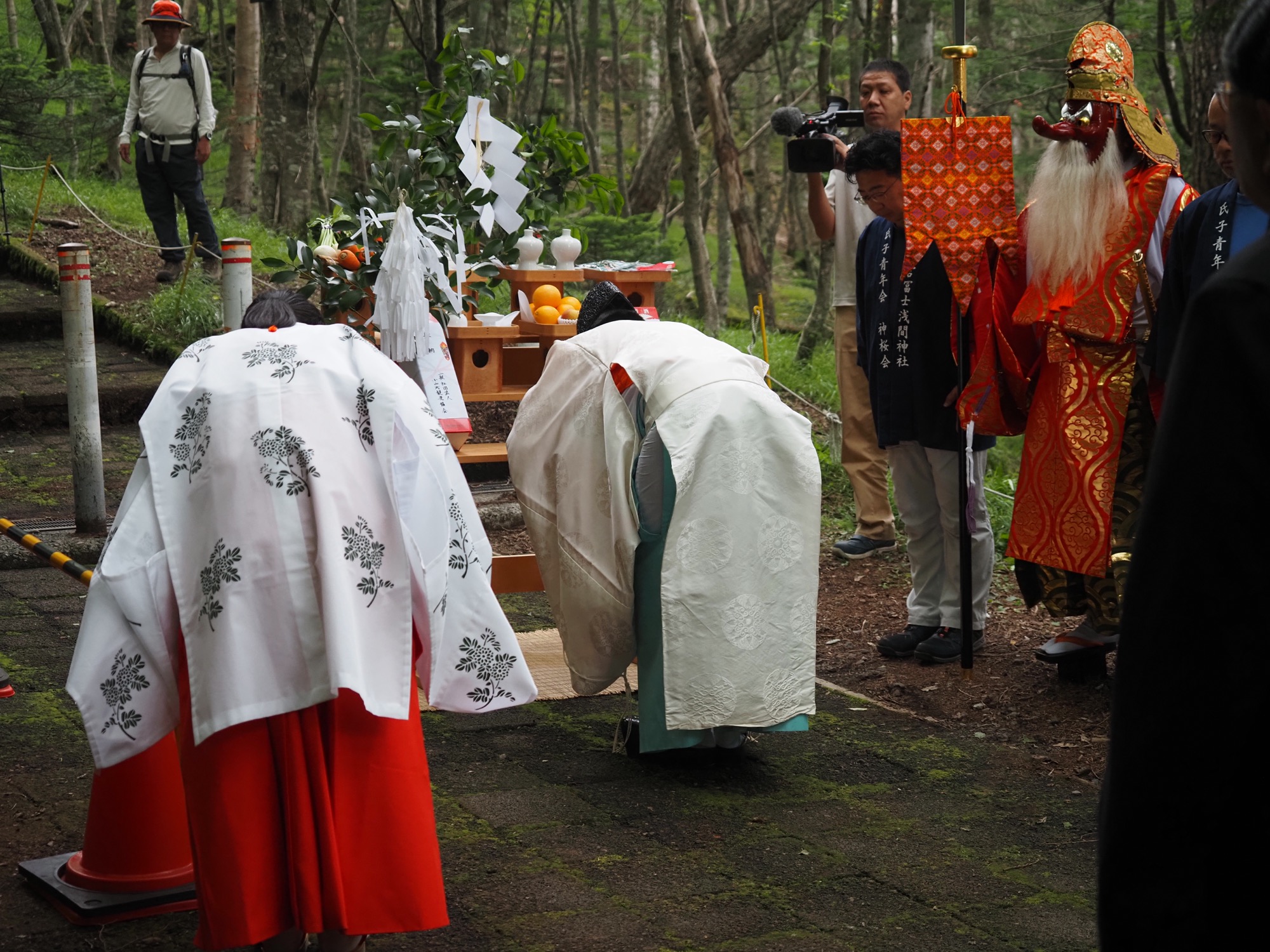
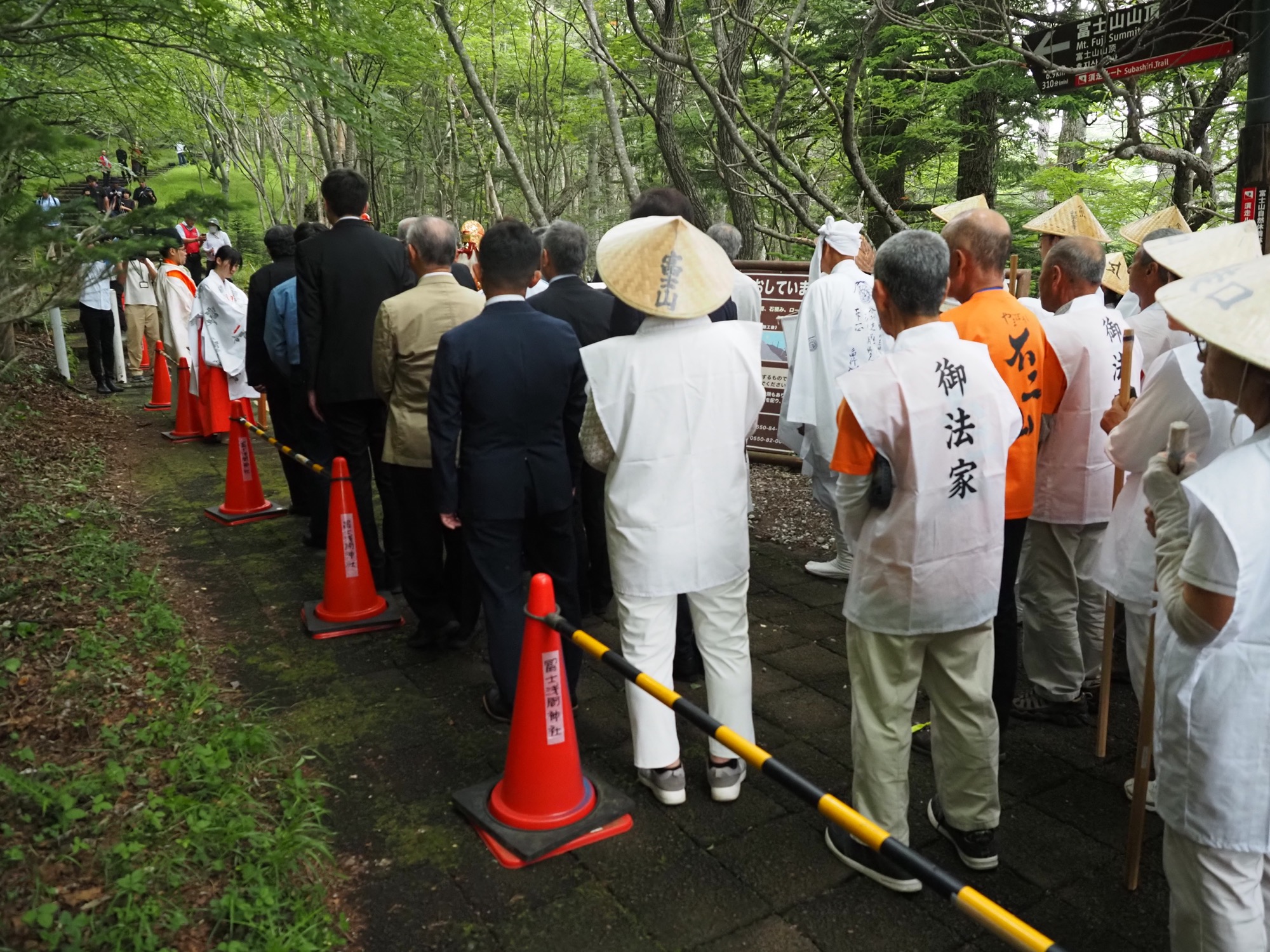
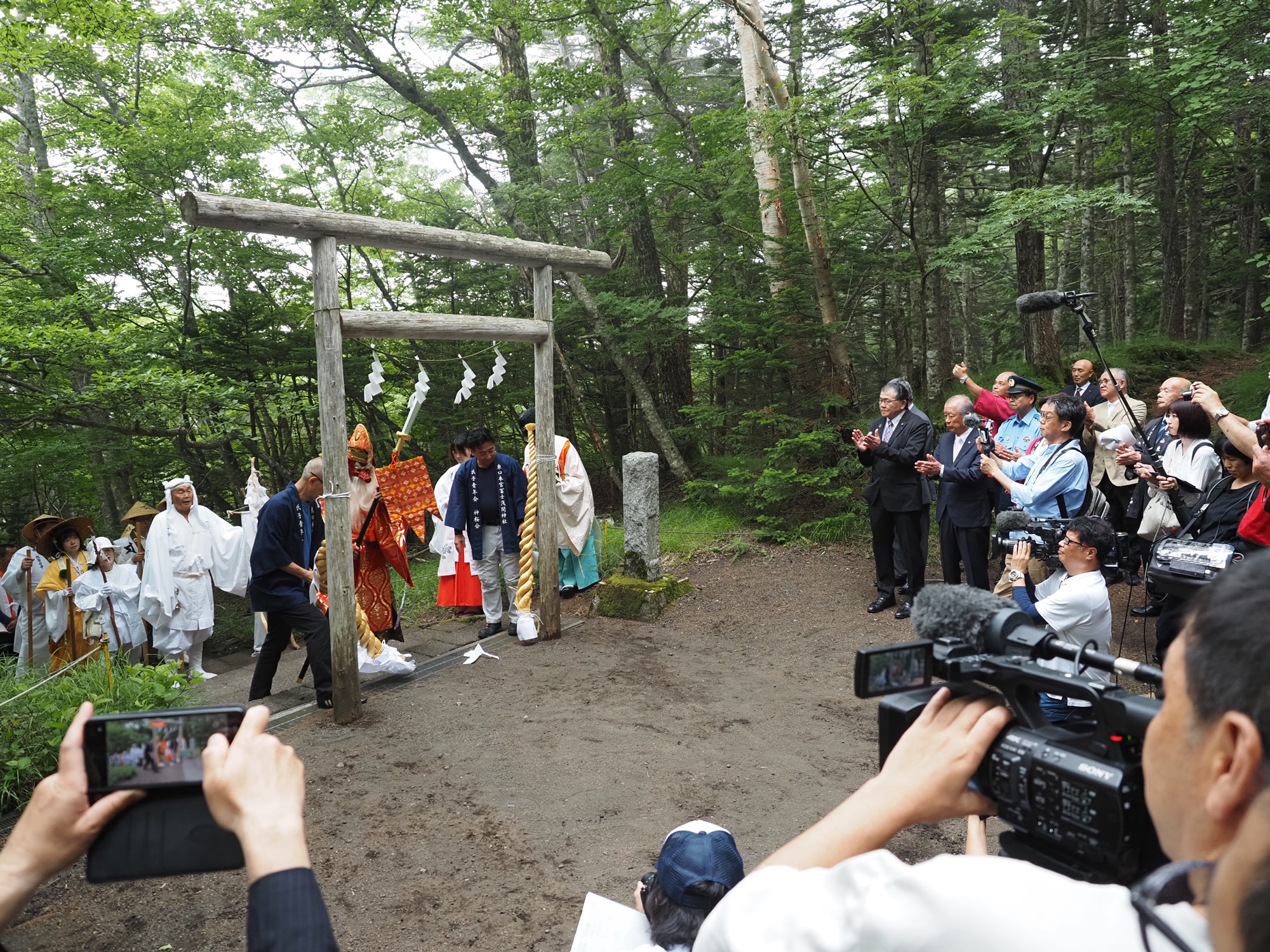
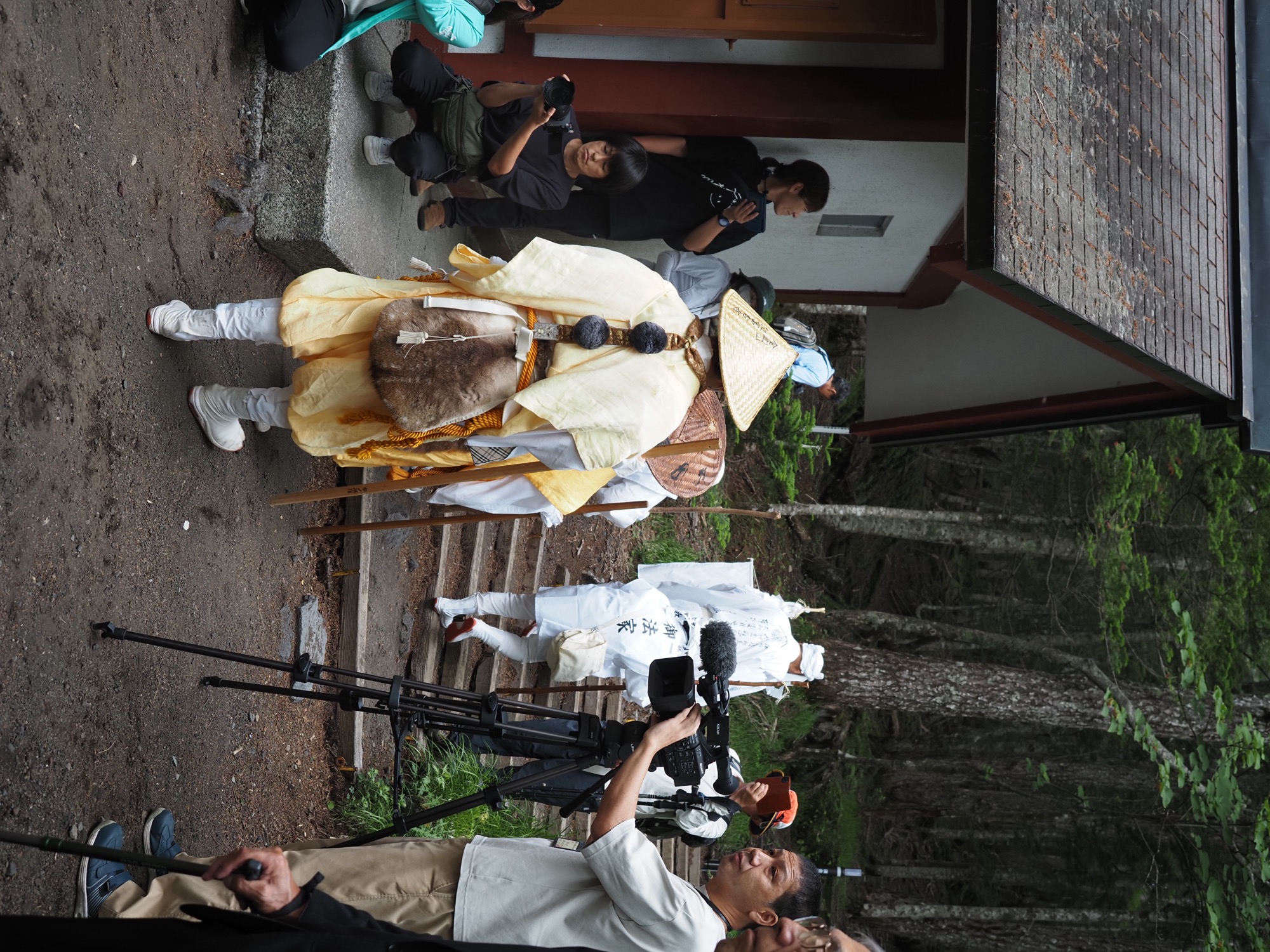
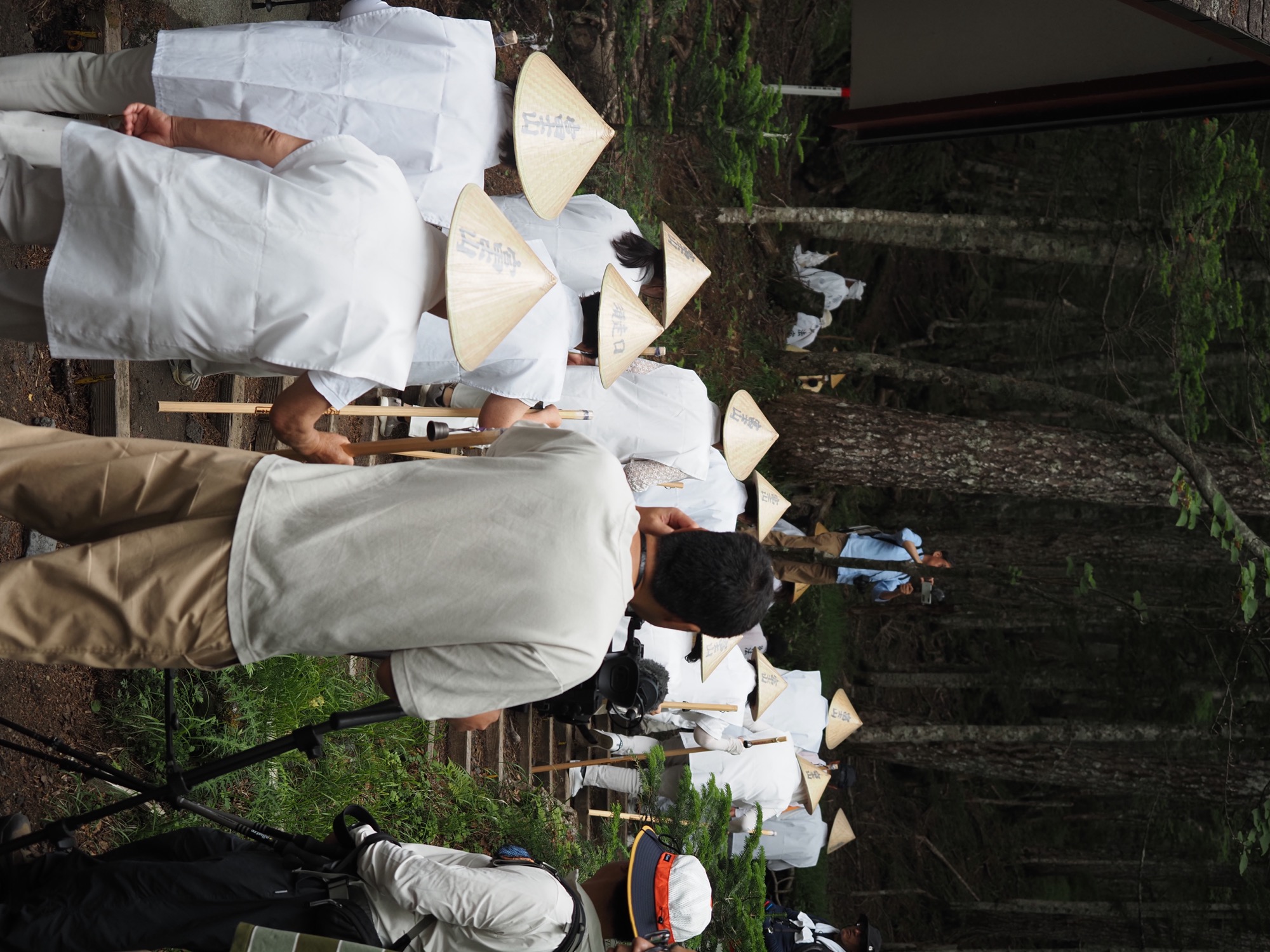
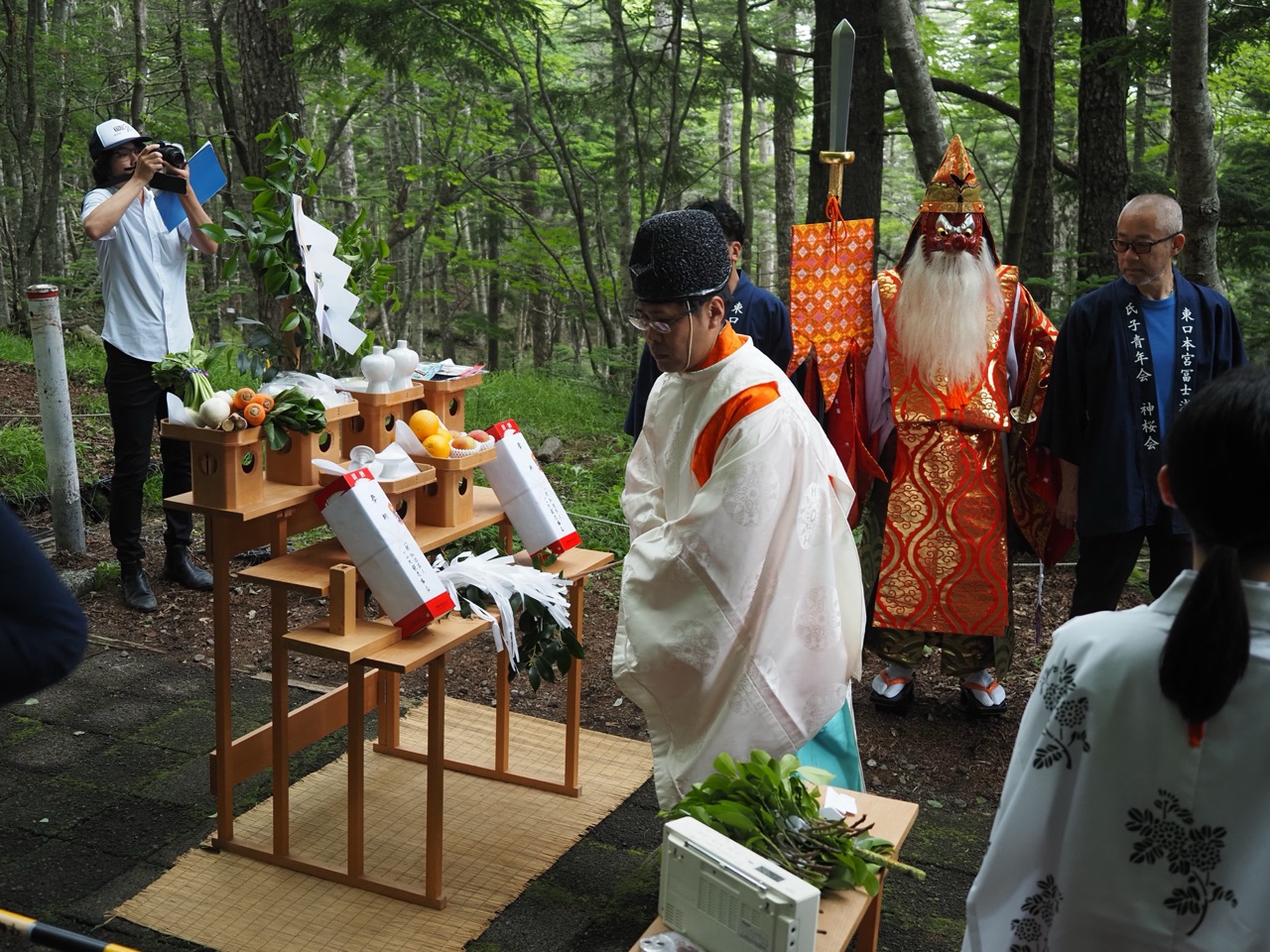
In the morning, the broad square between the row of shops at the fifth station and the standing pillar inscribed “Mt. Fuji, Subashiri Fifth Station” already gathers tourists and shrine officials. Soon, led by priest and miko, the procession sets out: a tengu in the mask of Sarutahiko — embodiment of the deity who shows the way — white-robed practitioners with woven hats and pilgrim staves, members of the parish youth association Ujiko-Seinen-Kai and Shin-ō-kai carrying their banners, invited guests, and members of the press, all advancing in a long file toward the trailhead. The tradition of Subashiri — the “Eastern Main Gate” that has received pilgrims from the Kantō and Tōhoku regions since the Edo period — breathes on, in the twenty-first century, within this procession.
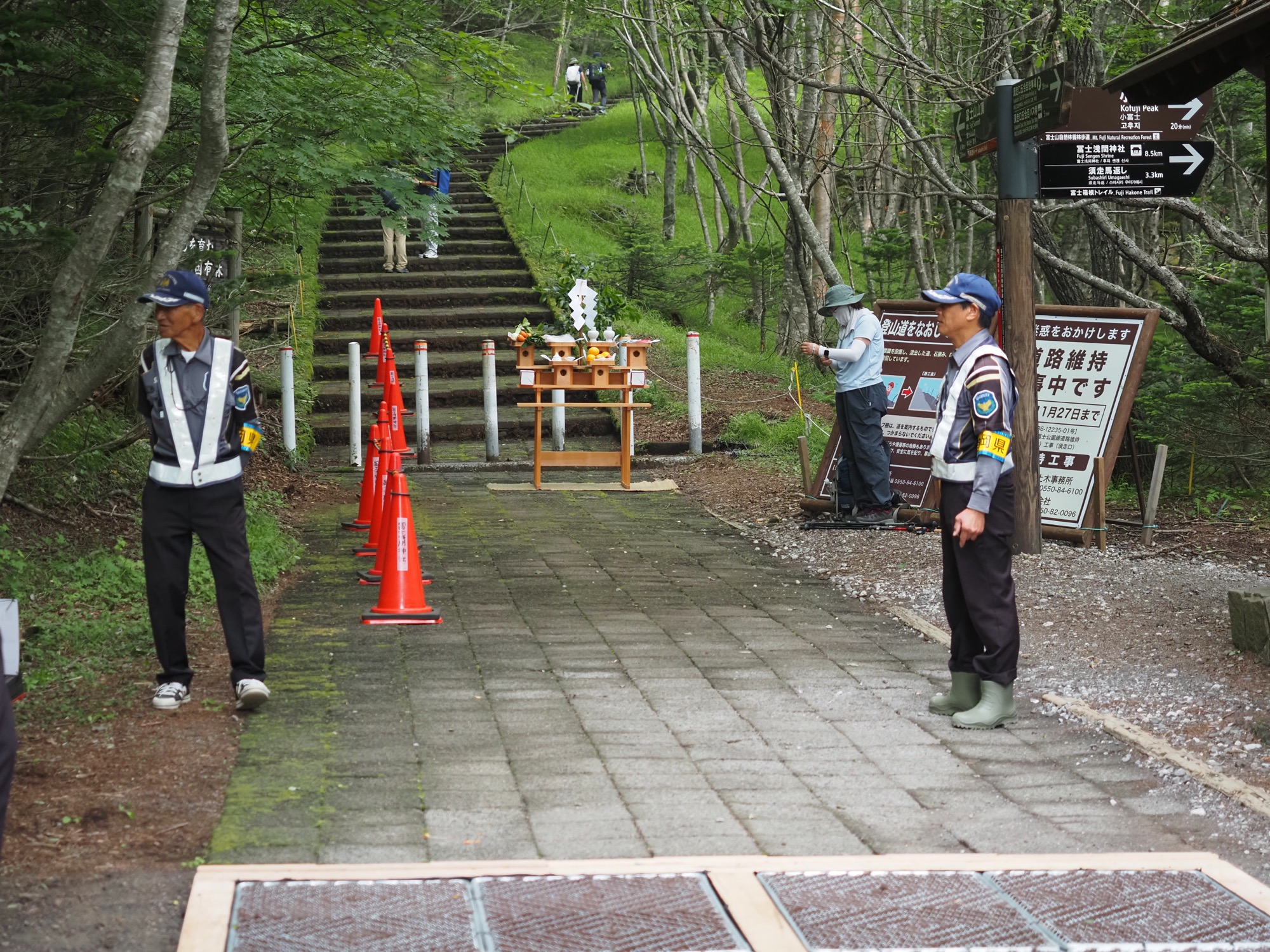
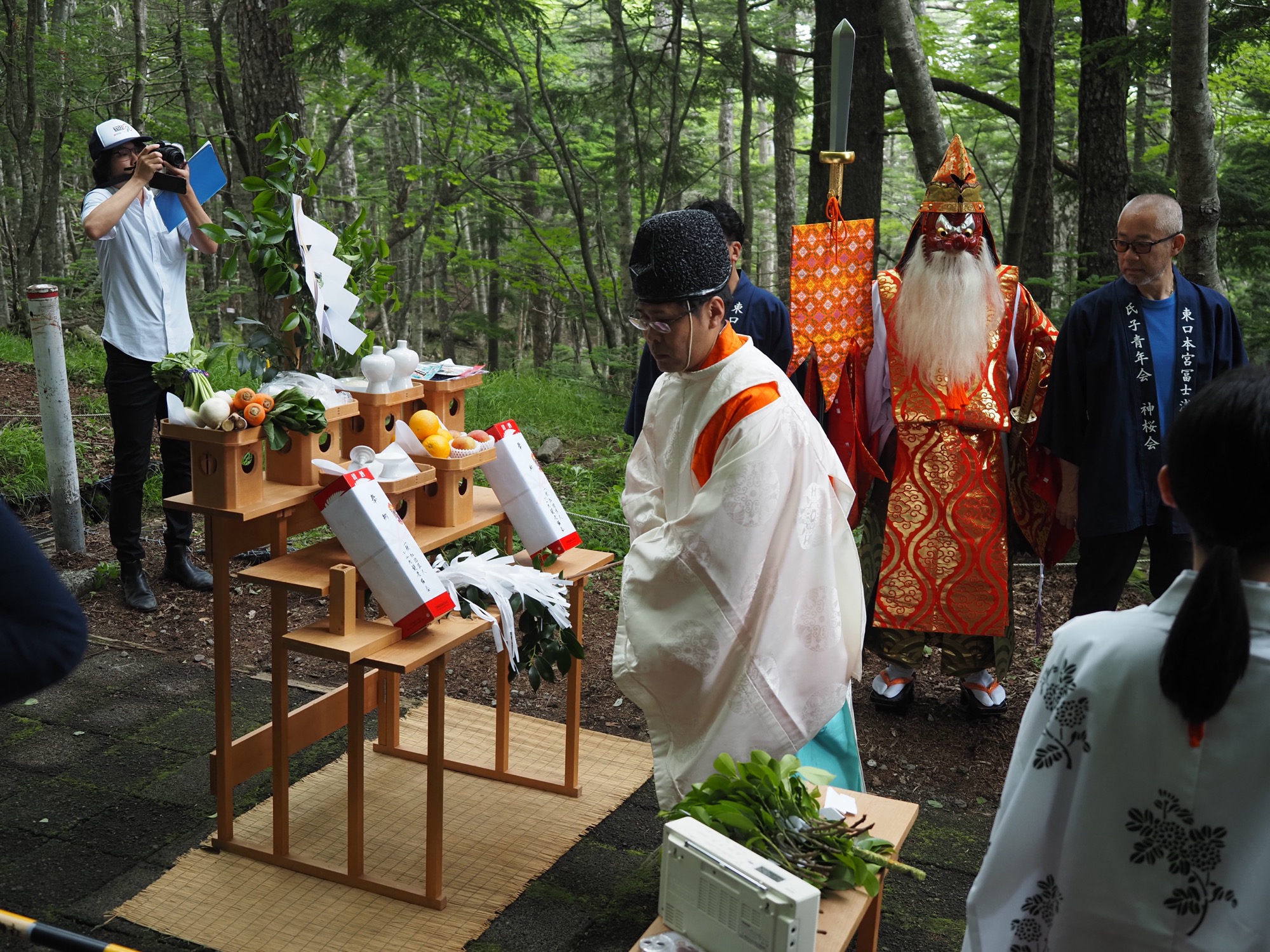
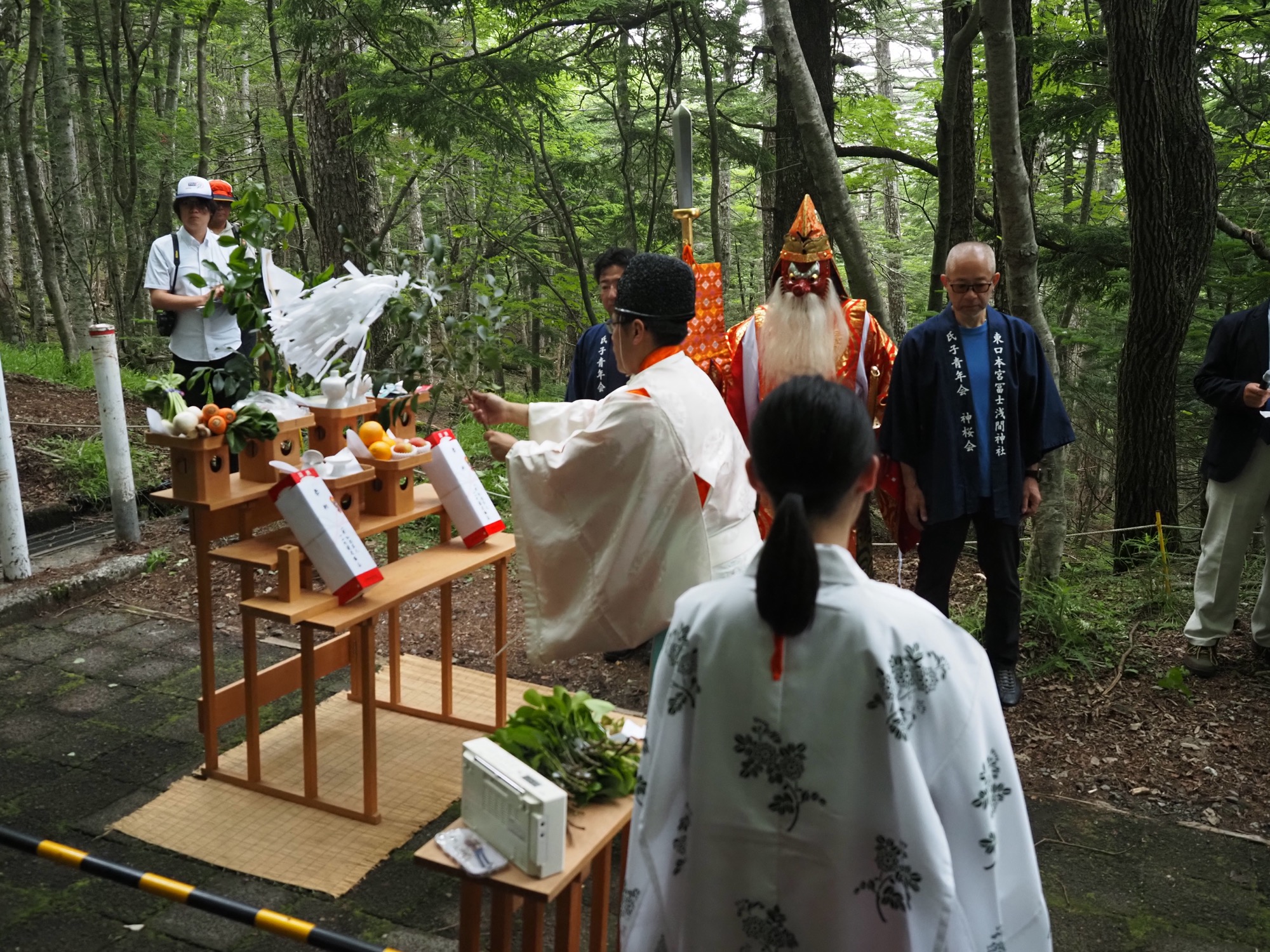
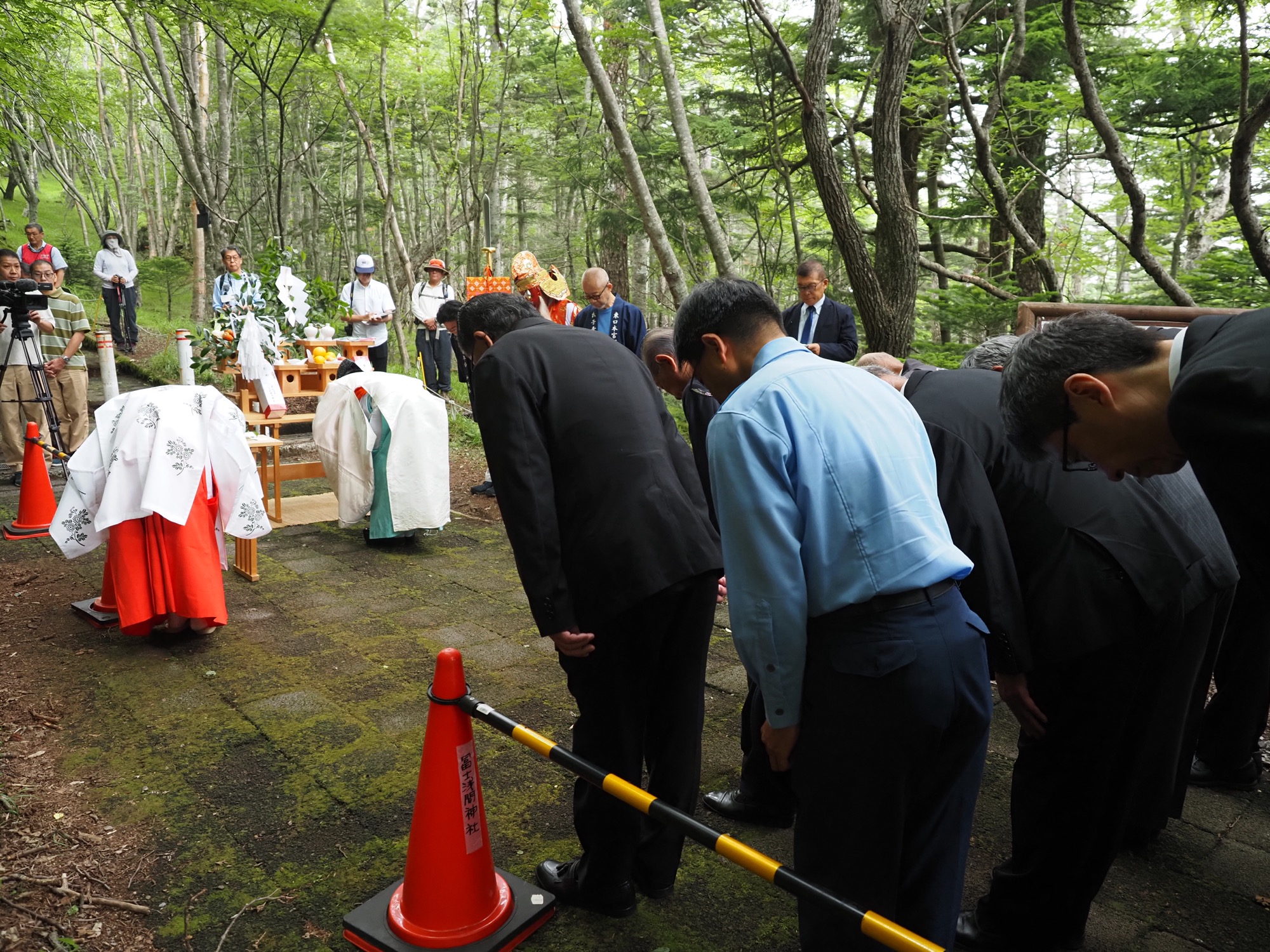
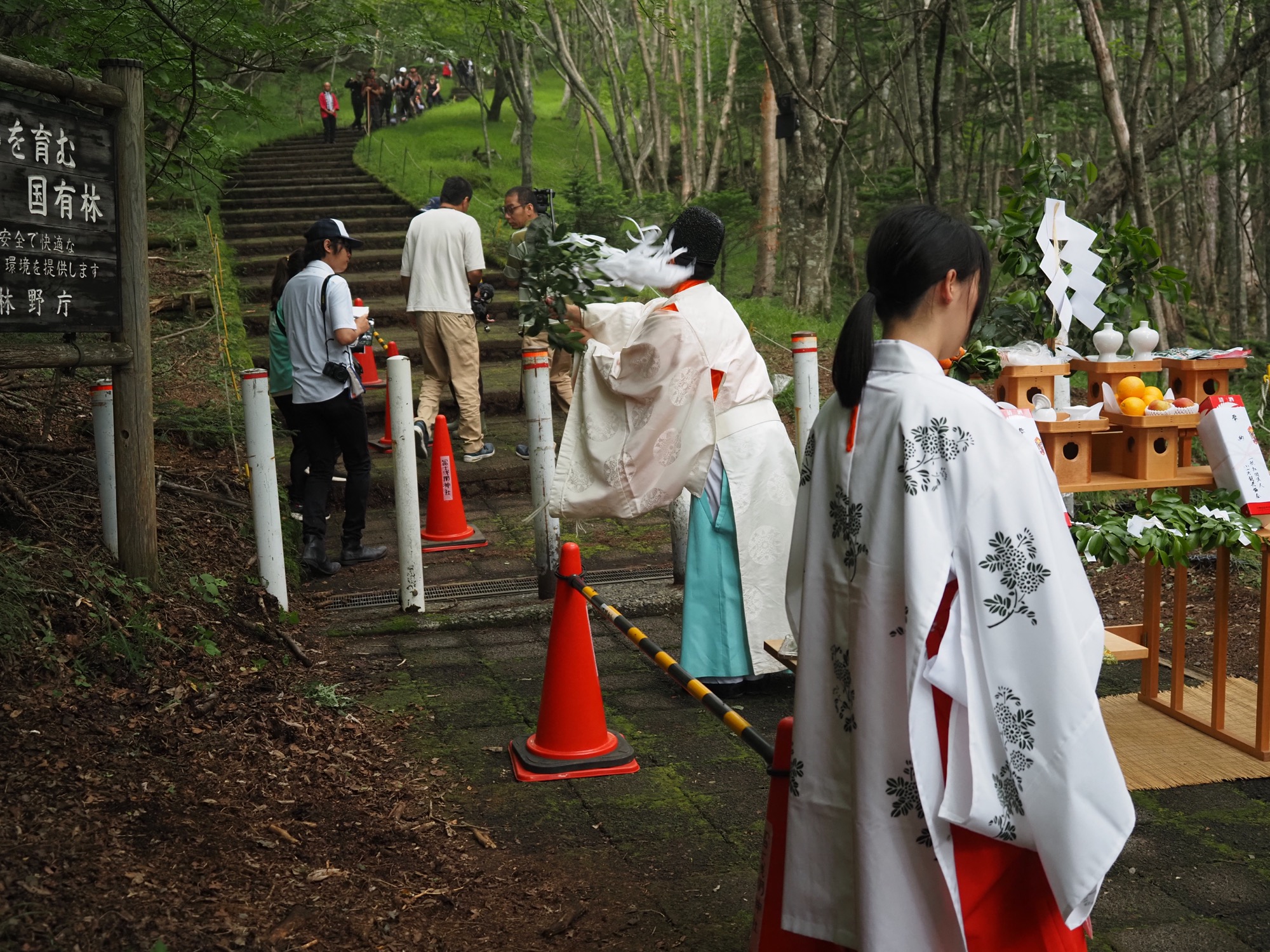
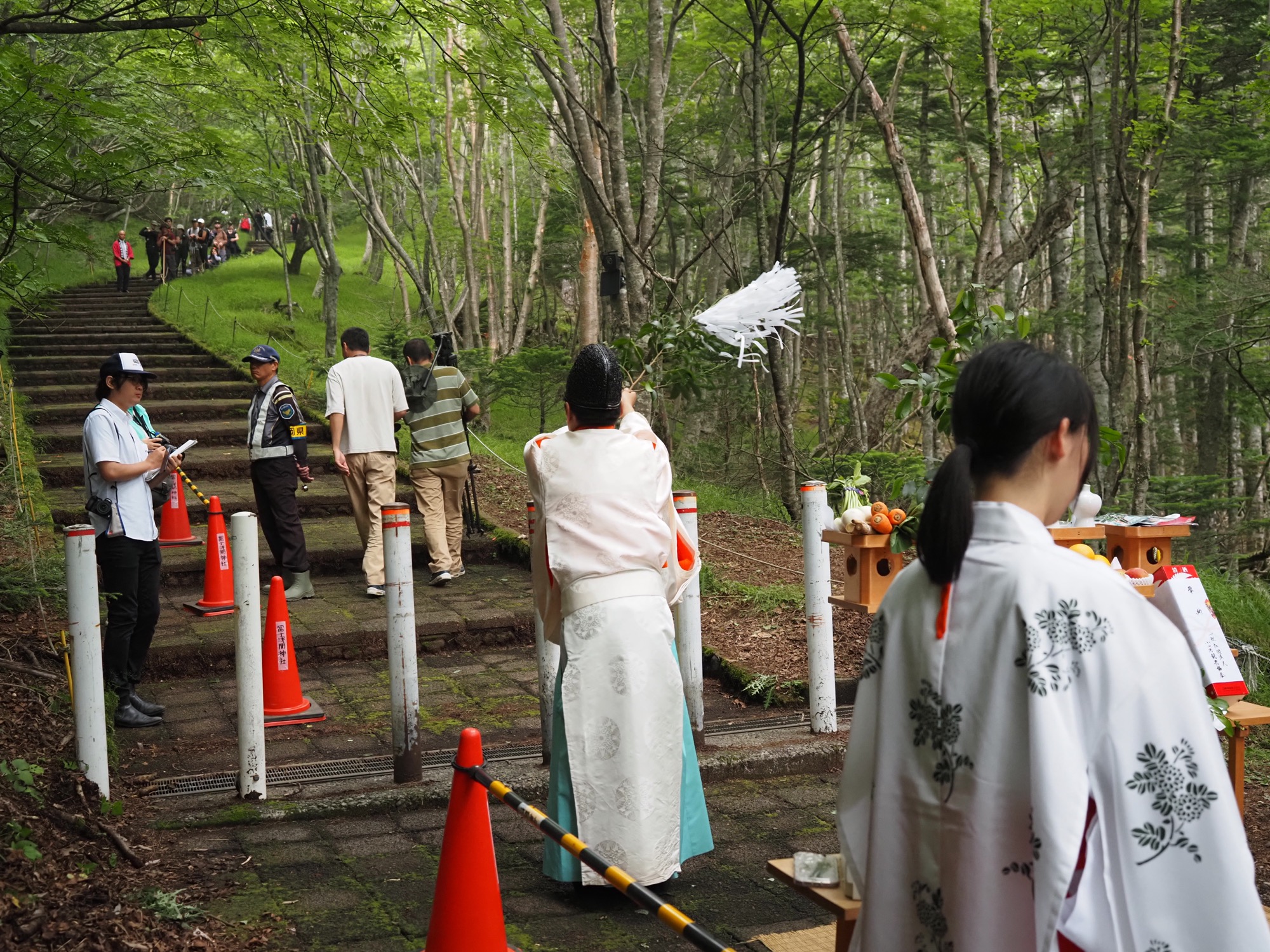
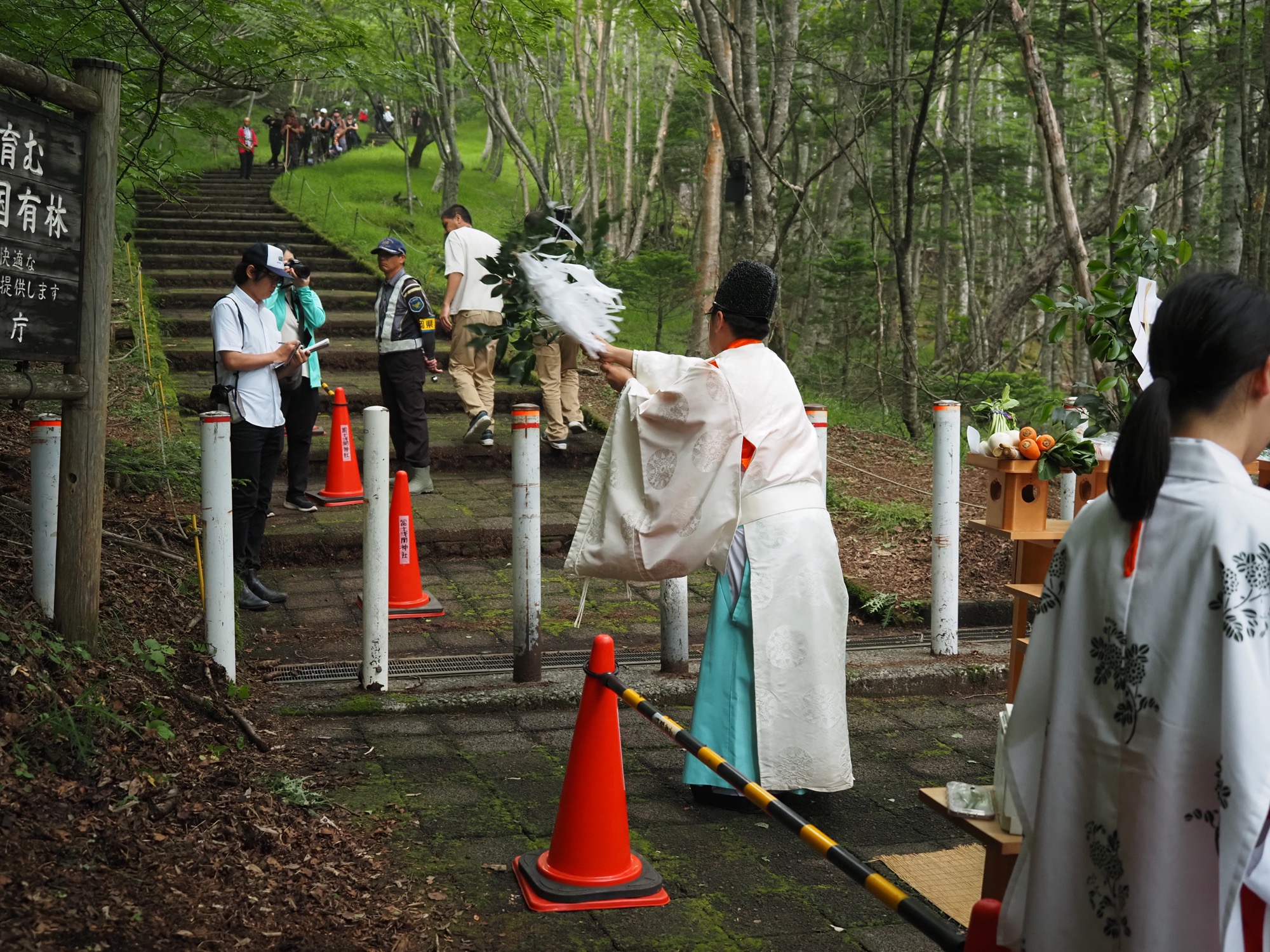
At the open-air altar set up at the head of the trail, a table of sacred offerings and ceremonial heihaku (paper wands) is laid out; the priest recites the norito, and all those assembled bow their heads in worship. The rite is held within a stand of trees at the entrance to the ancient way — a service that combines the announcement of the year’s climb to the deity of Mt. Fuji with prayers for the safety of all who will ascend, and that symbolises the unbroken continuity of local rite through the repeated reopenings of the trail after the great eruption of Hōei in 1707.
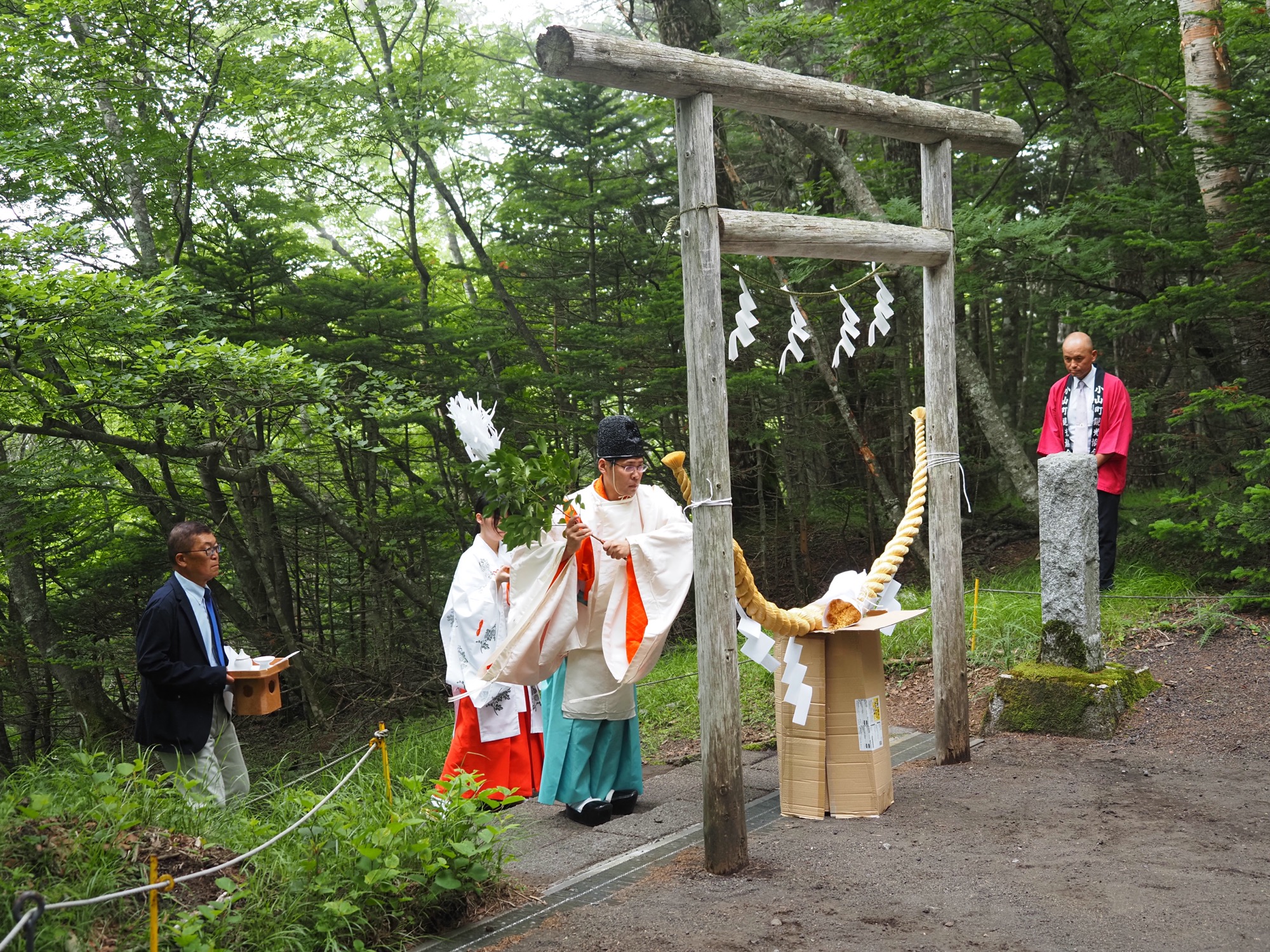
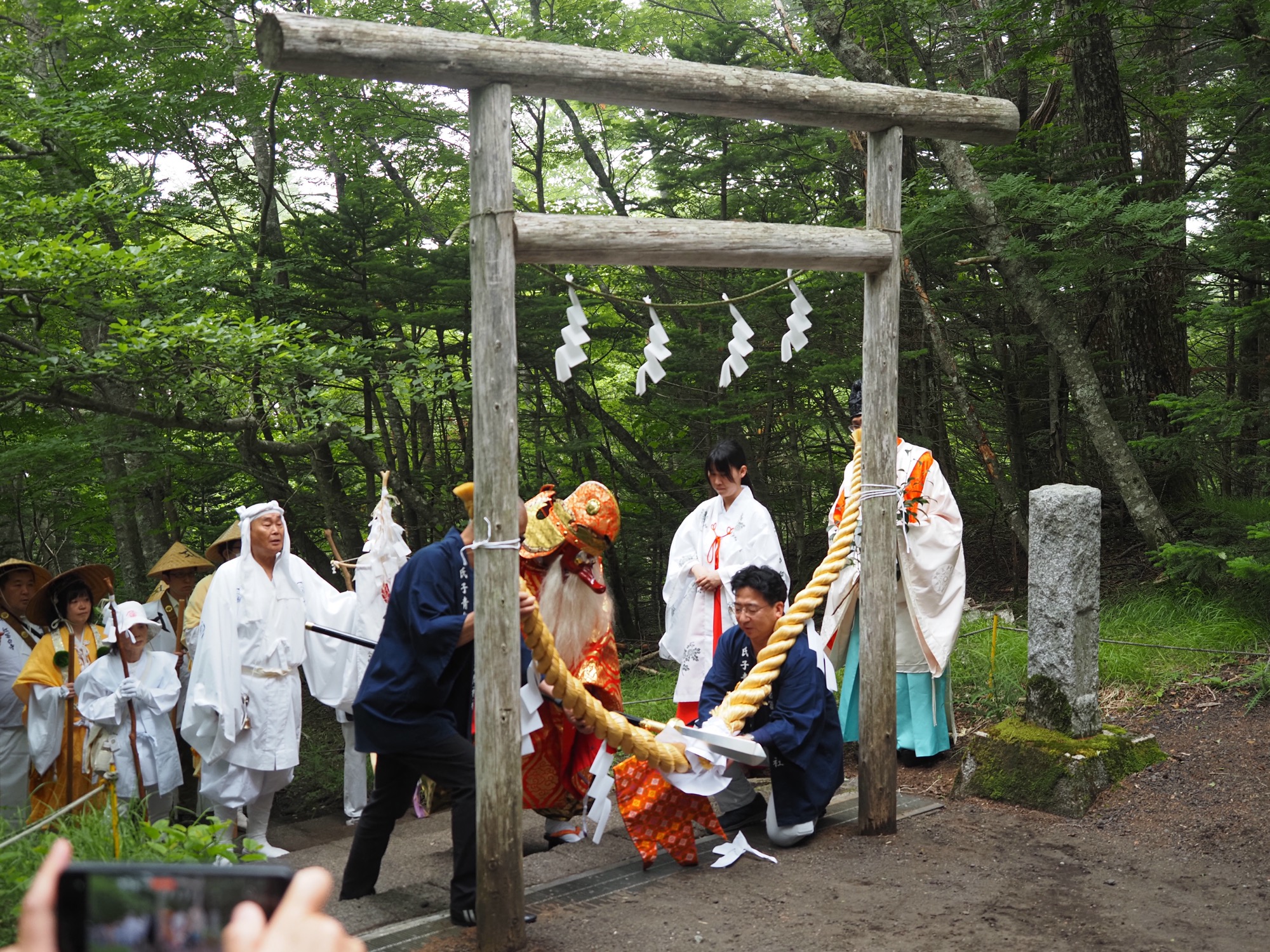
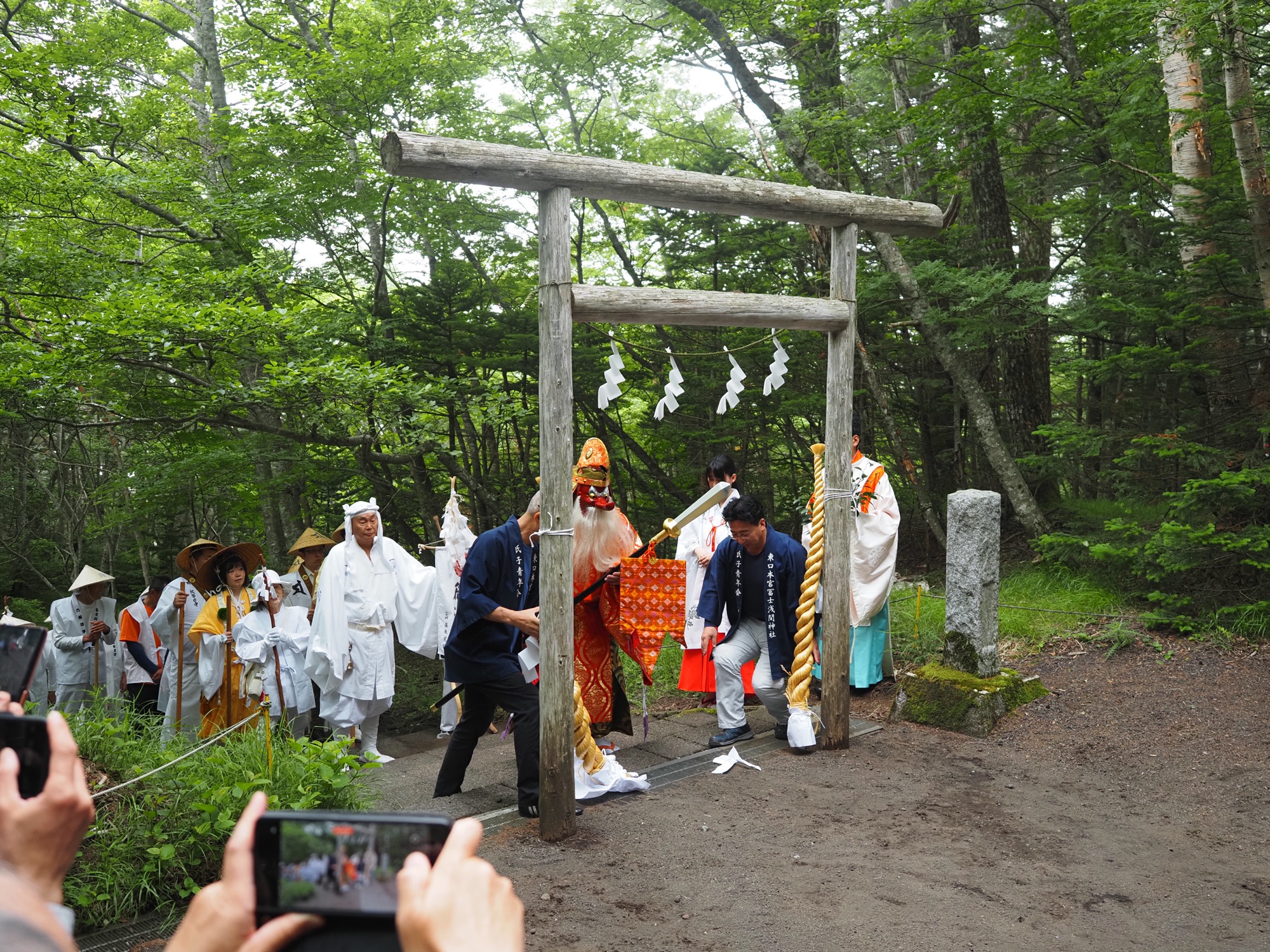
The culmination of the rite takes place at the wooden torii standing at the trail entrance. A new shimenawa is set in place, and the tengu, priest, and the young men of the parish bind the rope to the pillars in the musubi no gi — the rite of binding — that opens the way. This symbolic act, which unseals the barrier that has closed the trail for the past year and formally opens the path to the summit, lies at the heart of the trail-opening rites carried on, in various forms, at all five trailheads of Mt. Fuji — Yoshida, Subashiri, Suyama, Ōmiya, and Murayama.
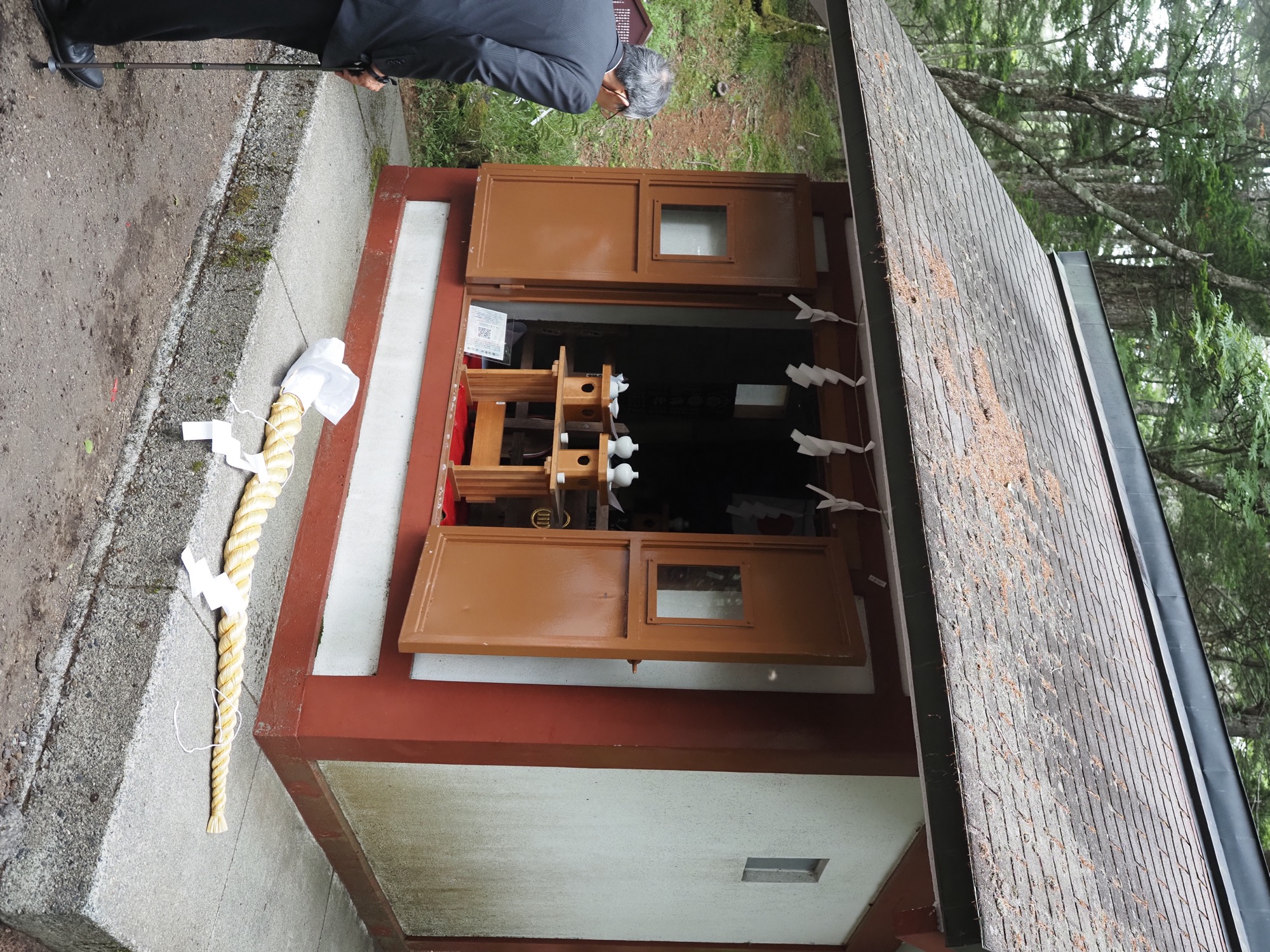
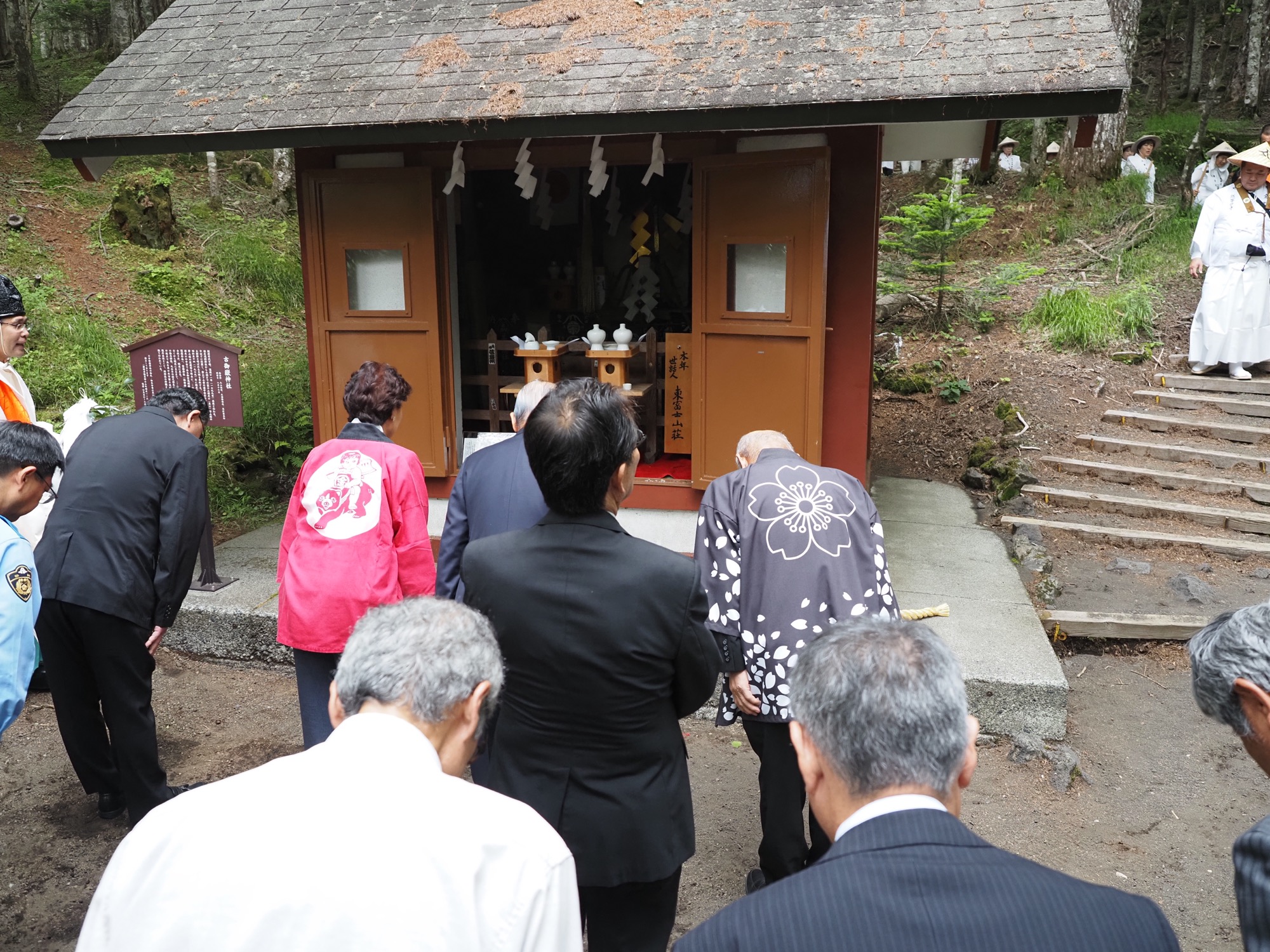
The procession then proceeds to a small shrine deeper in (perhaps the remains of the middle shrine of the Subashiri route, or the Sannai Sengen Shrine of the fifth station), where the assembled offer their final worship, and the rite concludes. The white-robed pilgrims now begin their actual climb to the summit. As did the dōja — pilgrims — of the Edo period, they ascend in woven hats and with pilgrim staves, intoning rokkon shōjō — “purification of the six senses” — and entering the embrace of the sacred peak. The ancient landscape of ascetic ascent still lives on within the modern rite.
In 2013, when Mt. Fuji was inscribed as a World Cultural Heritage site under the title “Object of Worship and Wellspring of Art,” the Subashiri trailhead was included among its constituent components. Many of the structures that once supported the culture of pilgrim ascent — the levying of mountain tolls, the convenience of the sunabashiri descent — have been lost; but the annual rite of opening, repeated on this day each year, continues, wordlessly, to pass the Japanese practice of more than a thousand years — the practice of “ascending the sacred mountain” — on to the next generation.